
“Go back to your country” is a phrase often used to demean immigrants. For stateless individuals, this demand is impossible. Many like me have no country to return to. U.S. immigration law assumes everyone has a nation. Stateless people reveal a flaw in this system, overlooked by Congress. My family sought asylum in the U.S. when I was eight. Our claim was denied, and with the Soviet Union’s dissolution, the nation on my birth certificate vanished. Ukraine did not recognize me as a citizen, leaving us nowhere to go. We joined around 218,000 stateless individuals living in the U.S.
Stateless individuals here face precarious situations with few legal solutions. Without a passport, we lack proper identification. Everyday tasks become daunting. Many cannot obtain a driver’s license or state ID, making it difficult to drive legally, open bank accounts, sign leases, or board domestic flights. Without a Social Security number, most job opportunities are out of reach, despite having the necessary degrees or skills. Professional licenses for teachers, nurses, and contractors are often unavailable. Leaving the country poses risks of not being allowed to return. A routine police encounter becomes a challenge due to missing paperwork.
Despite these challenges, many stateless individuals have grown up here, attended schools, funded college education, purchased homes, married, and started families. On paper, we aren’t citizens, but this country is our home. The government is aware of our existence. Many stateless individuals file for asylum or other temporary statuses like Deferred Action for Childhood Arrivals or Temporary Protected Status. Some receive work authorization, checking in with immigration officers yearly.
In severe cases, stateless individuals face long-term immigration detention, sometimes for decades, without a country willing to accept them. No one deserves such cruelty, especially with the American public now more aware of the conditions in detention centers. Statelessness has often been overlooked, yet gained attention during the birthright citizenship Supreme Court case. Here, families feared stateless newborns if an executive order passed. The Supreme Court upheld the 14th Amendment, but Congress can do more.
Passing the Stateless Protection Act would offer a solution for those living in the U.S. for years without nationality. This bill would enable recognition of stateless status by the U.S. government, a process that doesn’t exist today. Once recognized, stateless people would gain protection from detention and deportation, legal identification, a travel document, and work authorization. It wouldn’t grant automatic citizenship but allow those with no country, but who have built lives here, to gain identification, work legally, and stop fearing a knock on the door.
The U.S. hasn’t signed the two United Nations treaties regarding stateless people: the 1954 Convention signed by 99 countries and the 1961 Convention signed by 82. Our immigration laws ignore statelessness. Passing the Stateless Protection Act would address a major gap in the immigration system and give stateless individuals a sense of belonging.
Karina Ambartsoumian-Clough is the co-founder and executive director of United Stateless.
 The Impact of Arts and Closure on Democracy
 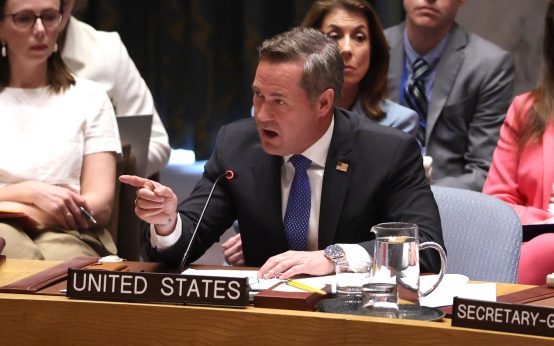 U.S. Ambassador Comments on Iran War Duration Amid Political Concerns
 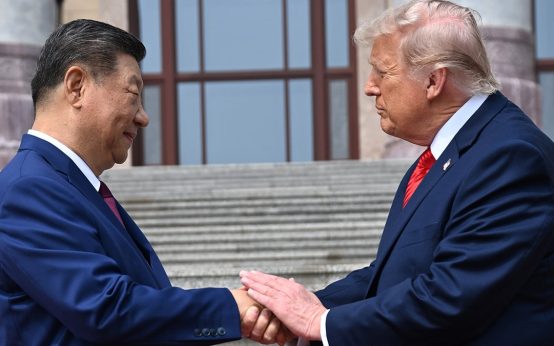 US-China Relations Under Scrutiny: Expert Warns of Escalating Tensions
  No Timeline for End of Iran Conflict
  German Chancellor Merz Vows to Pursue Reforms Despite Election Setbacks
  The Technology Rivalry: Trump’s Meeting with Xi and the AI Ecosystem Clash