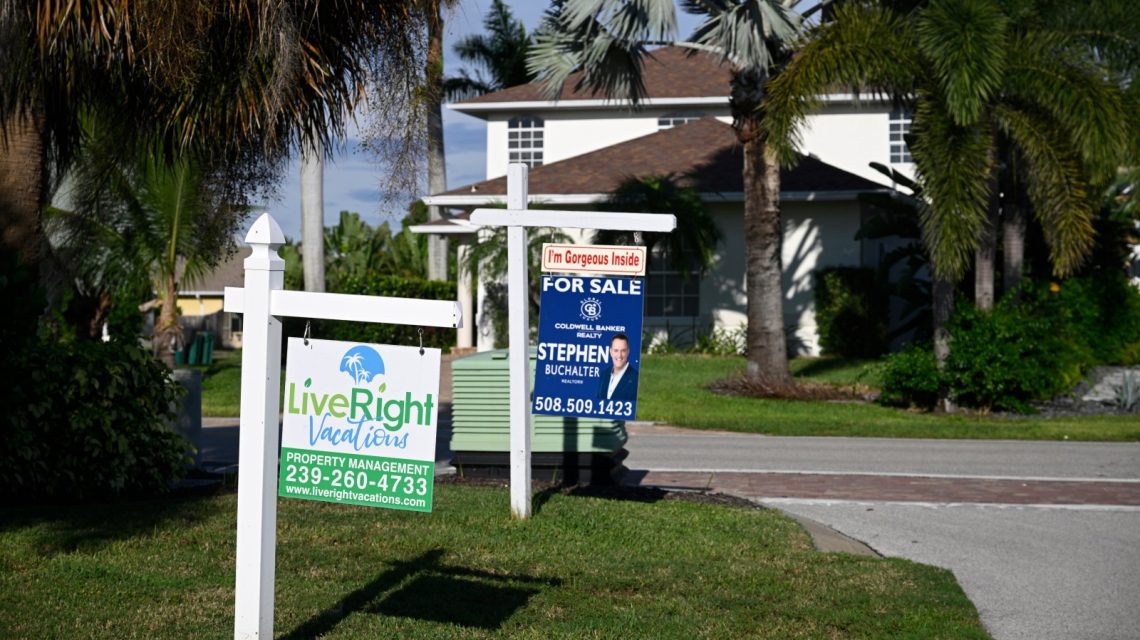
The latest data reveals a significant shift in the U.S. housing market, with sellers now outnumbering homebuyers by 63 percent. This change reflects the impact of rising mortgage rates and ongoing economic uncertainties, which have discouraged many potential buyers from entering the market.
Real estate brokerage Redfin reports that last month’s buyer count fell to the lowest level since they began tracking such data in 2013, dropping to approximately 928,892 buyers. This figure represents a 2.4 percent decline from the previous month. Concurrently, seller numbers surged to their highest level since March 2020. At that time, a housing frenzy was sparked by historically low borrowing costs amid the pandemic. According to Redfin, over 1.5 million sellers were active in the U.S. housing market in September, marking a 1.2 percent increase from the previous month.
The gap between buyers and sellers is the largest since the housing crash following the recession, shedding light on the challenges homebuyers now face. Fortunately, Americans are better positioned than during the 2008 crash.
Factors Influencing Buyer Retreat
Several factors are contributing to buyers retreating from the market. Housing experts anticipated lower mortgage rates through 2026, potentially improving affordability. Until late February, rates were declining. However, geopolitical events, including joint strikes by the U.S. and Israel in Iran, impacted rates. Before these strikes, the average 30-year fixed-rate mortgage peaked at 5.98 percent, according to Freddie Mac.
Concerns over economic instability and rising U.S. inflation, driven by disruptions in the global oil market, caused rates to rise again. The Federal Reserve’s recent decision to increase interest rates for the first time in three years contributed to this trend.
Implications of the Growing Gap for Buyers
For buyers willing to navigate the current market climate, there might be opportunities. Forty-one of the 50 most populous U.S. metropolitan areas have become “buyer’s markets,” where buyers hold an advantage and can negotiate more favorable deals. Redfin defines these markets as those with over 10 percent more sellers than buyers.
Asad Khan, senior economist at Redfin, explained this phenomenon: “This is a buyer’s market born out of caution, not strength.” Buyers now possess considerable negotiating power due to many being priced out or deterred by economic concerns.
“For house hunters with financial stability, this is an opportune time. They can negotiate and walk away if deals aren’t financially viable,” Khan added. “Ironically, despite favorable conditions for buyers, high costs deter many from taking advantage.”
Where Buyers Have the Greatest Advantage
Miami recorded the largest gap, with buyers outnumbering sellers by 158.9 percent last month. Here, 26.9 percent of homes for sale saw price reductions, while the median sale price rose 4.8 percent year-on-year to $649,691. Nashville followed, with a 152.3 percent surplus. Price cuts affected 38.3 percent of homes, and the median price decreased 1.1 percent year-on-year to $464,779.
Houston’s gap was 134.6 percent, with 35.8 percent of homes experiencing price cuts and a median price decrease of 2.3 percent to $341,837. These cities, along with others in the top 13 metros with the largest seller surpluses, share a commonality: they reside in the Sun Belt, including Texas and Florida, which have seen substantial housing construction since the pandemic’s start.
These states experienced a housing demand boom from 2019 to 2022, resulting in a construction surge. However, the market flooded after migration slowed, and other would-be movers were pulled back to costly metros in the West and Northeast due to workplace return mandates. Concurrently, rising home values, taxes, fees, and insurance premiums priced out many locals.
Existing Seller Markets
Four metros—Boston, Chicago, New Brunswick, NJ, and Providence, RI—remain balanced markets. Among the 50 most populous U.S. metros, five are still seller’s markets: Nassau County, NY (28.6 percent fewer sellers), Montgomery County, PA (-22.7 percent), Newark, NJ (-18.5 percent), Milwaukee (-16.1 percent), and San Francisco (-10.6 percent). Limited homebuilding and steady demand have kept inventory tight in these areas.
Redfin notes that San Francisco’s market has grown due to the AI boom, driving home sales.
 Oak Brook Five-Bedroom Home Highlights
  Historic UK Landmark Transforms into Luxury Development
  Historic Residences in Iconic Buildings: A Growing Trend
  Coby White Sells Lincoln Park Mansion for $5 Million
  Revival of Stalled Skokie Hotel Development Gains Traction
  The Impact of the Silver Tsunami on the Housing Market