In southwestern Albania, near a lagoon connected by a wooden footbridge, a 14th-century monastery stands resilient amid the tides of history. This area, Zvërnec, is not only an archaeological relic but part of Albania’s protected wetland, crucial for migratory birds and preserving the country’s natural coastline amidst threats of environmental degradation.
Recent investment plans, tied to Jared Kushner, propose a luxury resort on this land. The local population has risen to challenge this. Their opposition is a symptom, not the disease, of deeper issues within Albania—a nation where tourism contributes around 22 percent to its GDP, making economic arguments for development enticing yet fraught with environmental concerns.
Public outcry stems from a broader pattern of governmental decisions. Amended laws pushed through parliamentary majorities have historically sidelined public engagement.
Edi Rama’s government, since 2013, has pledged modernization and a clearer path to the EU, though achievements in infrastructure have been overshadowed by corruption scandals, implicating top officials and revealing systemic faults in governance.
The Special Structure against Corruption and Organized Crime (SPAK) provides confirmation of these flaws, with arrests of former ministers and mayoral figures, and millions tied to government-linked individuals.
Albania grapples not only with corruption but also opaque infrastructure ventures and concentrated economic interests. These add to citizens’ frustrations over a lack of accountability and oversight.
The opposition, led by Sali Berisha, compounds these frustrations, burdened by its own historical baggage and inability to offer a compelling alternative, leaving voters feeling politically unrepresented.
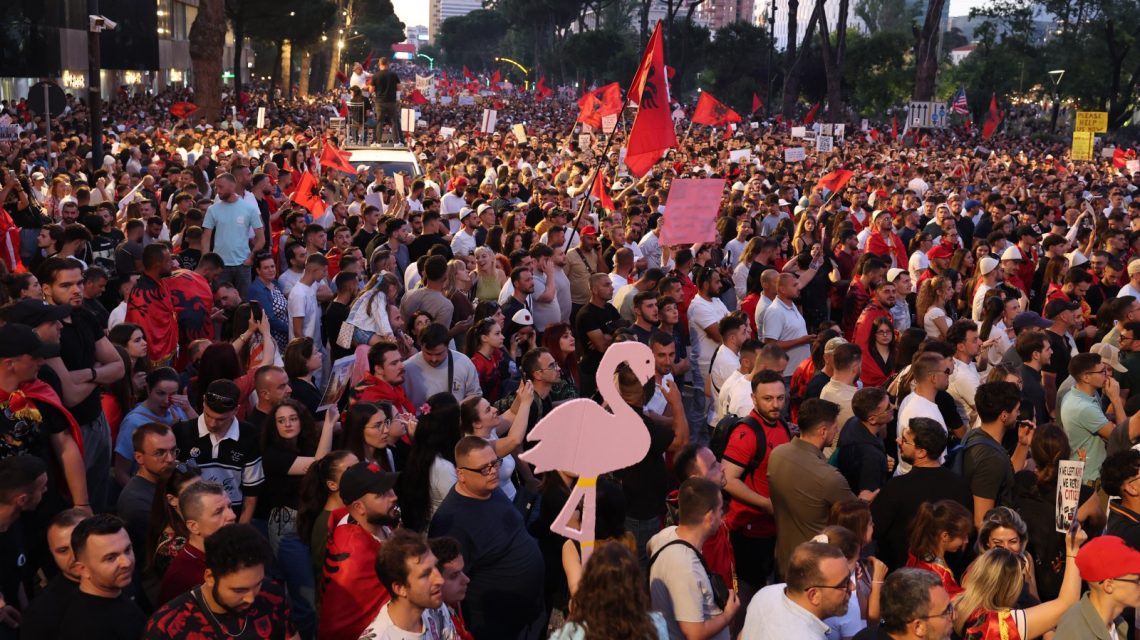
Today’s protests convey anger not at Kushner or Trump, but at their own governance failures and an ineffectual opposition. Public demands extend beyond changing rulers to reforming systemic operations, reflecting a global democratic challenge where governance must actualize its promise to the people.
Albania’s protests are a testament to the citizens’ refusal to surrender democratic ideals. Their activism embodies democracy actively securing itself, illustrating a demand for governance that meets the public’s needs.
Rudina Hajdari, the Acting Program Director at the Institute for Global Affairs, highlights ongoing struggles in Albania as indicative of democracy’s broader tests worldwide.
The Institute for Global Affairs is hosted at Eurasia Group, contributing to discussions on global democratic practices.
 Google Fined for Breaching EU Privacy Rules
  South China Sea Tensions Rise after Collision between Chinese and Philippine Ships
  North Korea’s Hypersonic Weapon Test Amid Global Tensions
  Austin Tice: A Search for Answers
  U.S., Denmark, and Greenland Forge New Security Agreement
  Secretary Rubio Discusses Middle East Conflict and NATO Relations