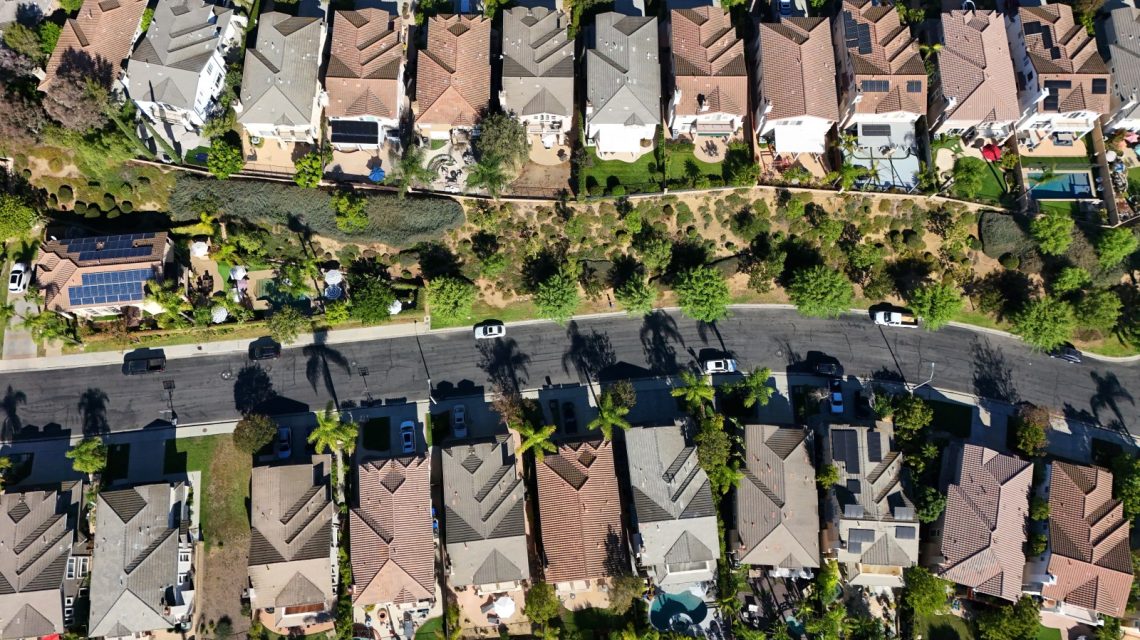
Rising property taxes are placing a financial strain on both new homeowners and those who have paid off their mortgages. In several U.S. cities, property tax increases have surpassed home value growth. An analysis by ConsumerAffairs highlights this trend in 46 of the 100 largest metropolitan areas, where property taxes have risen faster than home values between 2022 and 2024.
The Pandemic’s Influence
The pandemic sparked a homebuying surge due to low mortgage rates. As a result, the average U.S. home value rose by nearly $100,000 between 2020 and 2022, according to Brookings. This represents a growth of around 17 percent annually. While rising home values benefited many homeowners, property taxes also increased, albeit at a slower rate. A report from ConsumerAffairs shows a 10.6 percent rise in median property taxes from 2022 to 2024, whereas the average home value increased by 12.4 percent.
Additional factors have compounded financial challenges for homeowners, such as higher home insurance premiums, HOA fees, and borrowing costs. First-time homebuyers and seniors with fixed incomes are most affected by these affordability issues. The extent of a homeowner’s financial strain often depends on their location.
Geographic Disparities
ConsumerAffairs researchers analyzed U.S. Census Bureau data to examine the changes in median property taxes versus home values. The analysis revealed that the 10 metropolitan areas with the largest gaps are all located in the South or West. Florida, Colorado, and California feature prominently in this list.
Disproportionate Increases
Florida’s Lakeland-Winter Haven metro leads the nation with a 28.1 percent increase in property taxes, triple the national rise of 10.6 percent. Home values in the area rose by 14.2 percent in the same period, exceeding the national average.
Homeowners without a mortgage saw property taxes increase by 22.4 percent from 2022 to 2024. For those with a mortgage, taxes surged by 31.5 percent. Taking a broader view from 2019 to 2024, property taxes increased by 78.6 percent, with home values rising by 74.1 percent.
Jacksonville, another Florida metro, reported a 21.7 percent increase in property taxes compared to an 8.1 percent rise in home values.
The Denver-Aurora-Centennial area in Colorado faced a 19.1 percent rise in property taxes against only a 5.7 percent increase in home values. This dramatic tax rise followed the repeal of a law allowing the state to allocate property tax bills between residential and commercial properties proportionally.
In Colorado Springs, property taxes increased by 17.3 percent compared to a 4.7 percent rise in home values. El Paso County, covering Colorado Springs, reappraises properties biennially, leading to dramatic tax increases when home values spike.
Lastly, Birmingham, Alabama, saw a 17.6 percent rise in property taxes while home values grew by 6.6 percent. Despite the increase, Birmingham had the lowest property taxes among the top five metros in 2024.
Potential Relief for Florida Homeowners
Floridians will soon vote on a proposed constitutional amendment, Amendment 3, which aims to reduce property taxes. The proposal suggests raising the exemption on non-school property taxes to $150,000 in 2027 and $250,000 in 2028. It also seeks to lower the cap on annual assessment increases for non-homestead properties from 10 percent to 5 percent. To pass, the amendment needs at least 60 percent voter approval.
Recent polls indicate support for the measure is at 55 percent. If approved, the amendment may impact local government funding and essential services like law enforcement.
 U.S. Housing Market Faces Challenges with Rising Mortgage Rates
 Housing Shortage Challenges in Rural Ohio and Beyond
 Shift in U.S. Housing Market: Sellers Outnumber Buyers
 Oak Brook Five-Bedroom Home Highlights
 Historic UK Landmark Transforms into Luxury Development
 Historic Residences in Iconic Buildings: A Growing Trend