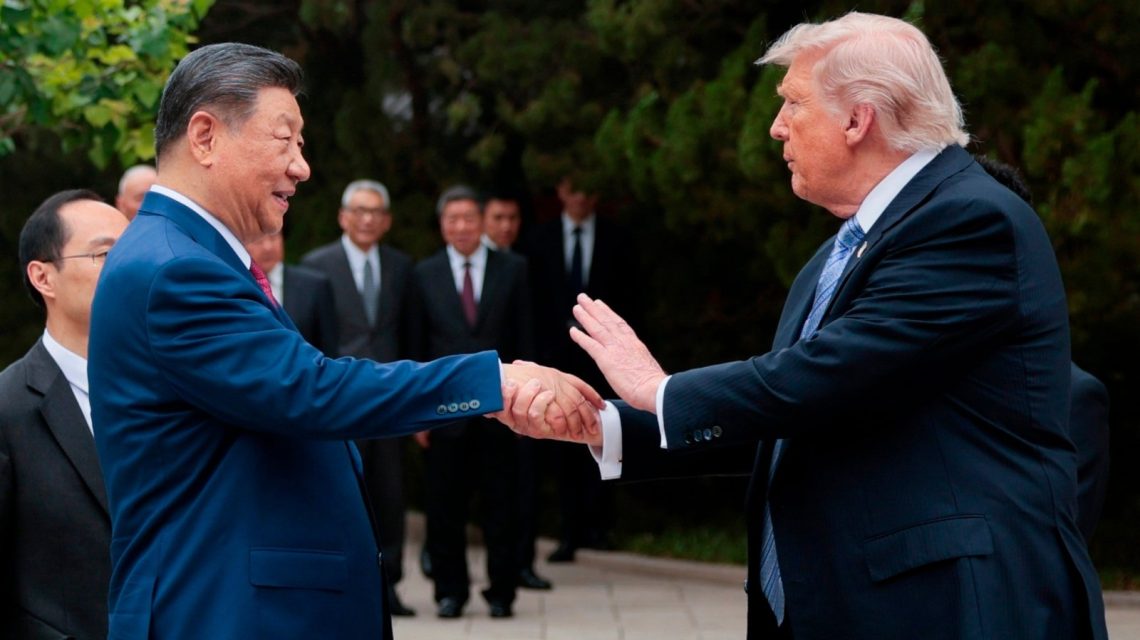
The Office of the U.S. Trade Representative has called on the public to provide their views on reducing tariffs for certain ‘nonsensitive’ goods as the United States progresses with its new ‘Board of Trade’ initiative with China. This trade mechanism emerged from President Donald Trump’s state visit to Beijing from May 13 to 16, where he held talks with Chinese leader Xi Jinping.
U.S. Trade Representative Jamieson Greer stated, ‘We welcome comments from interested parties on effective ways to facilitate mutually beneficial trade with China while continuing to use tariffs to defend American economic and national security and promote balanced and reciprocal trade.’ Greer’s statement emphasizes the administration’s intention to work with stakeholders in various industries such as manufacturing, fishing, ranching, and small businesses to identify non-sensitive goods that could provide positive trade outcomes.
The deadline for submitting comments is July 10. In response to inquiries, Newsweek reached out to the USTR and Chinese embassy for comment.
The call for feedback marks a step forward in alleviating trade tensions following the Trump-Xi summit, according to Xin Qiang, deputy director of the Center for American Studies at Fudan University, as reported by Chinese state media outlet, the Global Times.
Xin noted that since the trade dispute was initially triggered by U.S. tariff actions, any reduction in duties by the U.S. could ease tensions and pave the way for more productive bilateral trade engagement.
The Trump-Xi discussions resulted in limited actionable outcomes on conflicting strategic interests like artificial intelligence and Taiwan. However, trade appeared to show more promise for progress. The White House described the Board of Trade as a venue for both governments to manage trade in non-sensitive goods, while the Board of Investment was outlined as a forum for discussing investment-related topics.
Zongyuan Zoe Liu, a senior fellow for China studies at the Council on Foreign Relations, noted in an analysis that these mechanisms—not planned purchases of American agricultural products and Boeing aircraft—were termed ‘cornerstones’ of the U.S.-China agreement.
The trade war initiated by Trump during his first term intensified last year with aggressive ‘Liberation Day’ tariffs on numerous countries, targeting Chinese goods heavily. Tariffs climbed as high as 145 percent, reflecting Trump’s stance on unfair trade practices and drug precursor production.
During a previous meeting on October 30 in Busan, South Korea, the nations started to ease tensions. The U.S. reduced fentanyl-related tariffs on Chinese goods from 20 percent to 10 percent, and China committed to resuming U.S. soybean imports and easing restrictions on rare earth exports for a year.
 Trump’s Engagements at the UN: Focus on Ukraine and White House Developments
  Trump Administration to Admit 17,500 Afrikaner Refugees from South Africa
  Trump’s Vision for Global Security: Iran, AI, and the Role of the U.S.
  Concerns Raised Over Canadian Assisted-Dying Program
  Lithuanian President Urges U.S. to Maintain Military Presence Amid NATO Challenges
  Italian PM Giorgia Meloni Skips UN General Assembly Amid U.S. Tensions