Taiwan has indicated President Lai Ching-te’s willingness to engage in conversation with U.S. President Donald Trump. Such an interaction would mark an unprecedented event between the leader of the island claimed by China and the head of the world’s largest economy. The timing for these talks remains uncertain, yet their occurrence could impact U.S.-China relations and the ongoing considerations for a substantial U.S. arms package for Taiwan.
Since Washington’s shift in diplomatic recognition from Taipei to Beijing in 1979, no direct dialogue has occurred between the leaders of the United States and Taiwan. China regards Taiwan as its sovereign territory and has not ruled out the use of force to achieve control.
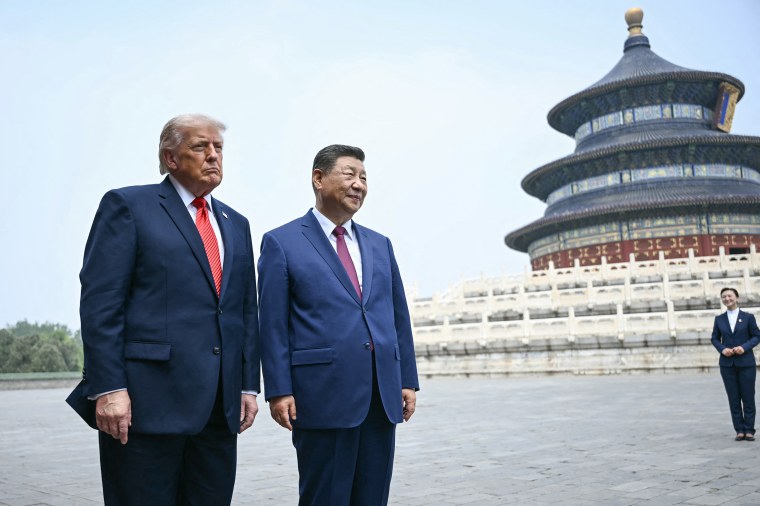
Last Wednesday, President Trump reiterated his intent to speak with Lai, emphasizing this for the second time in a brief period. This reaffirmation followed initial doubts about a potential verbal misstep after his Beijing meeting with Chinese President Xi Jinping. During their visit, Trump and Xi were photographed at the Temple of Heaven in Beijing, lending weight to their diplomatic interactions.
The Taiwanese Ministry of Foreign Affairs restated Lai’s openness to discussions with Trump, asserting a steadfast commitment to peace across the Taiwan Strait. Joseph Wu, Secretary-General of Taiwan’s National Security Council, emphasized the need for discretion regarding the topic, indicating that any advancements would be disclosed publicly.
“Elevating talks to higher levels of communication could significantly benefit not only Taiwan but democratic regions across the Indo-Pacific.”
Wu countered Trump’s reference to the “Taiwan problem,” attributing the issues to China instead, highlighting its contentious activities along the first island chain spanning from Japan to the Philippines.
In 2016, Trump’s direct telephonic engagement with then-Taiwan President Tsai Ing-wen defied longstanding U.S. diplomatic norms, capturing global attention.
China has consistently refused dialogue with Lai, labeling him a “separatist.” On Thursday, China reiterated its steadfast opposition to any official U.S. engagements with Taiwan.
Among the topics of U.S.-China dialogue, Taiwan’s potential arms purchase featured prominently. Reports suggest the possible $14 billion package as Trump deliberates on U.S. support for Taiwan’s defense under the 1979 Taiwan Relations Act. This act obliges the U.S. to ensure Taiwan’s defensive capabilities despite formal diplomatic absences.
Taiwan’s Defense Minister Wellington Koo expressed confidence based on the U.S.’s unchanged policy towards Taiwan, reflecting ongoing cautious optimism about arms procurements.
Beijing remains displeased with continued U.S. military engagements with Taiwan, including arms transactions, while Taiwan steadfastly rejects China’s sovereignty claims.
 California’s Demographic Shifts: A Closer Look
  Israel Marks Tragic Anniversary Amid Political Turmoil
  Israel Commemorates Third Anniversary of Hamas-Led Attacks
  Immigration Policies and Their Impact on Afghan Refugees in the U.S.
  The Impact of October 7 and Its Aftermath
  U.S. Embassy Monitors Suspected Plague Case in Russia’s Irkutsk Region