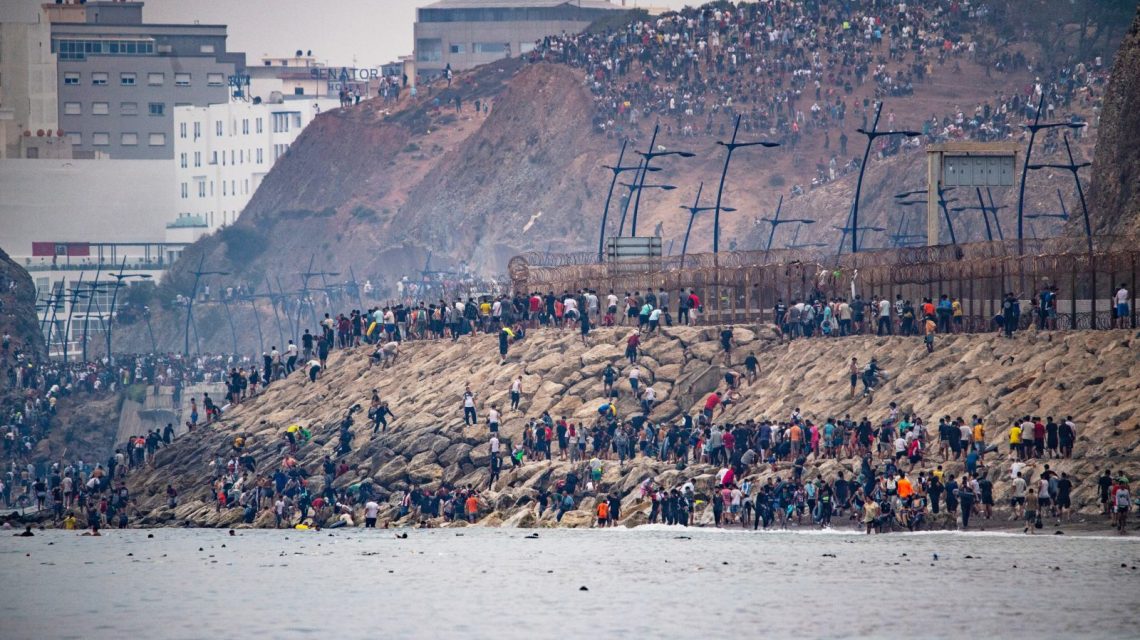
Spanish Prime Minister Pedro Sánchez has criticized some European allies for their response to the migration crisis in Ceuta, an enclave on the African coast. He described their approach as “selfish, polarizing and unlawful” and claimed that suggestions to suspend Spain from the Schengen area were driven by “prejudice, fake news, ignorance or political interest.”
The situation saw between 50,000 and 60,000 migrants enter Ceuta from Morocco in recent days, most of whom have since returned, according to Spain’s interior ministry. Tragically, the death toll reached 67 due to drownings and a stampede near a breakwater.
“Calls to suspend Spain from Schengen are fueled by prejudice, fake news, ignorance or political interest.”
In a letter to European Commission President Ursula von der Leyen, Sánchez highlighted that Spain restored control within 48 hours, provided humanitarian aid, and returned most migrants. He mentioned Spain’s collaboration with Moroccan authorities and lamented the lack of support from other European countries.
Italy reinstated border checks for arrivals from Spain, and officials in Finland and Denmark supported suspension discussions, despite Ceuta being separated from mainland Spain by the sea. There was no evidence of migrants traveling from Ceuta to the mainland.
Spain’s Migration Record
Sánchez defended Spain’s migration policies, citing a significant drop in irregular arrivals and positioning the country as the EU’s second most secure external border. He noted Spain recorded half as many irregular entries as Italy from 2021 to 2026.
Spain has supported countries facing migration emergencies, such as Belarus in 2021 and Italy’s Lampedusa in 2023.
“This successful policy has also allowed us to assist other Member States when they faced similar crises,” Sánchez stated.
Sánchez urged the EU to avoid selfish responses, calling for an urgent videoconference of interior ministers to discuss a unified approach to such situations. He emphasized shared responsibility in external border security among Member States.
“We count on your leadership to ensure the European Union responds swiftly, effectively and in a coordinated manner,” Sánchez wrote.
European Union Divided
The crisis has highlighted divisions in Europe over border enforcement and support for front-line states. Italian Prime Minister Giorgia Meloni, along with leaders from 22 countries, called for emergency talks to strengthen borders, combat smuggling, and expedite migrant returns.
Meloni emphasized the need for joint EU actions, while Italy’s foreign minister Antonio Tajani blamed Spain’s closed regularization program for undocumented migrants, suggesting it encouraged trafficking. Madrid rejected this claim.
European Commission President Ursula von der Leyen responded positively, acknowledging Spain’s efforts and advocating for strengthened European border control. France opposed suspending Spain from Schengen, with its Interior Minister Laurent Nuñez emphasizing continued cooperation.
Events in Ceuta
The crisis began with increased crossings from Morocco into Ceuta. Migrants entered through various methods including fences, breakwaters, and swimming, some undertaking lengthy sea journeys.
Ceuta, along with Melilla, represents the EU’s only land border with Africa and has been a migration route into Spain. Identification checks prevent automatic access to the mainland, thus limiting entry to the Schengen area.
The sudden influx overwhelmed local facilities, prompting Madrid to deploy additional soldiers and police after Ceuta’s regional authorities reported being overwhelmed.
The cause remains unclear, with speculation of involvement by trafficking networks. Critics linked the surge to Spain’s undocumented migrant regularization program, but its criteria excluded those arriving during the crisis.
To curb crossings, Spain implemented a new containment barrier along Ceuta’s border, reaching into the sea, intending to prevent swimmers from bypassing land fortifications. Soldiers continued monitoring the border and assisting exhausted migrants.
 Investigation into Lion Deaths in Tanzania
  Merz Stays Resolute Amid Electoral Shifts in Germany
  U.S.-Iran Relations and Diplomacy at Upcoming U.N. Assembly
  US-China Relations Under Scrutiny: Expert Warns of Escalating Tensions
  Extradition of Suspects in Haitian President’s Assassination
  No Timeline for End of Iran Conflict