Pennsylvania’s Initiative to Monitor Data Centers
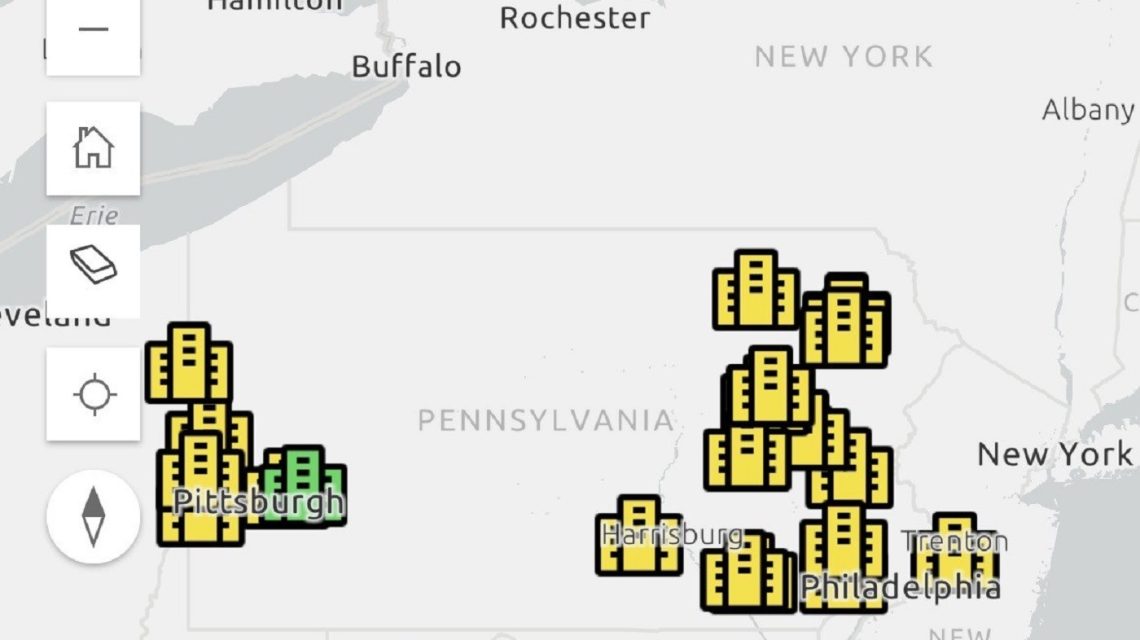
Pennsylvania has introduced a public map that helps residents track proposed data centers seeking environmental permits. As artificial intelligence infrastructure grows, it is increasingly becoming an important issue ahead of the 2026 U.S. midterm elections. This initiative, known as the Pennsylvania Data Center Permit Tracker, is managed by the Pennsylvania Department of Environmental Protection (DEP). It provides visibility on data center projects brought to the agency’s attention, allowing the community to observe their progression through environmental permitting processes.
This tracker is part of an effort by Governor Josh Shapiro’s administration to address concerns about the AI industry’s effects on electricity costs, water resources, the environment, and local communities.
The DEP and Shapiro were contacted via email for comment, with responses pending.
Source: Pennsylvania Department of Environmental Protection, Data Center Permit Tracker.
The Broader Context of Data Center Expansion
Pennsylvania’s map launch aligns with a surge in data center development. Advocates highlight potential benefits such as job creation, investment, and AI competitiveness. Meanwhile, critics point to rising demand for energy and water and the strain on local communities. Scott Taylor, president of Protect Elizabeth Township in Pennsylvania, expressed opposition to a proposed data center campus, stating, “We don’t want it.” Virginia Marcille-Kerslake, a senior organizer for Food & Water Watch, remarked to Inside Climate News, “We’ve seen the devastating impact of these hyper-scale data centers in other states.”
Pennsylvania’s tracker stands out by linking a public map directly to environmental permitting processes, which contrasts with other states like Virginia. Virginia, a top data center hub, offers an interactive map pinpointing existing and proposed facilities, though it is crowdsourced rather than state-sponsored for environmental permits.
On a national scale, independent projects monitor development. The Data Center Record map provides updates on facilities ranging from operational to proposed and under-construction.
Data Centers: An Emerging Election Issue
The unveiling of Pennsylvania’s tracker map coincides with the growing prominence of AI and data center development as topics in the lead-up to the midterm elections on November 3. Candidates face increasing pressure to articulate their stance on the economic benefits of AI investments versus concerns over energy prices, environmental impact, and development pace. The term “data center election” reflects this dynamic.
Communities across the United States are contending with speedy AI infrastructure expansion. Pennsylvania’s new map contributes to national discussions about the advantages and drawbacks of the data center boom. As tech companies rush to build facilities supporting AI, cloud computing, and digital services, critics have raised alarms about electricity usage, water consumption, environmental repercussions, and local growth.
Public Opinion on Data Centers
Opinion surveys indicate widespread local opposition to data centers. A Gallup poll from May revealed that around 70% of Americans oppose the establishment of an AI data center in their community, which outpaces opposition to nearby nuclear plants.
An Annenberg Public Policy Center survey in August showed 61% opposition to local data centers, up 12 points from earlier in the year. This sentiment cuts across party lines, with majority opposition among Democrats, Republicans, and independents.
Some political leaders underscore the necessity of attracting tech investments and competing globally. Others advocate for stricter regulations or heightened scrutiny of projects. Local opposition has further pressed officials to clarify the costs of new infrastructure.
AI Concerns and Political Implications
President Donald Trump has championed data centers. A Reuters/Ipsos poll on October 7 reported that 84% of voters consider AI a threat to American employment, with 69% calling for more stringent AI regulations. 56% of registered voters support limits on data center construction. Many voters perceive the Trump administration and Congress as insufficiently addressing AI risks.
These findings highlight widespread discussions beyond planning disputes, encompassing broader issues about technology development and regulation.
Insights from Newsweek’s AI Policy Scorecard
The political weight of AI is mirrored in Newsweek’s AI Policy Scorecard, evaluating congressional members’ positions on the technology. It scrutinizes five key areas: regulation and governance, data centers and energy, jobs and the economy, safety and privacy, and national security concerning China. The methodology relies on legislative votes, bill sponsorships, and public statements.
The scorecard categorizes lawmakers on a spectrum from AI skepticism to enthusiasm. It enables comparisons of representatives’ approaches to a technology shaping economic and infrastructure policies.
Candidates are increasingly compelled to clarify not only their support for AI but also their plans for infrastructure development, regulation, and funding. Newsweek’s AI Policy Scorecard suggests Pennsylvania’s congressional delegation has a nuanced record on AI, with most House representatives rated as “mixed” among both Democratic and Republican members.
Newsweek’s editorial team utilized Martyn, their AI assistant, for this article. Learn more about Martyn here.
Contact Newsweek editors for this story: Rebecca Flood and James Debens.
 Debate Over Driverless Vehicles in Washington D.C.
  Winter Heating Costs: What to Expect Amid Historic El Niño
  Trump and AI: Balancing Economic Potential and Regulation
  Tropical Storm Rachel and Coastal Hazards for Southern California
  Hurricane Simon Surges Toward Mexico as Category 4 Storm
  California Faces Unusual Coastal Flooding Amid Predictions of El Niño Winter