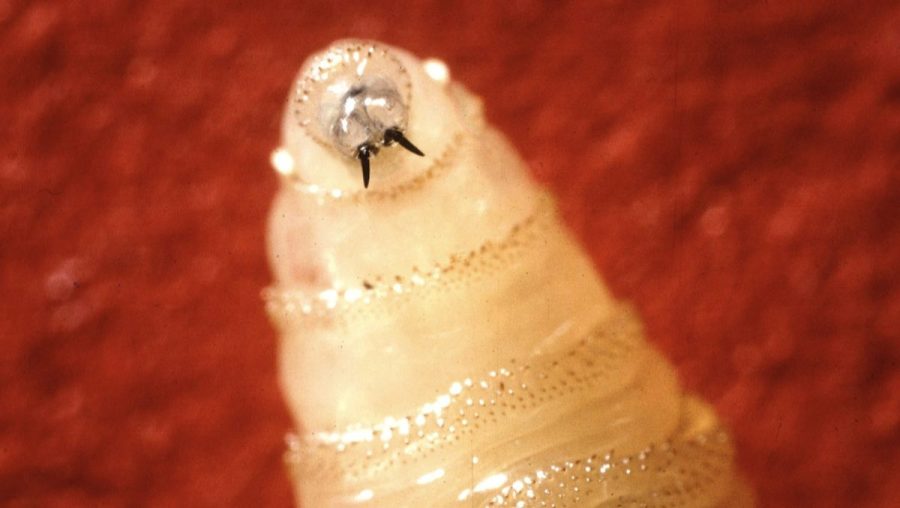
The United States Department of Agriculture reports a rise in confirmed New World screwworm infestations, with 45 cases recorded in August. The latest occurrence appeared in Terrell County, Texas, involving a sheep. These screwworms have been detected solely in animals such as cattle, sheep, and dogs since they entered the U.S. this summer. Although humans haven’t been infected, there’s potential risk due to the screwworm flies’ ability to lay eggs on warm-blooded hosts, including humans.
Once the flies lay eggs, they develop into parasitic larvae that consume surrounding tissues. Untreated, such infestations could be fatal. Unlike the cyclospora parasite, which spreads through food, screwworm flies lay eggs in live tissue, often in wounds, orifices, or on exposed flesh.
“Wounds as small as a tick bite may attract a female fly to lay her eggs,”states the Centers for Disease Control and Prevention (CDC). They further explain that one female screwworm fly can produce 200 to 300 eggs at once, totaling up to 3,000 during her 10- to 30-day lifespan.
Encountering the New World screwworm is more challenging than cyclospora. The highest risk group includes individuals spending extensive time outdoors or near animals, especially if they possess open wounds.
The CDC recommends thorough removal of all eggs and larvae from an infected individual, which might necessitate surgery if maggots lodge deeply.
Efforts are underway to curtail the screwworm spread, aiming to safeguard the cattle industry. Presently, most cases are reported in Texas, with one case in New Mexico. The Department of Agriculture is releasing sterile flies to hinder reproduction, and the Food and Drug Administration has approved emergency use of a preventive drug.
 Debunking Hydration Myths: Insights from Experts
  Link Between Extreme Temperatures and Chronic Pain
  DNA Monitoring Offers Early Insight into Blood Cancer Progression
  Understanding Hospice Care and the Challenges of Discharge
  CDC Recognizes Needs of Detransitioners with New Diagnosis Codes
  Lenacapavir: A New Hope in HIV Prevention