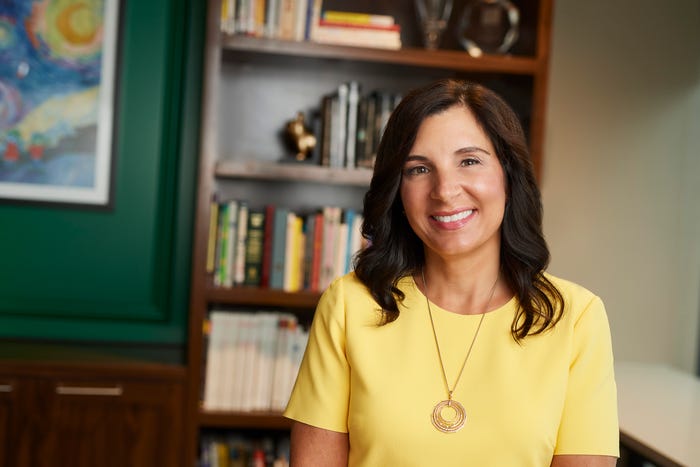
Linda Matzigkeit, the Chief Administrative Officer at Children’s Healthcare of Atlanta, recently shared her experience of working 12-hour shifts in the emergency room. During the COVID-19 pandemic, she felt compelled to make a tangible impact as the hospital struggled with staffing shortages due to employees needing to stay home with their children during remote schooling.
Matzigkeit’s interest in healthcare has always stemmed from her desire to help people. While she never pursued a career as a nurse or doctor, she considered becoming a pharmacist. When the pandemic hit, she sought advice from colleagues on the quickest way to contribute as part of the hospital’s clinical staff. The unanimous suggestion was to become an EMT.
Becoming an EMT
With her son in college, Matzigkeit became an empty nester and decided to pursue EMT training. The course was more challenging than she anticipated, involving two nights a week of classes from 5 to 10 p.m., along with weekend shifts on ambulances and in emergency rooms. This rigorous schedule lasted six months until she achieved national certification.
Throughout her training, Matzigkeit chose not to disclose her leadership role within the hospital to ensure she was regarded seriously by instructors. When she didn’t achieve top grades, she discussed it with her instructor, who reassured her that there was no ‘valedictorian’ in the course, and she was performing well.
Experiences in the Emergency Department
After certification, Matzigkeit began working shifts in her hospital’s emergency department. She underwent a demanding 100-hour EMT orientation during nights and weekends. Despite her leadership position, the experience of performing tasks like starting IVs and comforting anxious families highlighted how busy and dedicated the clinical staff is.
Her shifts, although voluntary and unpaid beyond her usual salary, offered valuable insights. She noted how critical face-to-face communication is in such a fast-paced environment, realizing that traditional emails were ineffective in keeping the staff informed.
Transforming Communication
The experience in the emergency department prompted Matzigkeit to rethink communication methods. Understanding that staff rarely had time to read emails, she introduced an internal communication tool resembling social media, allowing for swift updates and notifications accessible via phones. Additionally, she began preparing talking points for use in start-of-shift huddles to improve communication among frontline staff.
Continuous Learning and Contribution
Working as an EMT has been humbling for Matzigkeit. She strives to improve her skills like IV insertions, but acknowledges she may never reach the proficiency of regular EMT staff given her limited shifts. Still, she shares her journey with others, encouraging those interested in EMT work to pursue it.
Matzigkeit’s story underscores her belief that setting ambitious goals and working persistently toward them can have a significant impact. Her journey has not only benefited her clinical staff and leadership at the hospital but has also reinforced her own resolve to dream big and achieve those dreams.
 Biden Reflects on Memoir and Health Challenges
 Former Aide Criticizes Trump’s Advisers on Health Initiatives
 From Flight Attendant to Content Receptionist: Embracing Simplicity
 A Different Approach to Aging and Beauty
 Jocko Willink on Discipline and Longevity
 Caring for a Parent in Memory Care: A Personal Journey