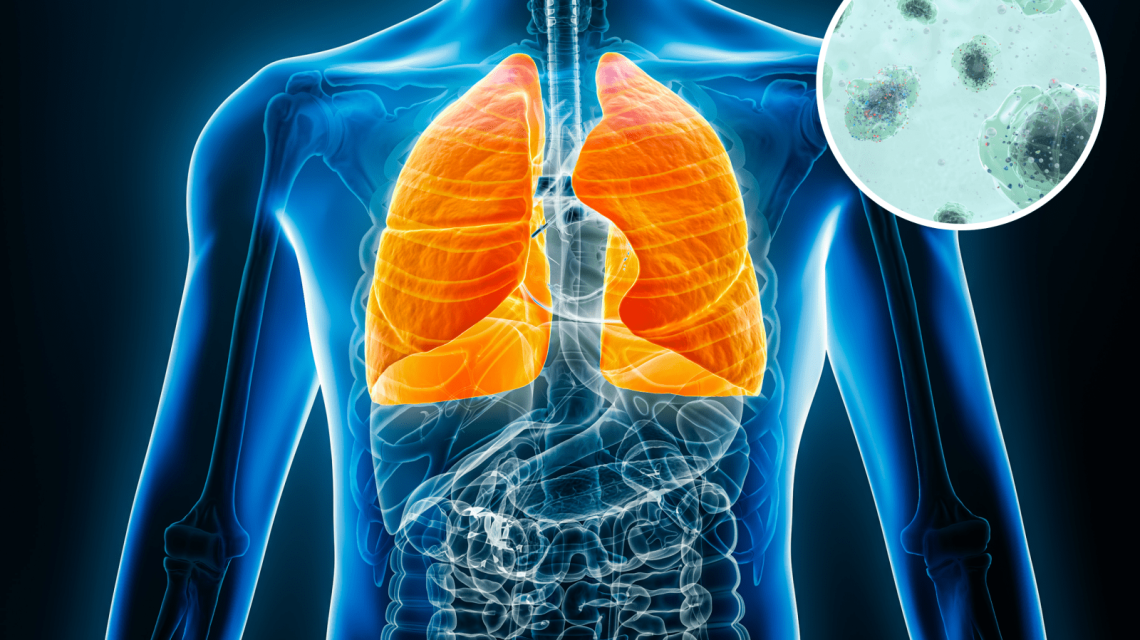
Microplastics are becoming a common element in daily life. Yet, their impact on health, especially after being inhaled, remains largely mysterious. Recent research suggests a link between microplastics and lung cancer, as indicated by findings to be presented at the European Respiratory Society Congress in Barcelona, Spain.
Researchers have found that patients diagnosed with lung cancer often have detectable microplastics in their lungs. This study raises critical questions about whether these particles play a role in lung diseases.
The Researchers’ Observations
Dr. Ilias Dimeas, affiliated with University College Dublin School of Medicine and the University of Thessaly, shared insights with Newsweek. He noted that cancerous lungs might retain more microplastics, yet the study does not confirm causation. He emphasized that further longitudinal and mechanistic studies are necessary to clarify the relationship between microplastics and lung cancer.
Although microplastics may contribute to inflammation or other biological processes linked to cancer, diseased lungs might also process these particles differently. Notably, the study does not prove microplastics cause cancer.
Unanswered Questions
Scientists still have limited understanding of microplastics within the body. Determining normal levels of these particles in lungs, how they vary among individuals, and their link to diseases remain crucial.
Dr. Dimeas stressed the importance of understanding the trajectory of inhaled particles and their potential effects on health.
Study Methodology
The research involved 100 individuals undergoing bronchoscopy at University Hospital of Larissa, Greece. A bronchoscopy uses a camera-equipped tube to explore the airways and gather samples.
The American Cancer Society notes lung cancer as prevalent in the U.S., with an estimated 229,410 new cases expected by 2026. During the study, participants provided lung-wash samples, using saline to extract cells and materials. Half also offered lung tissue samples. Researchers analyzed these for microplastics, identifying various types within the specimens.
Among the participants, 50 received lung cancer diagnoses. Across all samples, 232 microplastic particles were discovered. Detectable microplastics were present in 70 percent of patients in at least one sample.
Findings and Implications
Analysis revealed cancer patients were more inclined to have detectable microplastics, with a higher burden overall. Microplastics appeared in the lung-wash samples of 66 percent of cancer patients, compared to 46 percent of those without cancer.
An unexpected pattern emerged. Patients with more microplastics in lung-wash samples exhibited fewer in tissue samples, indicating uneven particle distribution in the lungs.
Polypropylene and polyethylene were the most common plastics. These materials are prevalent in consumer goods, packaging, textiles, and household items.
Ongoing Research Efforts
Dimeas highlighted the significance of inhaled microplastics being found in human lungs more frequently than many anticipate. Reducing plastic pollution may yield human health benefits beyond ecosystem preservation.
The study does not clarify why microplastics were more prevalent in lung cancer patient samples. While causation is not established, their presence in larger quantities warrants further investigation. Laboratory studies are underway to explore microplastics and their interactions with lung cells.
Researchers are also examining samples from patients with chronic lung diseases to discern if microplastics influence lung scarring or disease progression.
 Florida Man Claims ‘Lion Diet’ Transformed Health and Life
  Concerns Over Food Safety and Its Impact on Families
  A Mother’s Tragic Journey Under Abortion Ban
  Medical Diagnosis Errors: Understanding the Crisis
  Lymphatic Drainage and Ice Sculpting: Emerging Wellness Trends
  The Rising Trend of GLP-1 Medications Among College Students