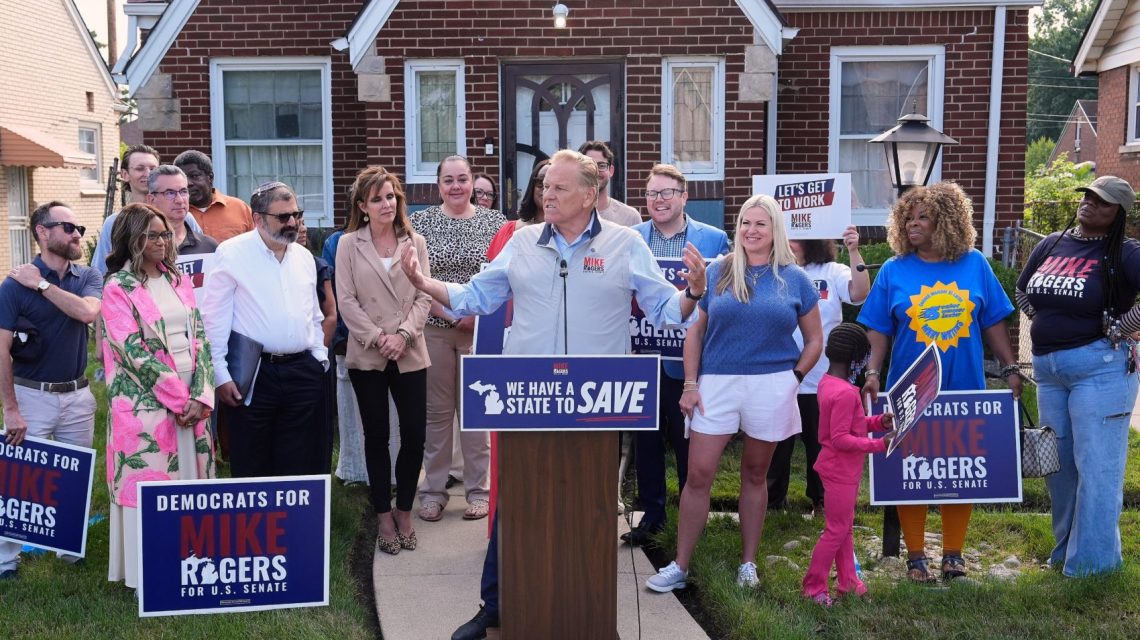
In Michigan, the U.S. Senate race transcends party control in Washington, reflecting the complexity of faith, identity, and community concerns. The suburbs of Detroit are a microcosm where Jewish Democrats face internal debates about their support for the Democratic nominee. Meanwhile, in Dearborn, Arab American leaders who previously backed President Donald Trump express alarm over Republican rhetoric. These tensions are rooted in the broader context of Israel’s war in Gaza following the Hamas attack on October 7, 2023.
The political contest is between Republican Mike Rogers, a former congressman, and Democrat Abdul El-Sayed, a former public health official. If elected, El-Sayed could become the country’s first Muslim senator. As the race intensifies, Rogers has characterized El-Sayed as an extremist, striving to appeal to Jewish voters traditionally inclined toward the Democratic Party. He has used incendiary language, laughing off derogatory remarks and accusations about El-Sayed, which has added to the charged atmosphere.
In West Bloomfield, communities are healing from an attack on a synagogue, reflecting a backdrop of heightened emotions before the campaign escalated. Just a short drive away in Dearborn, a memorial stands for children who lost their lives in Gaza. These events influence friendships and alliances in the race, highlighting divides even among close friends like Lori Goldman and Mimi Price-Miletic. Goldman perceives Rogers’ strategy as fear-driven, while Price-Miletic has not closed the door on voting for Rogers.
Rogers has actively pursued Jewish voters, featuring prominently in his strategic outreach. The recent contentious Democratic primary between El-Sayed and U.S. Rep. Haley Stevens focused heavily on Israel, drawing significant financial support for Stevens from groups like the American Israel Public Affairs Committee (AIPAC). Rogers continues to solidify alliances by engaging in events in Jewish communities, particularly in Oakland County.
Rogers’ campaign events are strategically aligned to position him as a protector of Jewish interests in the region.
Meanwhile, El-Sayed faces a challenging path in unifying the Democratic base, with Oakland County’s evolving political scene. Many top Democrats have distanced themselves from him. Even as some Democrats openly support him, others refrain from joint appearances or endorsements, highlighting the lingering division over his candidacy. Contentious associations, including El-Sayed’s past appearances with controversial figures, exacerbate hesitations among potential supporters.
The backdrop of Dearborn, hosting the nation’s largest Arab American community, heightens these political tensions. The community’s shifting stance reflects broader discontent with Trump’s handling of issues popular among Arab Americans. The criticisms from figures like Dearborn Mayor Abdullah Hammoud signal cultural confrontations about accusations against Muslim politicians and faith-based discrimination.
Leaders have noted that prior alliances with the Trump campaign could shift due to the rhetoric surrounding El-Sayed. Concerns over faith-based attacks resonate in a deeply interconnected political landscape where former supporters now question the current administration’s tact with minority communities.
The ongoing dialogue within these communities highlights essential conversations around identity and political representation amidst national discourse on religion and race.
A free press and engaged citizens remain vital, supporting trusted journalism and fostering civil dialogue in this closely contested senate race.
 Trump Administration’s Legal Actions on Voter Fraud Before Midterms
 Campaign Rallies Heat Up in North Carolina
 Alberta Rejects Independence Referendum Proposal
 Trump’s Comments on Lincoln Memorial Reflecting Pool Alteration and Alleged Vandalism
 Trump Warns About Democratic Policies Using France as Example
 Iowa U.S. Senate Race: Undecided Voters Deciding Between Josh Turek and Ashley Hinson