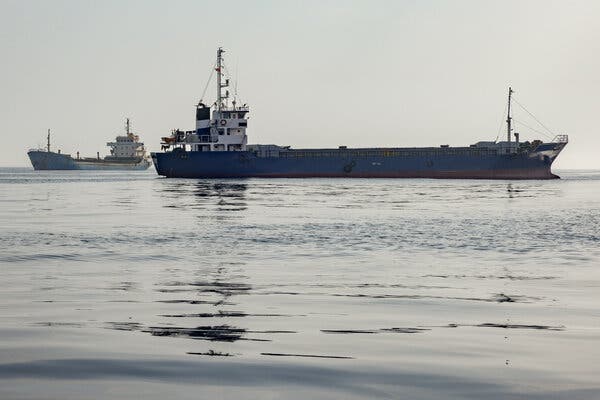
Shipping in the Strait of Hormuz has seen an increase since the preliminary agreement between the United States and Iran to end ongoing conflicts and reopen the crucial waterway. However, this progress faced uncertainty on Saturday when Iran announced a new closure of the strait.
On the same day, the U.S. Central Command reported a significant milestone, as 55 commercial ships passed through the strait. This marks the highest number of vessels in a single day since Iran initially closed the strait at the start of the conflict. Despite this, it remains below the prewar average of 130 ships daily.
The announcement from Iran’s military caused confusion about the current status of the waterway. The Islamic Revolutionary Guards Corps warned that security threats would arise if ships came near. Meanwhile, U.S. Central Command’s Capt. Tim Hawkins stated that the strait remains open, with the U.S. blockade against Iran lifted. He affirmed that traffic continues to flow and U.S. forces are ensuring it stays that way.
Throughout the war, the Strait of Hormuz has been a strategic point leveraged by Iran, impacting global oil and gas supply routes. The mere threat of renewed conflict has been enough to disrupt shipping activity, leading to inconsistent traffic levels well below those seen before the conflict.
The preliminary agreement between Iran and the United States includes plans to reopen the strait, though shipping companies proceed with caution. Many still deal with logistical challenges after their ships lingered for months in the Persian Gulf.
 Google Fined for Breaching EU Privacy Rules
  South China Sea Tensions Rise after Collision between Chinese and Philippine Ships
  North Korea’s Hypersonic Weapon Test Amid Global Tensions
  Austin Tice: A Search for Answers
  U.S., Denmark, and Greenland Forge New Security Agreement
  Secretary Rubio Discusses Middle East Conflict and NATO Relations