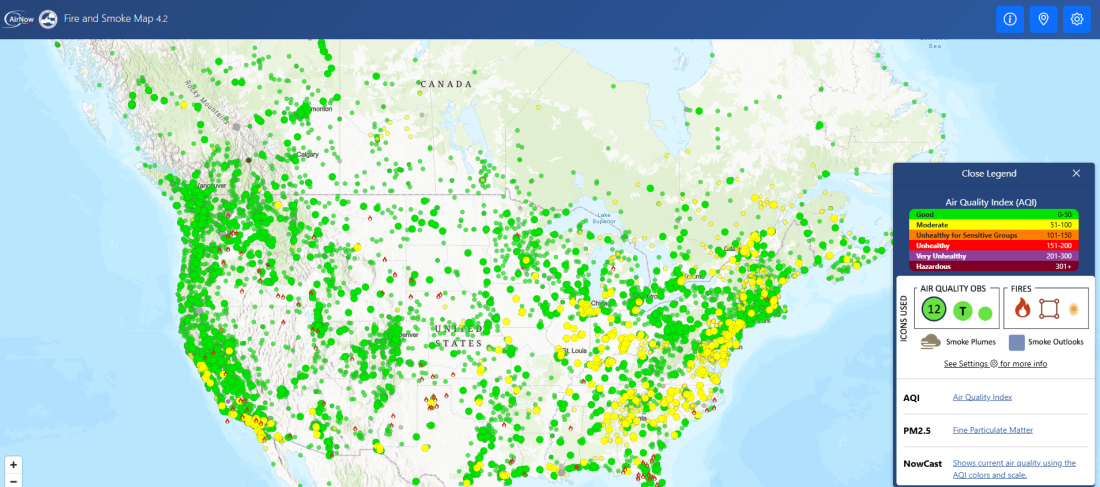
Wildfire and smoke maps, like the one on the federal government’s fire.airnow.gov website, have origins in research partly funded by the U.S. Forest Service. These tools are vital for monitoring wildfire conditions and informing the public. Developed with contributions from the University’s Environmental and Forest Sciences department, the maps provide real-time updates essential for predicting smoke movement and concentration of harmful particles.
Tension at the University of Washington
The University of Washington ranks among the top public universities in federal research funding. With President Trump canceling or suspending substantial National Science Foundation and National Institutes for Health financing, concerns are growing. This uncertainty extends to departments such as UW’s School of Environmental and Forest Sciences, especially with proposed U.S. Forest Service funding cuts and reorganizations. As the West anticipates a severe wildfire season, the impact could be immediate.
Focus on Wildfire Crisis
Ernesto Alvarado, a fire ecologist at UW, highlights how urgent the wildfire crisis is across the United States. Utilizing technology, Alvarado and his team track wildfire smoke and its potential health implications, especially for vulnerable populations. These advancements are the result of longstanding Forest Service research.
Seattle Smoke Lab Faces Closure
The Seattle smoke lab, integral to this research, is slated for closure in a controversial Forest Service reorganization. This plan involves relocating headquarters and consolidating regional offices, which raises concerns among scientists like Morgan Varner, formerly of the lab. Relocations threaten Seattle’s status as a key location due to its research resources and infrastructure.
Defending the Reorganization
Forest Service Chief Tom Schultz defends the reorganization, citing a $3 billion maintenance backlog as a major factor. While closing and consolidating facilities may save funds, Schultz insists that research remains a priority. Despite this, President Trump’s budget proposals, which eliminate research and development funding, clash with Schultz’s assurances. Ultimately, Congress will decide the agency’s budget, with some opposition already evident.
Western Concerns and Skepticism
In the American West, Trump’s proposed changes raise concern due to their potential drastic impacts. Thousands left their roles in the Forest Service last year, and communities rely on USFS resources for fire response and prevention. Washington’s Public Lands Commissioner, Dave Upthegrove, relies on local research labs to support wildfire management. He initially expected improved cooperation following the reorganization proposal. However, recent communication silence from the Forest Service has increased anxiety.
Potential budget and reorganizational changes compound worries of accelerating wildfire threats, especially given the already vulnerable regions. Wildfire management research and support remain critical as climate change intensifies these challenges.
 Communities Continuing Recovery from Hurricane Helene Explored through Graphic Novel
  Fire Amoeba Discovery Challenges Limits of Complex Organisms
  Fat Bear Week 2026 Highlights: Meet the Competitors
  Annual Fat Bear Week Begins at Katmai National Park
  Understanding Hurricane Development
  Impact of Sleep Types on Disease Risk