Assessing Damage from Recent Coastal Threats
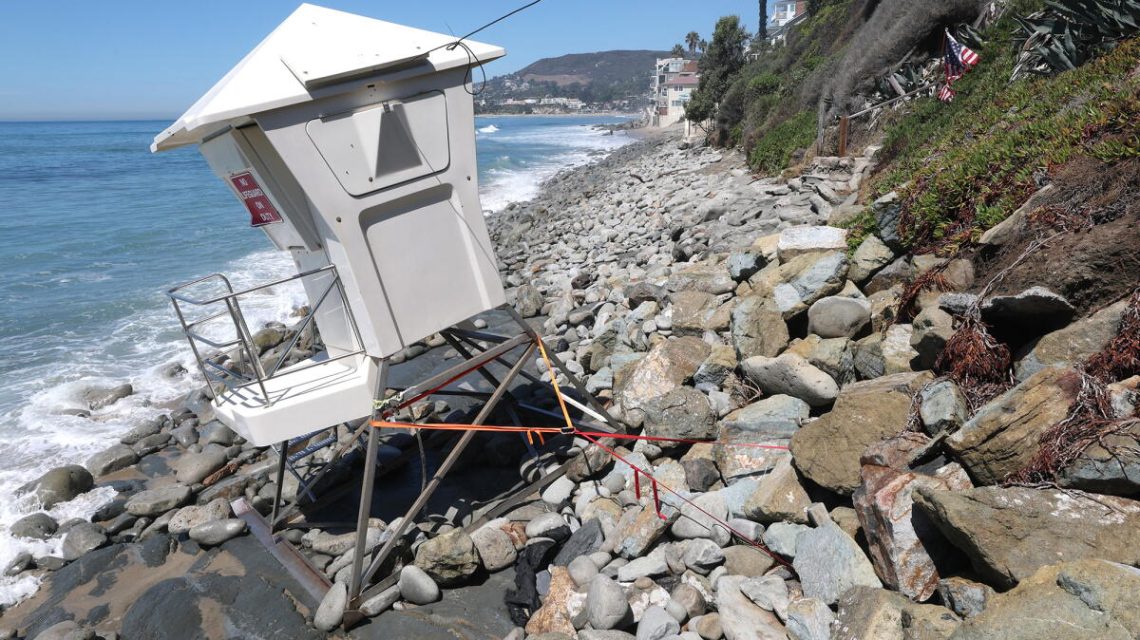
Coastal communities in Southern California face the aftermath of recent waves and flooding. From south Orange County to Malibu, homes have been inundated and significantly damaged. Erosion has also affected the coastline from Carlsbad to Long Beach.
Recently, Laguna Beach, Dana Point, and Carlsbad declared a local state of emergency. This action was taken due to coastal erosion and sand loss resulting from a south swell induced by Hurricane Marie. The hurricane developed during an unusually active eastern Pacific hurricane season, often linked with El Niño.
Laguna Beach City Manager Dave Kiff reported varying levels of damage along the coast, emphasizing concerns regarding sand replenishment projects. These projects are ongoing from Newport to Seal Beach, and further along the southern coast as well.
“Our coastal cities are experiencing serious damage, and the county is mobilizing our emergency response,” said Katrina Foley, Vice Chair of the Orange County Board of Supervisors.
Train tracks in San Clemente face risks as severe erosion and strong ocean waves strike, according to transportation officials. Metrolink emphasized the seriousness of the situation with a video post showcasing the damage.
In San Diego County, Carlsbad has also declared a local emergency to protect Carlsbad Boulevard from erosion’s impacts.
Future Threats and the Influence of El Niño
An upcoming weather phenomenon related to El Niño, known as a “coastally trapped Kelvin wave,” is expected to impact the U.S. West Coast. This could exacerbate already severe conditions with more damaging storms anticipated this winter.
Government forecasts indicate a 75% probability that this El Niño will be stronger than any recorded since 1950. The National Oceanic and Atmospheric Administration predicts a 98% likelihood of it being very strong for the period ending in December.
Understanding Kelvin Waves
Kelvin waves, central to El Niño, are ocean waves linked to climate patterns that significantly influence global weather. These waves contribute to atmospheric changes due to heated ocean waters in the central and eastern equatorial Pacific.
While considered obscure until recently, coastally trapped Kelvin waves have been recognized for decades. They follow coastal boundaries, and in the Northern Hemisphere, the shore lies to the right of these waves. Computational advancements now allow scientists to model and track these phenomena in real time.
“Now scientists have a way of seeing these things unfold in real time,” noted Dillon Amaya, an assistant professor specializing in marine sciences.
As El Niño progresses, typical east-to-west equatorial trade winds weaken or reverse, allowing warmer waters to shift east from the western equatorial Pacific to cooler areas, like near Peru, propelled by Kelvin waves.
Impacts on Sea Levels
Upon reaching South America, Kelvin waves split, with one path heading toward California. As they become coastally trapped, these waves can elevate sea levels by up to 12 inches for extended periods.
When combined with weather events or storms, the increased sea levels can significantly raise flood risks and promote beach erosion, as evidenced recently with houses along the Southern California coast being severely impacted.
Expected Timing and Ongoing Impact
The coastally trapped Kelvin wave is currently near Mexico’s west coast. Expected to reach the Gulf of California shortly, it could arrive in Southern California by early October.
The full trip from the equatorial Pacific up through the gulf to Alaska spans approximately 15,500 miles, taking about 120 days.
This wave will not appear like a surfable crest, yet it will likely raise sea levels off the California coast by another 6 inches. This subtle rise can further exacerbate coastal issues when combined with additional storm effects.
“High water levels, especially with hurricane swells and tides, severely damage coastal properties,” observed Jonathan Warrick, a research geologist.
California’s coast has already witnessed a foot of sea level rise over the past 125 years due to global warming and polar ice melts, combined with recent high tides.
 Urgent Archaeological Efforts in Quinhagak Stay Ahead of Erosion
  Concerns Rise Over NIPSCO Permit In Jasper County
  Reader Reactions on Grizzlies and Data Centers
  Managing the Crisis of Drying Rivers
  Efforts to Protect Great Lakes from Invasive Carp Resume
  Study Reveals Air Pollution Surge After U.S. Stops Monitoring