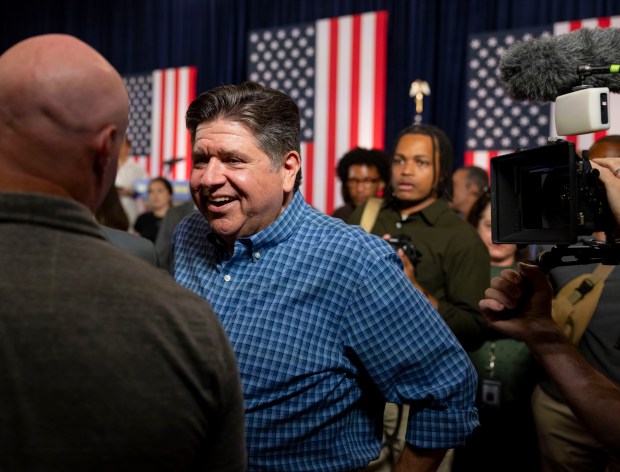
Labor Day traditionally signals the start of the fall election campaign period, especially in Illinois where statewide races are battlefields for key political figures. Major candidates shift their attention from downstate events to campaigning in the Chicago area, a region crucial in determining election outcomes.
This year’s campaigns for governor and U.S. Senate reflect multiple distractions that affect the candidates’ messaging. These distractions include national political dynamics, internal party conflicts, funding challenges, and future political ambitions. Among Chicago voters, interest is further diluted due to a pending mayoral race, perceived by many as more significant than the November state election.
Governor’s Race
In the gubernatorial race, Democrat JB Pritzker seeks an uncommon third term while contemplating a future presidential bid. His opponent, Republican Darren Bailey, attempts to distance himself from the unfavorable-Illinois perception of former President Donald Trump and recover from his past electoral defeat against Pritzker. An additional element in the race is the candidacy of independent Collin Corbett, a former GOP operative.
Pritzker launched his reelection campaign with considerable self-funding, having invested $440 million since first winning the governor’s office in 2018. Contrastingly, Bailey operates on a limited budget, relying heavily on social media to promote his message centered around affordability. However, concrete policy plans remain unspecified, particularly on pivotal issues such as property tax reform and toll reductions.
Bailey’s proposals, like reducing reliance on property taxes for school funding, face feasibility challenges without significant state tax increases. His stance against toll hikes also involves unresolved financial complexities.
Battling both his political adversary and his previous controversial positions, Bailey aims to unify Illinois on common issues, downplaying prior affiliations with Trump. However, disagreements remain, as Bailey supports Trump’s tariffs despite their adverse impact on local agricultural markets.
The Republican campaign sees internal competition and ideological clashes as Bailey navigates party dynamics post-chairman resignation and challenges in party funding and leadership.
U.S. Senate Race
Parallel to the governor’s race is the U.S. Senate contest to fill the seat of retiring Sen. Dick Durbin, featuring Democrat Juliana Stratton and Republican Don Tracy. Stratton’s approach has minimized Tracy’s presence by largely overlooking him, while Tracy attempts to portray Stratton within a progressive narrative despite limited resources. Notably, both key GOP figures hail from areas emphasizing the party’s regional divide.
Tracy faces the strategic challenge of expanding his campaign beyond his regional base in Springfield to a broader voter demographic in Illinois.
The rhetoric heats up in the gubernatorial sphere while the Senate race remains less intense. Stratton, with Pritzker’s support, manages her statewide campaign with relatively minimal activity amidst criticisms regarding her campaign priorities.
In contrast, Tracy criticizes Stratton’s absence from significant farm events, stressing the importance of engagement across all state regions.
As these candidates navigate intricate political landscapes, Illinois voters remain focused on fundamental issues impacting their lives while observing the evolving political dynamics.
 The Cost of Challenging Beijing
 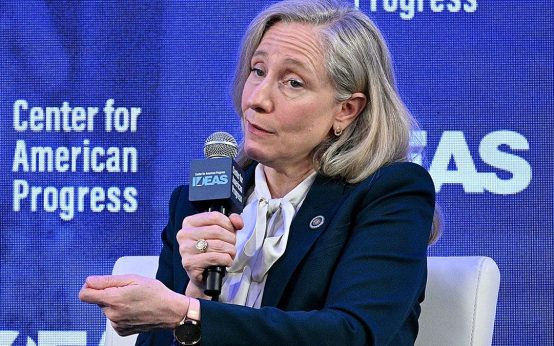 Analyzing Midterm Elections and Party Dynamics
 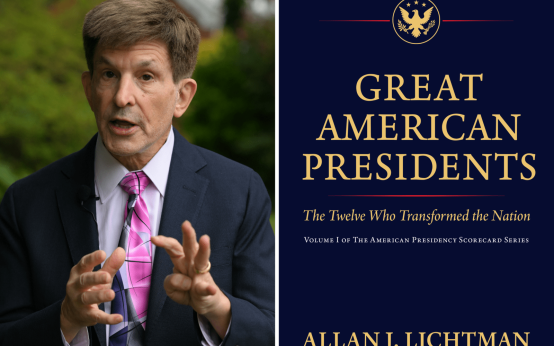 Allan Lichtman’s Framework for Assessing Presidential Greatness
 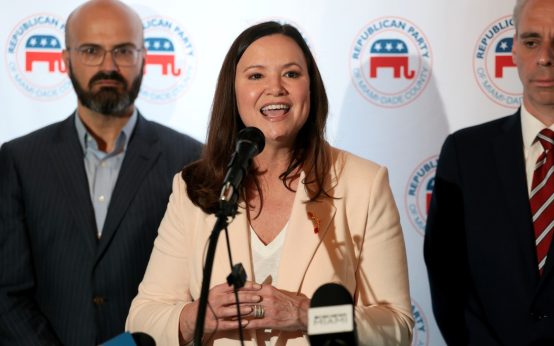 Florida Senate Race Tightens as Recent Polls Show Dead Heat
  Ethics Complaint Targets Colorado Representative Lauren Boebert
  Ken Paxton’s Campaign Funding and Polls