
On August 20, the United States deported over 160 individuals to Haiti, marking the first removal flight since the cessation of Temporary Protected Status (TPS) for around 350,000 Haitians. The flight, which carried some former TPS recipients, arrived in Cap-Haïtien instead of Port-au-Prince due to persistent unrest making the capital’s airport hazardous for U.S. flights.
TPS permits eligible foreign nationals in the U.S. to stay and work legally when their home country is deemed unsafe. Haiti qualified for TPS following the 2010 earthquake that resulted in 220,000 fatalities and displaced 1.5 million people. For 15 years, Haiti received TPS renewals, but in June, following a prolonged legal battle that reached the Supreme Court, TPS protection for Haitians ended.
Proponents and detractors of TPS often reference the 15-year span to support their arguments, yet they overlook a crucial question: What action is necessary when a crisis continues indefinitely?
The author, whose parents migrated from Haiti to the U.S. in the 1980s, experienced firsthand how migration can commence well before a disaster occurs. In her role, she oversees the creation of networks, both underwater and terrestrial, that connect people and economies. This work emphasizes resilience, redundancy, and the ability to reroute when faced with failure. A system that cannot fully recover becomes more vulnerable and risks not regaining full functionality without adequate investment.
The Internal Displacement Monitoring Center reports that from 2008 to 2023, 44 natural disasters in Haiti caused approximately 2.9 million internal displacements in a nation of about 10 million. Recovery from these disasters is seldom complete before another calamity strikes. Concurrently, Haitian governments have struggled with political instability, elite control of the state, and insufficient investment in rural infrastructure, where electricity is accessible to less than 10% of the population.
By the mid-2010s, due to limited electrification, 80% of urban households depended on charcoal, exacerbating wood demand and accelerating urban migration. This migration occurs despite cities lacking sufficient employment, housing, and public infrastructure.
Such scenarios repeat globally, where climatic and natural disasters intersect with overburdened systems. In response, Congress should create guidelines for transitioning from temporary relief to permanent solutions when a nation faces a prolonged crisis. A suggested two-phase national stability review, led by the Departments of Homeland Security and State, would begin after a country has held TPS designation for 10 consecutive years.
The first phase would involve a comprehensive country review to determine if the crisis has become chronic, focusing on the persistence of conditions, possible compounding factors, safety of return, and institutional capacity for returnees. If deemed chronic, a second phase would assess individuals’ eligibility for permanent residence. Candidates with continuous 10-year TPS status would be evaluated based on their substantial U.S. ties.
Such measures would target relief to those with long-standing protection and deep connections in the U.S., avoiding generalized or automatic status changes. While existing legislative efforts like the American Dream and Promise Act focus on specific nationalities and amnesty dates, a national stability review would prioritize whether the TPS framework addresses the enduring crisis properly.
The U.S. can’t promise permanent residency to the global population vulnerable to environmental issues, inadequate infrastructure, or governance challenges. A national stability review would address protracted protection, preventing indefinite TPS renewals or sudden termination, thereby recognizing systemic or structural crises beyond isolated events like earthquakes or hurricanes.
 Mississippi State Auditor Shad White Announces Gubernatorial Bid
 Tragic Car Crash in Southern California Claims Teen Life
 Trump Dismisses Third Impeachment Prospects
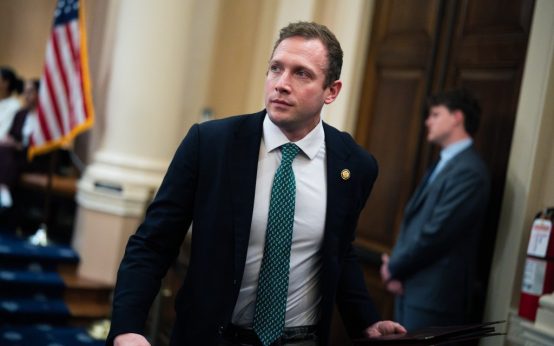 Custody Dispute Involving Rep. Max Miller Delayed
 Attorney General Addresses Post-Midterm Democratic Threats
 Senator Elizabeth Warren and the Future of Crypto Regulation