Annual Hypoxic Zone in Gulf of Mexico
A vast low-oxygen area, commonly called a ‘dead zone,’ has formed once more in the Gulf of Mexico along the U.S. coast. This information was released recently by the National Oceanic and Atmospheric Administration (NOAA). However, scientists noted that the affected region was smaller than expected due to a tropical storm disrupting conditions.
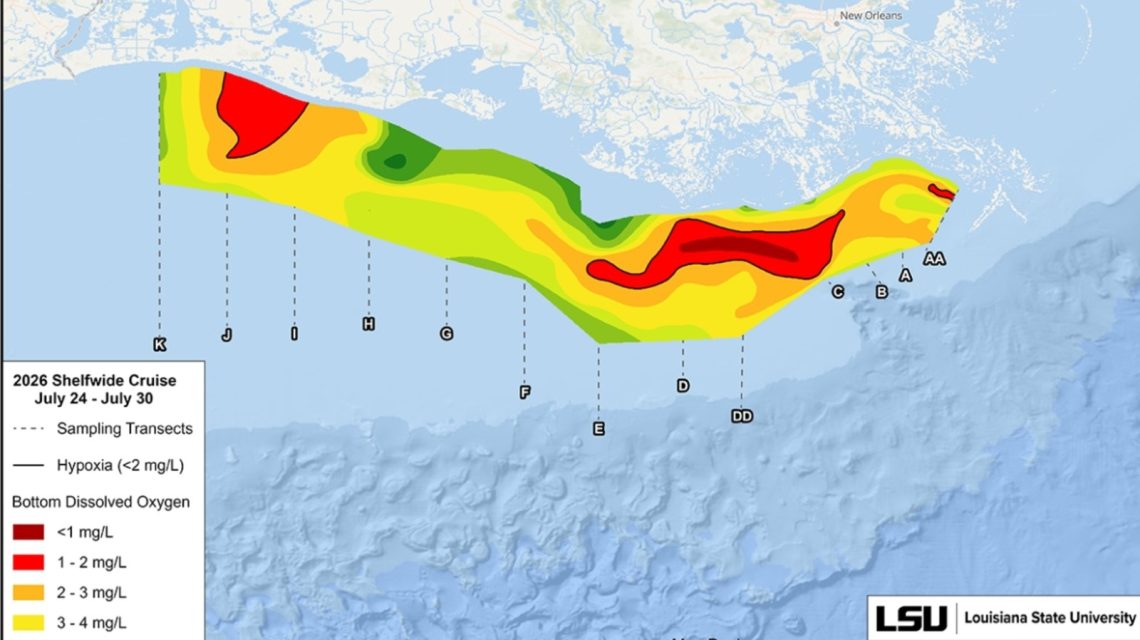
The hypoxic zone, characterized by dissolved oxygen levels too low to support most marine life, measured approximately 1,332 square miles during a July survey. This area is comparable to the size of Rhode Island and marks the second-smallest dead zone in forty years of monitoring. Fish, shrimp, and other marine organisms either flee or find survival challenging when oxygen becomes scarce.
NOAA released a map showing the zone stretching across parts of the northern Gulf near Louisiana. Nutrient-rich waters from the Mississippi and Atchafalaya rivers contribute to seasonal oxygen depletion. Areas marked in red on the map indicate dissolved oxygen levels of 2 milligrams per liter or less, which are considered hypoxic and unsuitable for many species living on the seafloor.
Causes of Hypoxic Zones
Hypoxic zones typically form when excess nutrients, notably nitrogen and phosphorus from agricultural runoff, wastewater, and stormwater, enter rivers and coastal waters. These nutrients fuel large algal blooms that deplete oxygen as they decompose. Bacteria breaking down deceased algae consume oxygen, leaving bottom waters with dangerously low levels, especially during warm months.
The ecological and economic consequences have kept scientists tracking this phenomenon over decades. Prolonged hypoxia can change migration patterns, reduce habitat, and impact commercially important fisheries. NOAA underscores the importance of understanding these impacts for industries dependent on healthy Gulf ecosystems, such as seafood, recreational fishing, and coastal tourism.
Marine Life at Risk
Species living near the seafloor face significant challenges when hypoxia occurs. According to NOAA, these conditions make critical habitats unavailable, forcing animals to either relocate or suffer stress impacting growth and reproduction. Fish, shellfish, coral, and aquatic plants are vulnerable to low oxygen levels.
Mobile animals, such as fish and shrimp, may escape gradually depleting oxygen by relocating. However, their movement can crowd populations into smaller areas and disrupt feeding and breeding behaviors. Less mobile organisms face greater risks as they have fewer options to avoid hypoxic waters.
Whales and dolphins are less vulnerable due to their ability to breathe air and swim away from affected areas. Yet, dead zones can indirectly affect them through alterations in marine food webs, changing prey abundance or distribution.
Repeated dead zones could trigger broader impacts throughout the ecosystem, affecting species vital to commercial fisheries. NOAA and partners continue surveys and improve models to understand these effects better.
Reasons for a Smaller Hypoxic Zone
The smaller measurement does not imply reduced severity of hypoxia. Tropical Storm Bertha passed through before the annual survey, stirring the waters and mixing oxygen-rich surface waters downward. This reduced the visible extent of low oxygen during measurements.
Earlier forecasts suggested a larger dead zone, roughly 7,027 square miles in size. This discrepancy emphasizes how weather events influence hypoxic waters’ formation and breakup.
NOAA’s Timothy Petty highlighted the importance of understanding interconnectedness between land, waterways, and oceans. Data from 40 years inform management strategies to mitigate future impacts.
Other Hypoxic Zones
These zones are not exclusive to the Gulf of Mexico. Recurring low-oxygen events have been noted in several U.S. waterways, including Chesapeake Bay, Long Island Sound, Lake Erie, and the waters off Washington and Oregon. Excess nutrients often fuel algal blooms that lead to these conditions.
Chesapeake Bay is closely watched, as low-oxygen conditions threaten fish and blue crab populations. Long Island Sound experiences summertime dead zones linked to nitrogen pollution. Seasonal hypoxia affects parts of the Pacific Northwest coast and Lake Erie, indicating that hypoxic waters are an extensive environmental challenge across coastal and inland U.S. ecosystems.
Future Actions
Federal agencies are working towards reducing the Gulf’s dead zone to 1,900 square miles by 2035. Reduction in nutrient runoff within the Mississippi River watershed is key. Though this year’s measurements fell below the target, factors like Tropical Storm Bertha heavily influenced the results, signaling that nutrient issues persist.
 Chumash Initiative for a Unique Marine Sanctuary Gains Momentum
  Tiger Shark Catch in Cape Cod Highlights Warming Seas
  North Koreans Encouraged to Consume Dog Meat Soup Amid Heat Wave
  Federal Appeals Court Reviews Lobster Industry’s Defamation Lawsuit Against Aquarium
  Energy Costs in California: A Call for Change
  Rescue of a Baby Hippo Highlights Colombia’s Invasive Species Issue