
Google, renowned for transforming information access, faces a new challenge as AI rivals emerge. This has prompted Google to invest heavily in securing its position amidst technological disruption. Once a small startup, Google has grown dramatically, amassing over $280 billion in revenue by 2022. Its supremacy in search ads turned it into a financial powerhouse, recognized as a verb itself. Marissa Mayer, a former Google executive, reflects on the company’s early growth from a fledgling startup to dominating the search engine market.
Despite its success, Google now contends with internal and external AI innovations reshaping technology landscapes. This includes developing transformer technology, critical in AI advancements. Google’s AI efforts hold potential benefits but also create risks, demanding significant investment to maintain competitive edges.
In recent times, Google’s stock experienced a substantial drop due to investor concerns about its earnings and AI restructuring of search functions. This scenario echoes the innovator’s dilemma, a theory suggesting that embracing disruptive technology might jeopardize existing profitable ventures.
Innovator’s Dilemma and Google’s Response
The Innovator’s Dilemma, articulated by Clayton Christensen, suggests that firms thriving on existing technologies might falter when new, disruptive technologies arise. Google exemplifies this dilemma. Ensuring business continuity while adapting to AI advancements could risk current revenue streams.
OpenAI’s release of ChatGPT marked a shift in information retrieval, challenging Google’s model. Google’s Chief Scientist, Jeff Dean, highlighted how search business perceptions influenced the slow rollout of their own chatbot technologies like Meena, leading to missed opportunities. Though innovating AI, Google’s cautionary approach reflects the tension between established business success and new technological frontiers.
Google’s swift action with Gemini, its AI chatbot, demonstrates a shift in Google’s strategy, acknowledging the necessity to pivot in an evolving tech environment. However, the ongoing question is whether Google will maintain its dominance in this new era.
AI Disruption and Google’s Position
Notable analyst Benedict Evans notes that AI forecasts a platform shift, providing opportunities for challengers. This shift could weaken Google’s grip on the search engine market, and its historical network effects may not translate into the AI domain. Moreover, Google’s monopoly in search is being scrutinized through a federal ruling questioning tactics that sustained its dominance.
Google’s immersion in platform development, covering devices and integral online services, ingrains it in everyday life. Yet, with AI, search competitors propose alternative methods of engagement, potentially reducing Google’s search dominance.
AI’s potential in self-improvement and creating a profound competitive divide remains to be explored. Some experts, like Mayer, anticipate multiple powerful market players, indicating a transition from a singular monopolistic presence.
Advertising Changes with AI Integration
AI not only disrupts search but also the advertising mechanisms underpinning it. Google’s earnings highlight slower growth attributed to AI-driven search modifications. With significant investment in AI infrastructures, the leap poses risks and potential for lucrative returns. CEO Sundar Pichai emphasizes innovation as the focal path, reinforcing Google’s commitment to technological advancement.
As Google’s AI initiatives evolve, the challenge lies in retaining advertising momentum. Mayer envisions evolving ad formats blending traditional features with new AI integrations, while contemplating the broader economic impact and advertiser behavior shifts.
Future of AI and Market Potential
Beyond response to immediate competition, the broader AI landscape offers unexplored opportunities. Investors eye vast AI potential beyond search, leaping into applications once deemed speculative. Evans suggests utility may not always equate to monetary success, drawing parallels to past tech innovations.
AI infrastructure investments could lead to diversified revenue streams. Google’s presence across segments positions it competitively, although success in AI business deployment remains uncertain amidst varying competition scenarios.
In summary, Google’s proactive AI integration underscores both inherent challenges and substantial opportunities. By betting on AI, Google aims to sustain and potentially enhance its profitability, potentially redefining its legacy beyond its search origins.
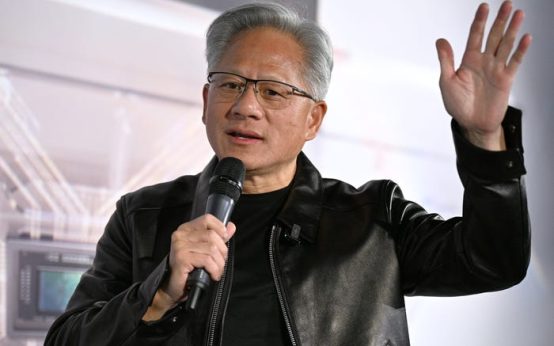 Nvidia CEO Jensen Huang Reinstatement Sparks Market Movements
 Concerns Arise Over AI-Powered Toys and Child Safety
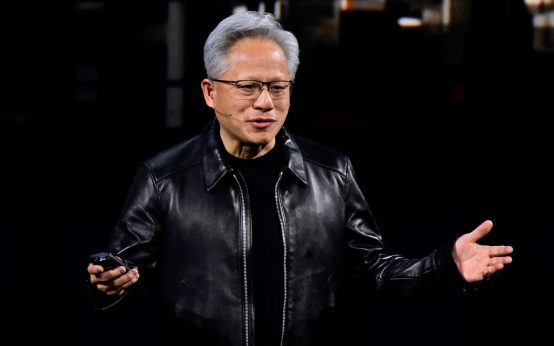 Analysis of Jensen Huang’s Return as Nvidia CEO
 Nvidia’s Market Impact and the AI Investment Bubble
 The Success and Impact of Grand Theft Auto VI
 How Apple Sells Simplicity