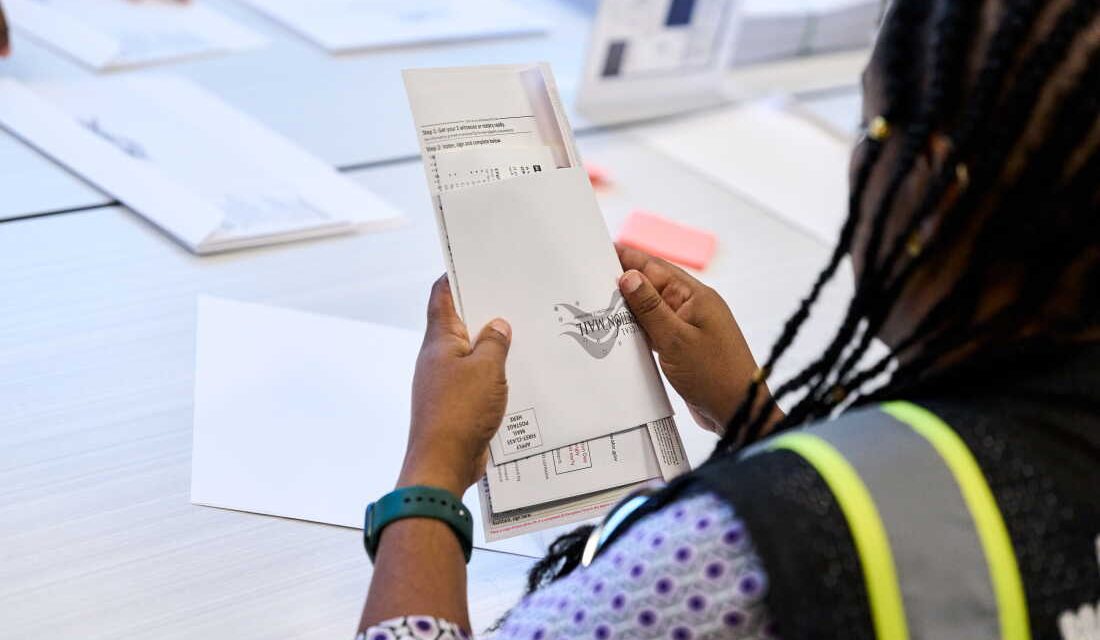
An employee from the Wake County Board of Elections prepared a mail-in ballot for sending in Raleigh, N.C. Significant risks now accompany relying on the U.S. Postal Service (USPS) to return mail-in ballots close to Election Day. These include the possibility of a late postmark, which might lead to ballot rejection.
Recent changes to the mailing system, initiated last year, have sparked concern. Election officials have started advising voters to consider alternative ways of returning their ballots. These methods include delivering them directly to local election offices or utilizing available drop boxes.
Such recommendations arise from decreasing trust in the USPS’s ability to deliver ballots promptly. President Trump’s efforts to limit mail-in voting for midterm elections heightened these concerns, although the Supreme Court blocked this attempt.
Election officials often determine if a ballot was mailed by Election Day through the postmark date stamped by USPS.
The USPS plans to introduce special postmarking procedures a week before Election Day. These measures aim to improve mail services for federal general elections. However, voters are advised to mail ballots at least a week before their state’s deadline. In states with late-arriving mail ballot grace periods, obtaining a manual postmark from a local post office ensures timely stamping.
Impact of Mailing System Changes
Since April 2025, USPS launched cuts to daily mail pickups and processing changes, affecting predominantly rural post offices. Under the “Regional Transportation Optimization” (RTO) initiative, this is part of a decade-long plan started in 2021 to stabilize USPS finances. Consequently, a date may not be automatically stamped on envelopes on the collection day, whether from a letter carrier, post office, or collection box.
To address mail-in ballot concerns, USPS instructed affected post offices to separate ballots from Oct. 26 onwards. Managers will manually add postmarks on the day ballots are received. During this year’s primary elections, increased ballot rejection occurred, as no such procedures were in place.
Elena Patel of the Brookings Institution finds USPS’s measures for delaying postmarks encouraging. Yet, unpredictability remains in how well post offices will execute these measures, especially where staffing is limited.
Further USPS Measures and Voter Concerns
Analyses predict that 43,000 to 55,000 ballots could be late due to RTO, increasing potential rejections. Patel, formerly with the Postal Regulatory Commission, highlights the financial strain of managing a large postal network.
- Starting Oct. 24, some post offices might adjust opening and closing times by a half-hour.
- Drive-through lanes may be set up for manual postmarks.
- From Oct. 26, delivery of ballots will be expedited.
USPS responded to inquiries by stating that extraordinary measures are thoughtfully timed before each General Election, based on internal considerations. The agency claims a track record of over 150 years of successful election mail deliveries.
Nevertheless, some mail-dependent voters find themselves challenged by the mailing system. Michelle Sparck from Get Out the Native Vote in Alaska notes the complexity faced by absentee voters in remote villages.
The primary cause for ballot rejection involved postmarking delays. Sparck emphasizes that reliable postal operations are unpredictable in Alaskan villages, even without adverse weather conditions.
Encouraging voters to act early, Sparck advises identifying early voting opportunities to avoid last-minute ballot submissions. By submitting ballots in advance, voters can ensure their inclusion in the official chain of custody.
 Polls Indicate Shift in Voter Support for Trump and Focus on Senate Control
  Will County Sheriff Election: Candidates Outline Their Plans and Priorities
  Obama Revives ‘Hope’ Slogan to Energize Democratic Voters
  Young Graduates Face Uncertain Paths to Career Success
  Texas AG Ken Paxton Under Pressure Over Debates
  Controversial Rap Song Sparks Investigation Amid French Protests