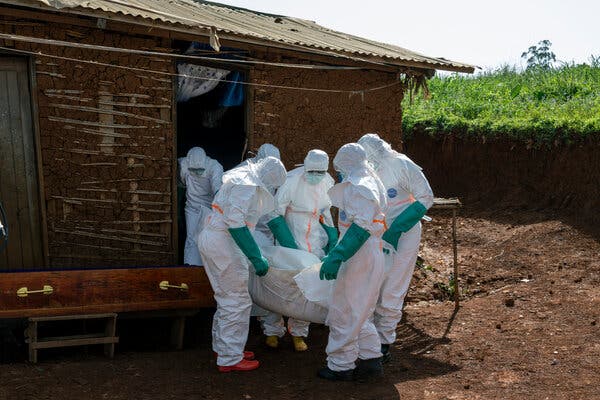
The gold mining industry has sustained Mongbwalu, a secluded hill town in the Democratic Republic of Congo’s Ituri province, for many years. Recently, it has also played a role in the spread of a severe Ebola outbreak in the area.
After an attack on his farm by the local Islamic State affiliate, Mumbere Saidi traveled 200 miles to reach the gold mines in northeastern Congo. This journey took him across a dangerous war zone. In Mongbwalu, he found laborious work as a gold miner. During prosperous times, Saidi would send small amounts of money to his family. But in leaner times, feeding his wife and baby daughter became a challenge. He felt secure in his new surroundings until the disease struck him at home last week.
“The disease got him,” said Saidi’s brother, Kondu Ganda, referring to the Ebola virus without mentioning it by name due to local stigmas.
Red Cross workers clad in protective gear removed Saidi’s disinfected body from his home for burial. Over the century, Mongbwalu has attracted many searching for employment. Now, this town marks the epicenter of a substantial Ebola outbreak. The outbreak, third largest on record, is believed to have started as early as February in the town. Authorities only detected it on May 15. This delay was partly because the outbreak stemmed from the Bundibugyo virus, a variant of Ebola for which no treatment exists.
Efforts continue to contain the outbreak. However, the gold mines’ intrusion into remote areas and the movement of miners between regions complicate control measures. Health authorities emphasize the urgent need for detection and intervention to prevent further spread.
 Tons of Aid Flow into Colombia as Earthquake Rescue Efforts Intensify
 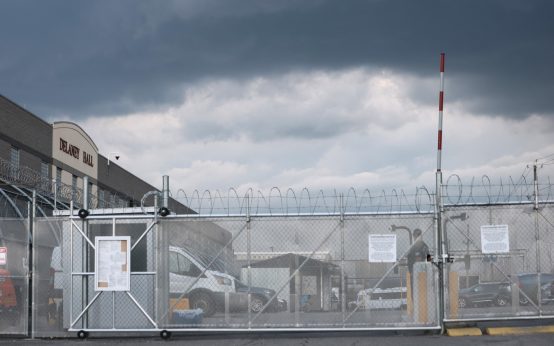 Controversy Over Unreported Death of Former ICE Detainee
  Marco Rubio Shares Lighthearted Views on Diets and Memes
 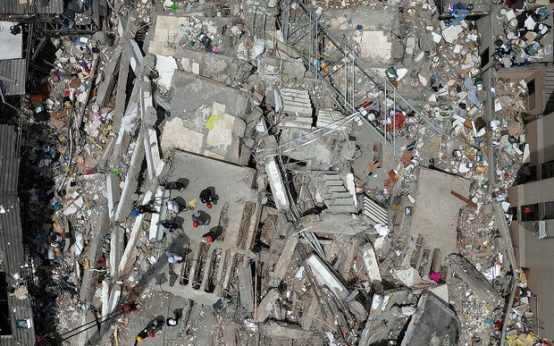 Colombian Earthquake Triggers Aid Initiative Amid Search for Survivors
  Trump’s Economic Sanctions Target Iran Amid Peace Talks
 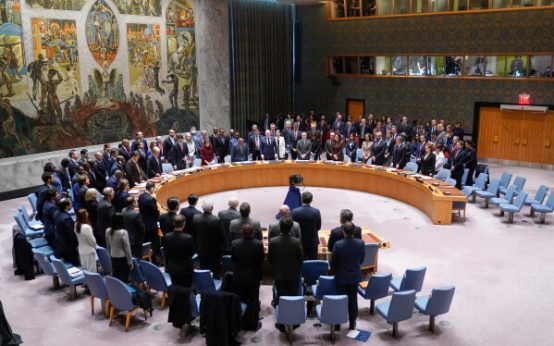 Ukrainian Forces Target Russian Naval Base Amid Growing Tensions