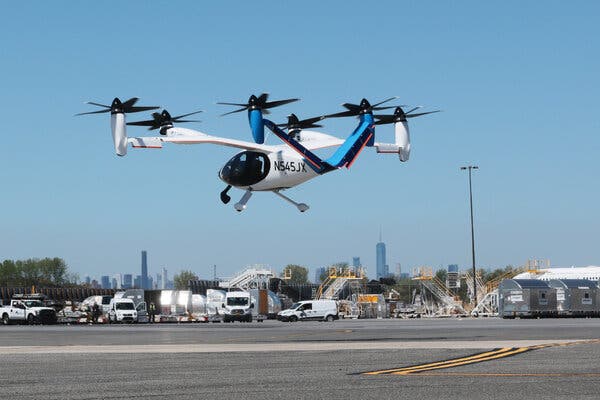
In April, a new electric aircraft flew from Kennedy International Airport to Manhattan, completing the journey in about ten minutes. The aircraft, developed by Joby Aviation, resembles both a helicopter and an airplane. This flight was part of a federal program designed to speed up the adoption of air taxis.
Many in the aviation industry believe these electric aircraft have the potential to replace helicopters and, in some cases, even cars. However, there are concerns about the cost and practicality of these aircraft. Despite industry promises of commercial flights, no company has received federal approval to carry passengers or cargo routinely in the U.S.
It’s not going to be like we look out our window and there’s flying cars everywhere.
Laurie Garrow, a professor of engineering at Georgia Institute of Technology, suggests that in the next two to five years, these aircraft could serve niche markets.
To encourage the use of electric aircraft, a program was launched encouraging collaboration between states, cities, and companies. In March, the Transportation Department chose eight projects across 26 states, including Joby’s demonstration flight in New York.
 Trump Suggests Renaming AI to ‘Super Intelligence’
  The Rise of Data Centers and AI Development
  How China Uses AI to Challenge U.S. Dominance
 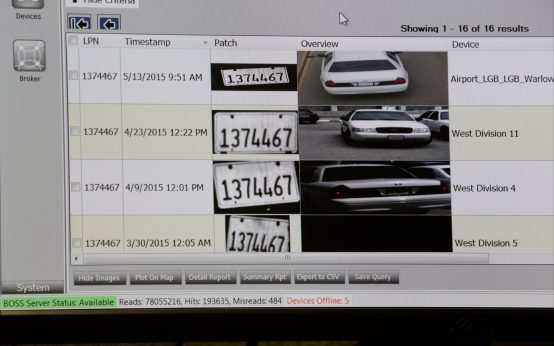 Controversy Surrounding Automated License Plate Readers (ALPRs)
 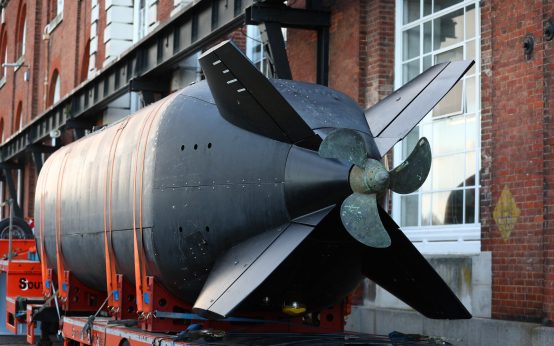 U.K. Test-Fires U.S. Torpedo from XV Excalibur
 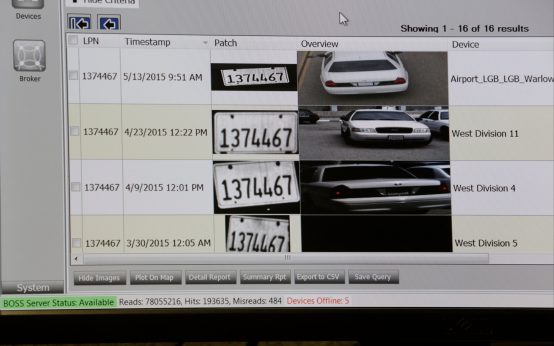 The Rise and Controversy of Automated License Plate Readers