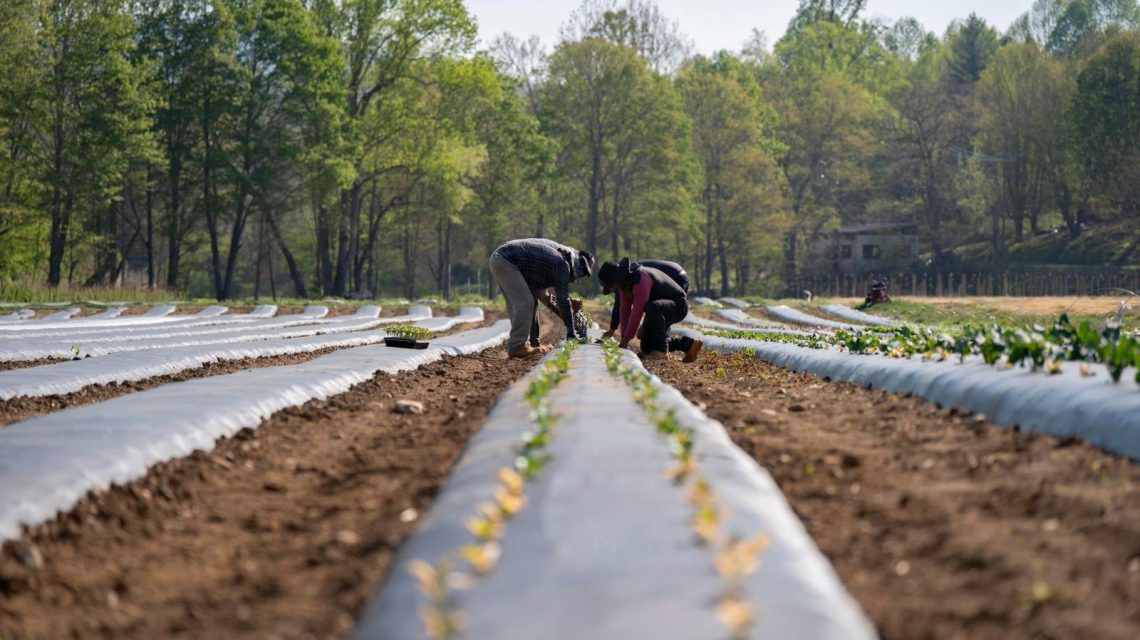
Judge Blocks Trump Administration Wage Rule
A federal judge annulled a Trump administration rule lowering wage requirements for foreign agricultural workers. The Labor Department’s failure to demonstrate that the changes protect U.S. farmworkers from lower wages led to this decision. The judge also criticized the bypassing of the usual federal rulemaking processes.
U.S. District Judge Kirk Sherriff found the Department of Labor’s 2025 overhaul of the H-2A wage system unlawful. This decision, however, stops short of immediately vacating the rule due to potential disruptions in the agricultural labor market. The court urged the department to develop a new wage-setting method, warning some employers might owe backpay if the new rates are higher.
“This decision recognizes the important and essential work of the men and women who put food on our tables and that farmworkers should get paid fairly,” Teresa Romero, president of United Farm Workers, stated.
Understanding the H-2A Wage Rule
The case focused on the Adverse Effect Wage Rate (AEWR), the minimum wage for H-2A visa program workers. Federal law requires this wage to prevent adverse effects on similar U.S. workers’ wages and conditions. Historically, wage rates relied on USDA farm labor data and regional averages.
When the USDA stopped its Farm Labor Survey in 2025, the Labor Department issued an interim final rule to change wage calculations. This rule cut many farmworkers’ wages significantly, depending on their state. The DOL anticipated a $2.46 billion annual transfer in wages from workers to employers.
The rule introduced a two-tier wage structure, switched to a different wage survey, and created a “housing adjustment” reducing required wages. This, critics said, allowed employers to lower pay for higher-skilled duties. The department acknowledged these changes could lower wage rates for H-2A workers.
Judge’s Reasons for Rejection
The ruling focused on whether lower H-2A wages would affect American farmworkers’ earnings. The judge ruled the administration didn’t justify low wage levels for most H-2A workers compared to market averages. About 92% of H-2A roles were set at a tier using the 17th percentile of workers’ earnings, not averages.
Critics said the “housing adjustment” could make H-2A workers less expensive than domestic ones. Law mandates housing provision for H-2A workers and some U.S. farmworkers. Reducing wages to cover housing costs might incentivize hiring more foreign workers.
The ruling also found issues with a new wage survey and job classification system. Critics argued it allowed incorrect lower-paying category allocation for workers performing higher-skilled duties.
“Farmworkers’ jobs are very difficult,” said Crisanto Serrano, a Sunnyside, Washington farmworker.
Connection to Trump’s Immigration Policy
The wage rule matched the Trump administration’s attempts to widen legal labor paths while enforcing strict immigration laws. The government argued farms depended on unauthorized labor. Reducing H-2A wage requirements aimed to shift to a legal workforce.
The Labor Department cited immigration enforcement efforts, expecting many unauthorized workers to leave, leading to shortages. The administration viewed H-2A reforms as a practical alternative to undocumented labor. H-2A visas, H-1B visas, and other programs were portrayed as substitutes for illegal labor.
However, the judge questioned the need for lower wages to facilitate this shift. Noting the H-2A program lacks numerical limits, the court observed increased participation and strong 2025 farm-sector income, weakening claims of high legal worker hiring costs.
The ruling stated, “The IFR fails to show why hiring more H-2A workers at then-current AEWRs was not feasible.”
Future Steps
The court ordered the Labor Department to devise a new wage-setting method and publish new wage rates promptly. The judge will monitor the case and expects an update within two weeks on the new rates’ progress.
The current rule remains effective temporarily, but officials must inform employers about potential future wage-adjustment responsibilities if new rates are higher than current ones. Deciding whether workers will receive back pay depends on the new wage schedule.
 American Public Opinion on Press Freedom
  Media Lawsuit Against Trump Administration for White House Ban
  The Cost of Challenging Beijing
  Analyzing Midterm Elections and Party Dynamics
  Allan Lichtman’s Framework for Assessing Presidential Greatness
  Florida Senate Race Tightens as Recent Polls Show Dead Heat