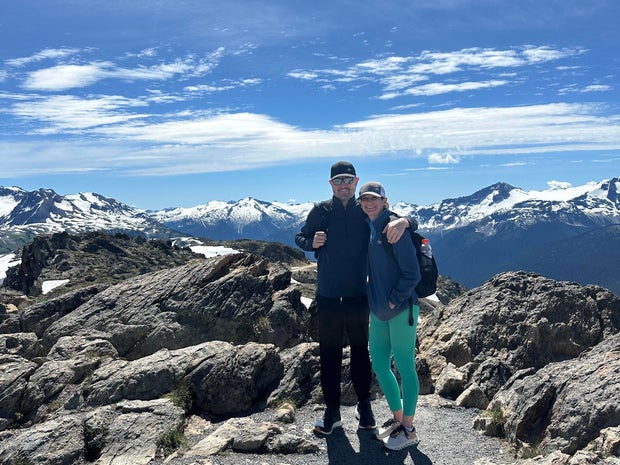
Ryan Goepel initially believed his knee pain during a September 2024 trip was merely a gout flare-up, a condition he often left unchecked. However, his concern grew when the pain didn’t subside. A visit to his doctor resulted in more than expected; blood tests revealed a critical condition. “She said, ‘Stop whatever you’re doing, and go straight to the hospital,'” Goepel recalled. His immune system was almost nonexistent.
At the hospital, further tests were conducted. An oncologist’s arrival unnerved Goepel. “I’m like, ‘Why are you here? I have a sore knee,'” he remembered. The response was grave: “Well, actually, you have leukemia.” His health was deteriorating rapidly, and doctors suggested hospice care.
His girlfriend, refusing to concede, sought a second opinion.
Goepel was transferred to Sylvester Comprehensive Cancer Center in Miami. There, he received a definitive diagnosis of acute myeloid leukemia (AML). Dr. Justin Watts, a hematologist-oncologist, explained that Goepel’s AML had a high-risk genetic profile. Standard chemotherapy therapy might not only be ineffective but could have been harmful.
Watts offered a glimmer of hope: a clinical trial still had a spot open. It experimented with two medications generally administered to older AML patients. Due to Goepel’s specific genetic markers, he appeared to be an ideal candidate. “Signing up for the trial was an easy decision,” Goepel said. The trial required daily medication for 28 days, alongside a week of infusions. Remarkably, Goepel entered remission just over two weeks after starting the treatment.
The trial data was promising. Of 36 patients, 25 saw significant improvement, with 19, including Goepel, reaching complete remission. Standard treatments see only about 44% of adverse-risk AML patients achieve similar results. Patients in the trial spent less time hospitalized and needed fewer transfusions.
While the trial presented encouraging outcomes, Goepel needed a bone marrow transplant to rebuild his immune system. His sisters were perfect matches, allowing a successful transplant in November 2024. Following three weeks in the hospital and 100 days of home isolation, Goepel faced some post-transplant challenges but remains cancer-free since the procedure.
Two years later, Goepel reflects on his extraordinary journey. He and his girlfriend married in November 2025, exactly one year after his remission. Now, he’s gradually re-engaging with life. “It’s not so much about normality but avoiding the constant fear of recurrence,” he explained.
 North Carolina Mother Trusted Intuition Before Son’s Diagnosis
 Hospital Ownership Drives Up Costs for Patients
 Understanding Lung Cancer Screening
 Maintaining Lifelong Knee Health
 Beauty Professional Faces Cancer Diagnosis
 Boy with Hearing Loss Experiences Joyful Moment with Hearing Aids