
Serena Murison from North Carolina felt an inexplicable intuition throughout her pregnancy. Despite multiple reassurances of a healthy pregnancy, she believed her unborn child might not walk. At 34, during her pregnancy with her son Rudy, everything appeared normal according to medical tests.
There were no red flags, nothing abnormal on ultrasounds, nothing anyone could point to medically,
Murison said. I just had this deep, persistent knowing that something was different. I couldn’t explain it, and honestly, I didn’t have any evidence to support it. I just knew.
Trusting the medical advice, Murison underwent an NIPT test, a blood screening for chromosomal conditions, which showed no issues. Despite others labeling her concerns as anxiety, she felt convinced her son wouldn’t walk. She struggled to dismiss her persistent intuition.
Everything objectively said that I was carrying a healthy baby, so I tried to convince myself that what I was feeling was just anxiety,
Murison recalled. But the feeling never really went away.
Ultimately, Rudy was diagnosed with LAMA2-related congenital muscular dystrophy, identified as a rare neuromuscular condition. This disease can lead to severe muscle weakness and developmental delays from infancy. A 2023 study in Neurology: Genetics showed that standing and walking are severely affected abilities. Similarly, a 2024 Swiss study reported that many with the severe form couldn’t achieve independent walking. The condition’s spectrum varies widely among patients.
It finally gave us an explanation for why his body worked differently and why he would not walk independently,
Murison stated. Getting that answer was devastating, but it also put a name to something I had somehow felt long before there was any way for me to know.
Murison highlights the balance between trusting maternal instincts and understanding their limits.
I don’t think I had some magical ability to diagnose my child before he was born,
she remarked. I couldn’t have known he had muscular dystrophy, but I knew my baby, and something in me was paying attention before I had the language or evidence to explain why.
She advises other parents to voice concerns about their unborn baby, even without supporting evidence.
Ask the question; keep paying attention,
she urged. You can trust what you’re noticing without needing to know exactly what it means yet.
 Hospital Ownership Drives Up Costs for Patients
 Understanding Lung Cancer Screening
 Maintaining Lifelong Knee Health
 Beauty Professional Faces Cancer Diagnosis
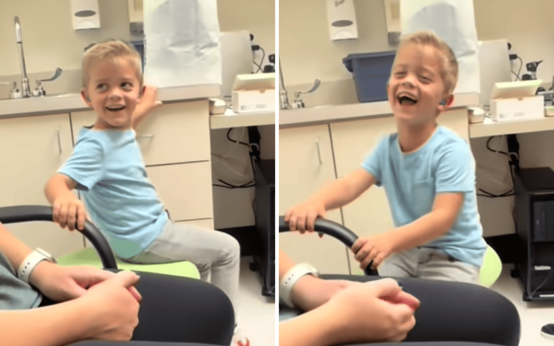 Boy with Hearing Loss Experiences Joyful Moment with Hearing Aids
 Gen Z Turns to Spiritual Practices in Modern Dating