During her time as deputy administrator of the U.S. Environmental Protection Agency under former President Joe Biden, Janet McCabe was instrumental in crafting a rule to regulate greenhouse gas emissions from power plants. Now, under President Donald Trump, the EPA is reversing these measures. McCabe expresses deep concern at the current administration’s actions to weaken and potentially undermine federal capabilities to address public health threats.
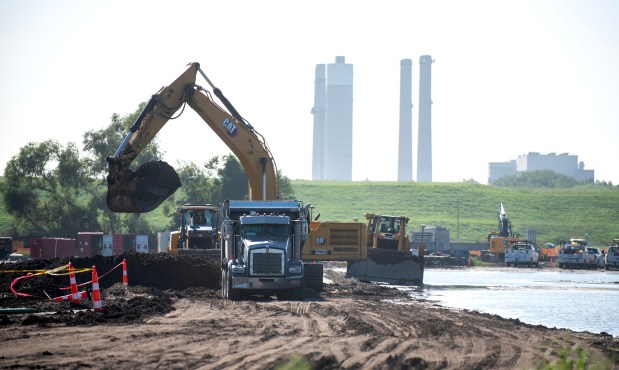
Construction activities proceed at a data center in Wheatfield, Indiana, against the backdrop of NIPSCO’s R.M. Schahfer Generating Station towers. EPA Administrator Lee Zeldin recently announced on September 14 the repeal of most Biden-era greenhouse gas requirements. This step follows the previous February repeal of the Greenhouse Gas Endangerment Finding. McCabe remains unsurprised, noting the consistent deregulation pattern since Trump assumed office.
Hana Vizcarra, deputy managing attorney at Earthjustice, also foresaw the EPA’s move, attributing it to the administration’s preference for coal, despite its higher cost. She remarks that repealing these regulations could substantially exacerbate climate impacts across the nation. The power sector stands as a significant greenhouse gas emitter, and rolling back on regulation is predicted to increase these emissions considerably.
The EPA claims that rescinding greenhouse gas standards will save substantial amounts. The latest action is projected to save $310 billion, with proposals to repeal all power sector standards allegedly saving another $370 million in compliance costs. Zeldin asserts these actions will lead to decreased electricity prices and greater energy prosperity for America. However, energy experts warn of the cost implications for ratepayers and the environmental consequences of prioritizing coal.
Kerwin Olson of the Citizens Action Coalition highlights the fiscal imprudence of relying on coal. He emphasizes that wind and solar are cheaper and cleaner energy alternatives. Maintaining coal operations entails higher utility costs and more pollution, particularly impacting regions like Northwest Indiana, heavily burdened by utility expenses and pollution. Olson underscores the importance of adhering to mandates like the Clean Air and Water Acts to safeguard health and environmental standards.
Janet McCabe echoes concern for Northwest Indiana, an area prone to pollution from various sources. She stresses the health risks posed by continuing coal use instead of cleaner energy solutions. Ashley Williams of Just Transition Northwest Indiana condemns the EPA’s strategies, stating that the standards they intend to repeal were meant to prevent significant premature deaths and health issues like asthma. Indiana’s policy restriction on adopting environmental rules stricter than federal mandates means the state is acutely vulnerable to these cutbacks.
State Rep. Earl Harris emphasizes the disproportionate impact rollback measures have on economically disadvantaged and Black communities. He advocates for cost-cutting methods that do not compromise public health. The U.S. Department of Energy’s emergency orders to keep plants like NIPSCO’s Schahfer Generating Station open exacerbate these challenges, with costs accumulating to significant figures daily.
A recent ruling from the U.S. Court of Appeals for the District of Columbia questioned the lawfulness of keeping certain coal plants, like Michigan’s Campbell plant, operational, finding DOE actions exceeding permitted emergency authority. This ruling sets a legal precedent that might impact future orders like Schahfer’s. The Environmental Law and Policy Center argues for adherence to this legal decision, considering the potential financial implications for Midwest ratepayers running into millions.
Though some remain hopeful, Earthjustice attorney Sameer Doshi remains realistic about potential renewals of such emergency orders. State Rep. Randy Novak urges challenging these orders, criticizing the lax approach to corporate accountability. Utility companies’ costs for compliance are likely to trickle down to ratepayers, adding to their financial burden.
In a statement, the Department of Energy defended its emergency interventions during severe weather, claiming they were crucial in preventing blackouts and safeguarding lives, though it remained non-committal about the bearing of legal decisions on future actions. NIPSCO has committed to reviewing the D.C. Circuit’s ruling, while continuing service delivery amidst these regulatory challenges.
 How Battery Innovations Transform Renewable Energy
  Data Centers Stir Controversy in Texas Amid Growth Boom
  Urgent Archaeological Efforts in Quinhagak Stay Ahead of Erosion
  Concerns Rise Over NIPSCO Permit In Jasper County
  Reader Reactions on Grizzlies and Data Centers
  Managing the Crisis of Drying Rivers