The National Oceanic and Atmospheric Administration (NOAA) has officially declared that an El Niño phenomenon has developed in the tropical Pacific. Meteorologists anticipate that this event will grow stronger in the coming months, leading to more severe weather events and higher global temperatures.
El Niño is a natural climate pattern occurring every few years when trade winds change direction and the Pacific Ocean experiences warming. This shift can significantly influence global weather, intensifying floods and droughts, which are already becoming more severe due to climate change.
NOAA’s announcement indicates that temperatures in the equatorial Pacific have consistently stayed 0.5 degrees Celsius (0.9 degrees Fahrenheit) above the long-term average for several months. This change has been accompanied by atmospheric adjustments typical of an El Niño pattern.
The NOAA forecasts a 63 percent likelihood that sea-surface temperatures could increase by 2 degrees Celsius above the norm, indicating a “very strong” El Niño. Additionally, some predictions suggest that this year’s event may exceed 3 degrees Celsius, potentially becoming the largest on record.
“We don’t really have an analog for that,” said Malte Stuecker, Director of the International Pacific Research Center and Associate Professor of Oceanography at the University of Hawaii at Manoa. “In a warming world, that would be pretty catastrophic.”
Historically, El Niño events reach peak intensity during winter in the northern hemisphere, leading to increased global temperatures that extend into the subsequent year. The previous El Niño spanned 2023 and 2024, coinciding with the two hottest years ever recorded.
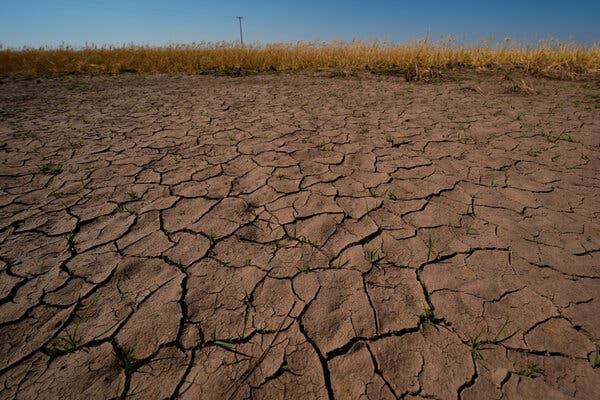
Major El Niño occurrences often have significant economic impacts worldwide. While each event varies in impact, they generally bring wetter conditions to certain American regions and cause more arid conditions in areas like South and Southeast Asia, Australia, and southern Africa.
For the United States, El Niño might suppress the hurricane season in the Atlantic. Following NOAA’s declaration, Colorado State University reduced its forecast for the Atlantic hurricane season to the lowest levels since 2015.
However, NOAA warns that El Niño events can elevate the risk of high tide flooding and algae blooms along the West Coast. Globally, poorer nations are more susceptible to food shortages and drought conditions. These risks are exacerbated by existing vulnerabilities like fertilizer shortages and reduced international humanitarian aid.
Mohamed Adow, Director of the Nairobi-based climate and energy think tank Power Shift, stated, “An El Niño means failed rains, dying crops, rising food prices, and families pushed to the edge yet again. In East Africa, especially, this will impact communities already battered by droughts and floods in recent years.”
 Communities Continuing Recovery from Hurricane Helene Explored through Graphic Novel
  Fat Bear Week 2026 Highlights: Meet the Competitors
  Annual Fat Bear Week Begins at Katmai National Park
  Understanding Hurricane Development
  California Prepares for El Niño-Fueled Storms with Emergency Declaration
  California’s Growing EV Adoption: Challenges and Benefits