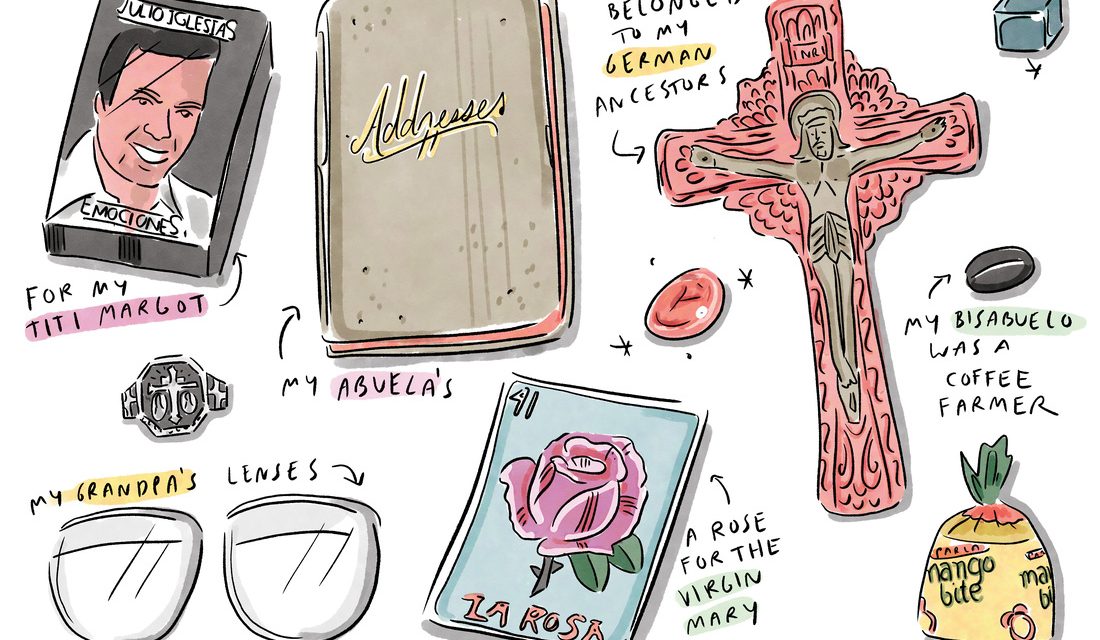
Every morning, I spend a moment honoring my ancestors. On my bedside table, a few cherished mementos rest: my abuela’s address book, the lenses from my grandfather’s glasses, and a Polish cassette tape of children’s songs given by my great uncle. These objects keep me connected to my family and their teachings.
Across the globe, people create ancestral altars. In Mexico, the ofrenda honors the deceased on Día de los Muertos. Many Buddhist traditions and African religions keep altars as a daily homage to ancestors. According to Ehime Ora, a teacher of African spirituality, anyone can make an altar. It’s about paying respects to family lineage.
Altars offer a connection to your heritage. Camara Meri Rajabari, a psychotherapist, suggests they remind you you’re not alone. Interested in setting up one? Here’s how:
Step 1: Explore Your Intentions
Before setting up an altar, reflect on why you’re connecting with ancestors. Chelsey Luger, co-author of The Seven Circles, shares a phrase from the Lakota language, Mitakuye Oyasin, meaning “we are all related.” Luger says honoring ancestors places us within this connected web.
Your motivation doesn’t have to be spiritual. Ora suggests viewing it as gratitude to those who preceded you.
Step 2: Choose a Special Spot
Opt for a place that’s meaningful to you. For me, it’s the bedside. Ora says altars can be in any dedicated space. Whether on a dresser or stored in a suitcase, what’s important is it’s a place for focused communication with ancestors.
Step 3: Display Ancestor Representations
An altar houses ancestral energy. Rajabari notes that symbols and artifacts here connect us to history. Seek out family mementos or small items with personal significance. My altar holds a Julio Iglesias tape, as my Titi Margot cherished his music.
If you lack specific items, learn family stories from older relatives to inspire your altar. Maybe a favorite flower or scent embodies someone dear.
Step 4: Start a Ritual
Establish a ritual to honor your ancestors. Collins, co-founder of Well for Culture, emphasizes rituals for recognizing sacred elements in life. Rajabari includes prayer and meditation at her altar daily. She communicates both daily matters and struggles with her ancestors.
In some African traditions, offerings like food strengthen ancestral connections. I, too, have rituals. Lighting candles or wearing my grandmother’s rings helps me remember them, granting me peace.
Your turn: How do you connect with your ancestors? Share your stories and photos at [email protected]. We may feature you on NPR.org.
The audio segment of this episode was by Audrey Nguyen. The story was edited by Malaka Gharib. Interested listeners can find Life Kit on Apple Podcasts and Spotify, or subscribe to the newsletter.
 Screencaps: Sports, Pop Culture, and Engaging Stories
 Royce White Contemplates Legal Action Against WNBA Eligibility Standards
 Ana Navarro Declines Meeting with Trump on ‘The View’
 Historic Preservation and Cultural Community Building
 Dance Theatre of Harlem Returns with a Vibrant Performance
 Artistic Legacy of Jackson Pollock and Lee Krasner