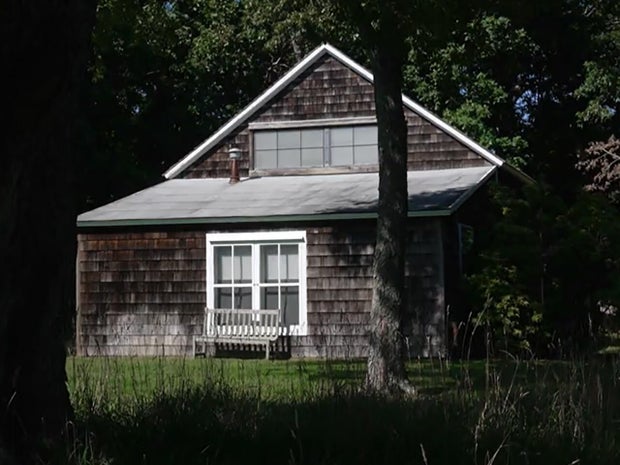
The farmhouse in Springs, New York, is easy to overlook, except for the sign marking the Pollock-Krasner House and Study Center. Located in the eastern end of Long Island, it was the home and studio of Jackson Pollock and Lee Krasner. The pair relocated here in winter 1945, initiating a movement that would significantly influence the art world.
Pollock and Krasner’s residence in a house without plumbing or heating was a conscious choice to focus intensely on their work, notes Matthew K. Ward, the Center’s director. Today, the property—an historical site managed by Stony Brook University—remains much like it was after Krasner’s death in 1984.
“It was really a choice that they made to come out here, to go into isolation almost to really focus on the work,”
A custom-made speaker system, connected by Pollock himself within the crawlspace, still features paint splashes. Such marks are prevalent throughout the home, a testament to the work done there.
Krasner’s workspace, though compact, offered a picturesque view of Accabonac Creek. Pollock, however, chose the barn out back for painting, a place he worked without an easel. Instead, he spread his canvases on the floor, dripping or pouring paint onto them from above—a technique now synonymous with his name.
Ward comments on how Pollock’s work process was highly physical, so much so that it resonates through the floor. The barn served as the studio where the art world underwent a transformation, producing works that were deemed incredibly modern.
In 1949, Life magazine questioned if Pollock was the greatest living painter in the United States. Yet, visitors often query the significance of Krasner at the Pollock-Krasner House. The exhibition Krasner and Pollock: Past Continuous aims to bridge this gap by intertwining both artists’ careers.
Co-curator Brinda Kumar highlights how the exhibition’s layout—featuring Krasner’s work on one wall and Pollock’s through a portal—facilitates a dialogue between their respective art. Both artists’ backgrounds and their connection are explored in detail in the exhibition.
Pollock, born in Cody, Wyoming, and Krasner, a Jewish immigrant’s child from Brooklyn, each brought different influences to their bond. David Breslin, co-curator, suggests Krasner was fascinated by Pollock’s work, although Pollock’s challenging personal habits, including heavy drinking, complicated their relationship.
Krasner’s move to Paris in the mid-1950s impacted their marriage deeply. Pollock’s integration of girlfriend Ruth Kligman into the farmhouse was another turning point. Tragically, in 1956, Pollock died in a car crash, an event that shifted Krasner’s perspective on her own life’s work.
Returning to the Springs house, Krasner championed Pollock’s legacy while advancing her own career, using the barn to make large-scale artworks such as Through Blue, Right Bird Left, and Combat painted directly on the walls.
The exhibition seeks to redefine their narrative, asserting Krasner’s equal importance alongside Pollock. It emphasizes her powerful work post-Pollock’s death, spanning the remainder of her life.
The Krasner and Pollock: Past Continuous exhibition, open until January 2027 at the Metropolitan Museum of Art, provides an integrated view of both artists’ contributions. It aims to establish Krasner’s stature alongside Pollock firmly.
 Dance Theatre of Harlem Returns with a Vibrant Performance
  The Impact of AI on Writers and Publishing
  Bayeux Tapestry Exhibition Draws Crowds in England
  Exploring the Museum of Bad Art
  Sydney Sweeney’s Ad Sparks Debate Amidst Powerade’s Response
 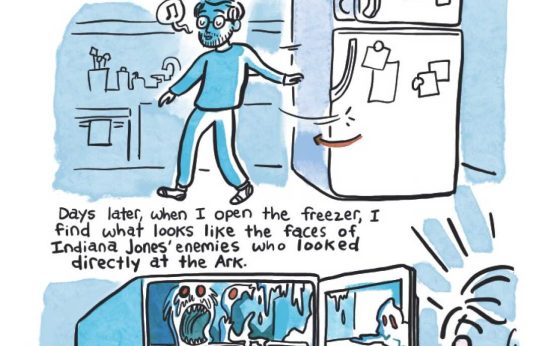 Exploring Humor in ‘The Two Saddest Kitchens’ by Roz Chast and Jason Adam Katzenstein