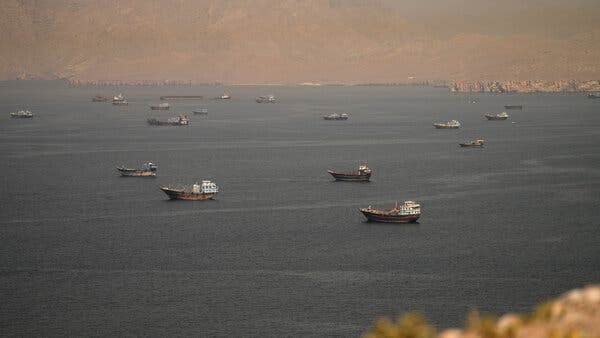
The status of the Strait of Hormuz remains uncertain following conflicting reports from the United States and Iranian militaries regarding its openness. The strait, a vital passage for oil and gas shipping, has become a central issue in ongoing U.S.-Iran negotiations aimed at concluding the war.
Maritime analysts noted a reduction in the number of vessels traversing the strait over the weekend. However, the cause of this decline remains unclear, largely due to limited available data.
President Trump warned Iranian officials against closing the strait on Fox News, stating, “You close it and you won’t have a country.”
Vice President JD Vance is leading the U.S. delegation in talks with Iran in Switzerland.
Iran’s military announced on Saturday its intention to close the strait, accusing the U.S. of violating a preliminary cease-fire by failing to manage Israel’s military actions against Hezbollah in Lebanon. The Iranian Revolutionary Guards Corps issued a caution to ships approaching the strait, saying they risked their security.
U.S. Central Command contradicted Iran’s claim, assuring the strait’s openness. Tim Hawkins, a spokesman for the command, stated, “Iran does not control the Strait of Hormuz. Traffic continues to flow, and U.S. forces are monitoring the situation to ensure this remains the case.” However, ship tracking data indicated reluctance among vessels to navigate the strait’s northerly path since the latest Iranian threat.
Daniel Mueller, a senior analyst at maritime intelligence firm Ambrey, observed uncertainty in the region, commenting, “The Iranians are maintaining the strait is closed again, though there have been no attacks.” Windward, another maritime intelligence firm, reported a decrease in transits compared to the previous day.
U.S. Central Command confirmed the passage of 55 commercial ships on Saturday, marking the highest number in a single day since the war’s onset, but far below the prewar daily average of 130.
Energy Secretary Chris Wright stated that 67 ships passed through the strait within the last 24 hours, aided by U.S. military guidance along a southern route heavily mined by Iran.
Windward noted that many ships that crossed the strait on Sunday had their transponders turned off to avoid detection, indicating persistent hesitation in navigating this volatile maritime corridor.
Leo Sands reports for the Breaking News Hub of The New York Times from London.
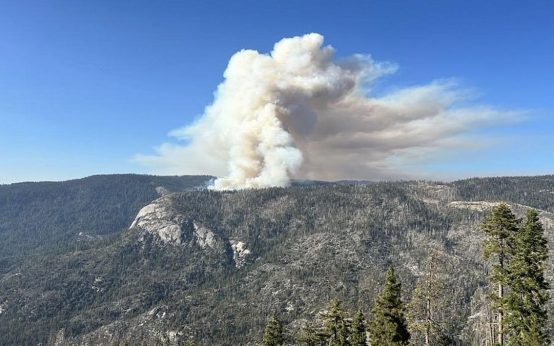 Two Pilots Killed in Helicopter Crash Fighting Yosemite Park Wildfire
  Alarming TSA Discovery: Hidden Object Found in Flashlight
  Homeland Security Takes Action Against Voter Fraud
  Evacuation Orders Issued in La Verne Due to Battery Fire
  California AG Bonta on Paramount’s Settlement and Merger
  Tuesday News Highlights: Trump’s UNGA Address and Greenland Deal