A New Method to Restore Coral Reefs
In the Pacific Ocean’s Coral Triangle, a conservation group is making efforts to rebuild coral reefs. The Tropical Research and Conservation Center, led by Robin Philippo, is spearheading this initiative near Pom Pom Island in Malaysia.
Building the Artificial Reef
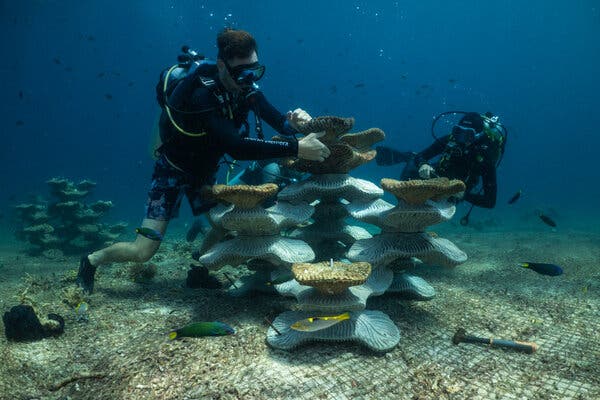
On May 24, 2026, a group set out from a small island in the Western Pacific, carrying pieces of concrete weighing 60 pounds each. These pieces featured textured surfaces resembling white lotus leaves. The crew dropped these pieces into the ocean.
Divers then descended to the seabed, working with nuts, bolts, and steel rods to assemble the concrete pieces into a reef structure. During the process, damsel fish and green turtles showed interest in the activity, highlighting the potential ecological benefits of the reef.
The Structure and Its Components
The artificial reef stands 3 feet tall and 10 feet wide. Its components, made from concrete with 3-D printed molds, suggest innovative approaches used in reef construction. Volunteers played a crucial role in deploying these structures using carts and lift bags.
“Volunteers loading the artificial reef structures onto a push cart for deployment.”
The Importance of Artificial Reefs
The concrete molds could help revive coral reefs damaged by bombs and climate change. This method serves as a practical approach to conservation efforts in the Coral Triangle.
The project illustrates the commitment to preserving marine ecosystems. The center’s efforts in Malaysia may become a model for reef restoration worldwide.
 Communities Continuing Recovery from Hurricane Helene Explored through Graphic Novel
 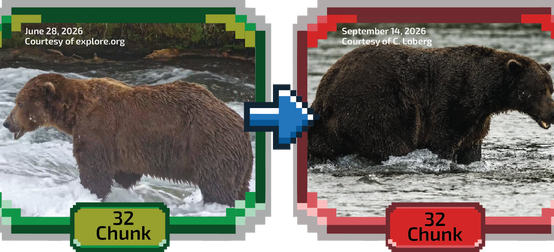 Fat Bear Week 2026 Highlights: Meet the Competitors
  Annual Fat Bear Week Begins at Katmai National Park
  Understanding Hurricane Development
  California Prepares for El Niño-Fueled Storms with Emergency Declaration
  California’s Growing EV Adoption: Challenges and Benefits