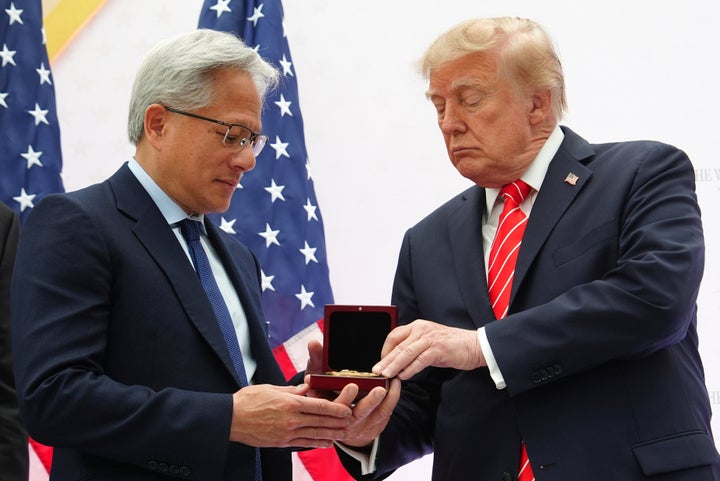
President Donald Trump permitted the CEO of a major computer chip manufacturer to engage in discussions with China, despite U.S. intelligence concerns about his proximity to a Chinese spy. This decision occurred while the company was allowed to sell advanced chips to China, raising questions about Trump’s commitment to winning the artificial intelligence race against China.
One of the controversy’s key figures is Nvidia CEO Jensen Huang, who has supported Trump’s projects financially even as he faces an internal company investigation following an admitted affair with an executive at a Malaysian data center company. Trump’s remarks reflect unwavering support for Huang, downplaying the significance of his involvement with the alleged spy. Trump’s comments suggested a casual attitude toward such relationships, saying, “everybody” encounters similar situations.
Trump expressed his belief that Huang didn’t know about the espionage links, stating, “He said he had absolutely no idea that the person in question was a spy. I believe him.”
Reports indicate a memo containing intelligence about Huang’s ties circulated earlier this year, but Trump claimed he only recently learned of it. This revelation adds complexity to a situation involving Nvidia, a significant player in the U.S. economy during Trump’s tenure.
Critics argue that the affair undermines Trump’s rhetoric of needing to “beat China” in AI advancement. Despite warnings, Trump has refrained from regulating artificial intelligence development, citing a global race primarily between the U.S. and China. Trump’s recent comments to reporters reiterate his focus on AI leadership, emphasizing, “We want to lead in AI, and we’re leading China by a lot in AI.”
Former national security adviser John Bolton and others express confusion over how such a situation, with far-reaching national security implications, could develop. Suggestions arise that Huang’s generous donation to Trump’s ballroom project may play a role.
“There is no foreign policy. There are only opportunities for enrichment,” said Robert Kagan, a former State Department official.
Rahm Emanuel, a potential presidential candidate for 2028, highlighted Trump’s financial ties to Nvidia, questioning the administration’s knowledge and response to the situation. The questions Emanuel poses revolve around awareness within the Trump Administration and the action taken or lack thereof despite such knowledge.
Despite Trump’s promotion of maintaining AI leadership over China, he approved Nvidia’s requests to export high-speed chips, such as the H200, to Chinese companies, contradicting his public stance. This discrepancy has prompted bi-partisan calls for scrutiny.
Sens. Elizabeth Warren and Jim Banks have urged Congress to examine the national security implications of Huang’s acknowledged relations, seeking a thorough review.
 Auditing ICE’s Body-Camera Program Compliance
 Senator John Cornyn Approaches Senate Retirement as Transition Begins
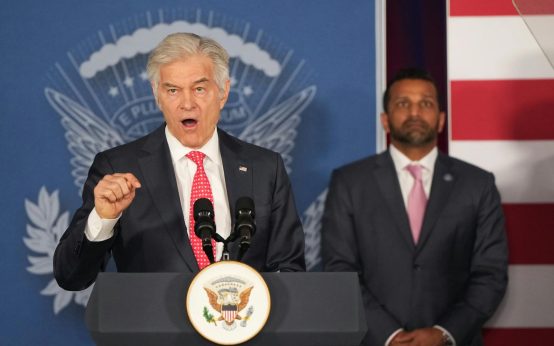 Federal Government Freezes Minnesota’s Medicaid Funds Amid Fraud Probe
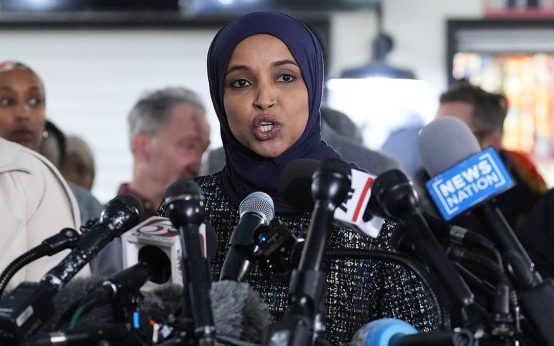 Rep. Ilhan Omar Returns to Capitol Hill Amid Ongoing Investigations
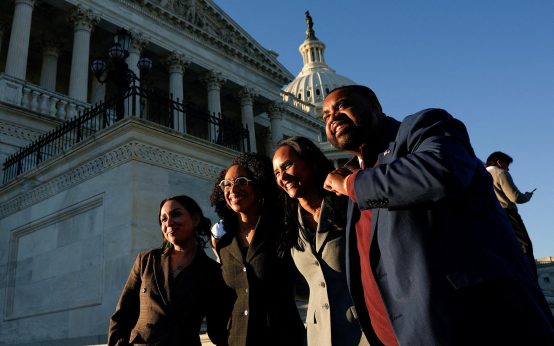 The Challenges Facing the Democratic Socialists of America
 Impact of the Bipartisan American Affordability and Jobs Act on Permitting and Energy Development