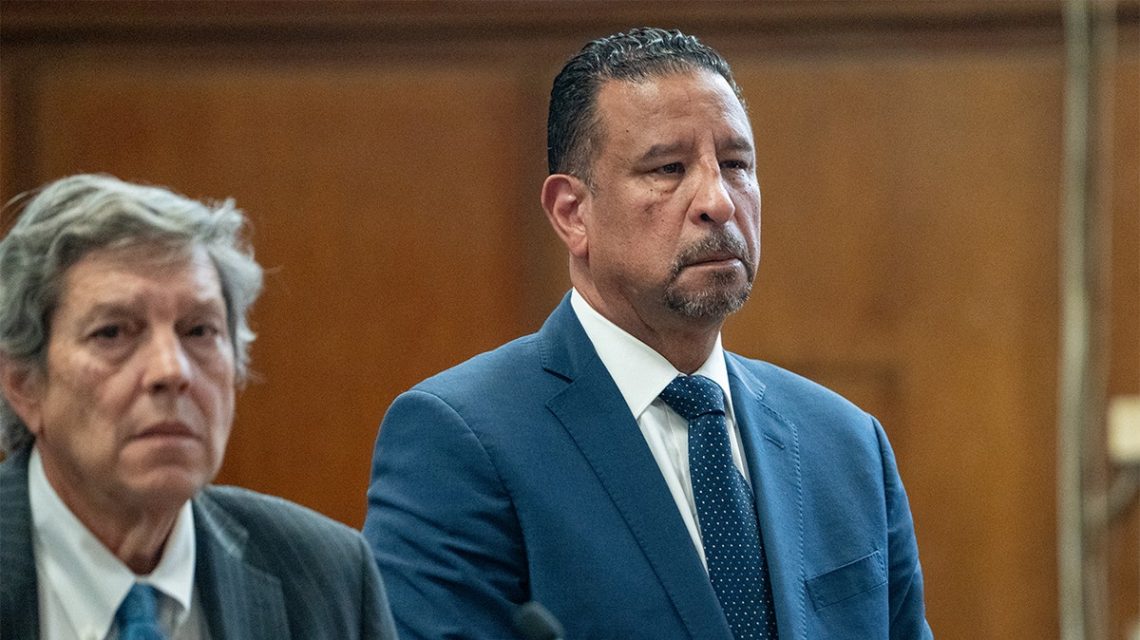
On Tuesday, a significant contingent of Con Edison employees gathered at a courtroom in support of Koran Irvine’s family. Irvine’s alleged killer, Victor Romero, faced upgraded charges following a grand jury indictment related to a road rage shooting.
Romero, a former NYPD detective employed as a driver and security guard for a hedge fund, now confronts a second-degree murder charge. This charge stems from the shooting on the George Washington Bridge last week that claimed the life of Irvine, aged 46.
Irvine, survived by his wife and two children, had dedicated 20 years to Con Edison before his untimely death. On October 27, 2026, Romero appeared in court to address charges linked to Irvine’s fatal shooting.
Several hundred individuals, comprising Con Edison employees, family, and friends, gathered in Foley Square, Manhattan, on the same day. The rally exemplified their outrage over Irvine’s death, allegedly at the hands of Romero in a road rage incident occurring on October 20.
“We’re brothers here,” conveyed a Con Edison worker to the gathered crowd, as reported by FOX 5 NY.
Prosecutors indicate surveillance footage captures Romero tailgating Irvine’s vehicle aggressively before firing a shot. A near collision on their drive toward the George Washington Bridge allegedly sparked the confrontation.
Following Irvine’s shooting on Tuesday evening, a 24-hour manhunt was initiated to apprehend Romero. He initially posted a $1 million bail and pleaded not guilty to charges of first-degree manslaughter.
Romero will face a Supreme Court arraignment scheduled for November 23. His attorney, Alan Abramson, remains unavailable for immediate comment.
The investigation continues as authorities piece together events leading to the tragic incident.
 Judge Blocks Administration from Cutting Trees at East Potomac Park
 West Virginia Couple Charged with Felony Child Abuse
 Florida Man Indicted for Defrauding Clients Over Ransomware Recovery
 New Hampshire Man Pleads Guilty to Killing Father
 Archdiocese of New York Settles Abuse Claims for $800 Million
 Internal Reviews Highlight Failures in Detention Center Operations