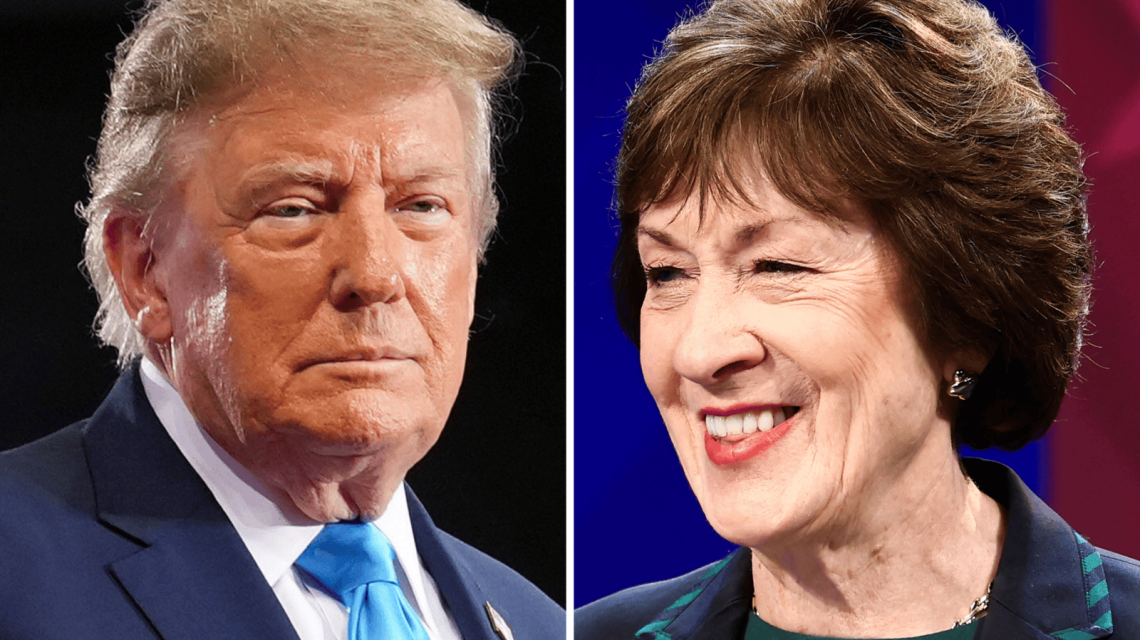
President Donald Trump has given Republican Senator Susan Collins a strategic economic edge in the tight Maine Senate race. He announced support for the state’s lobster industry and targeted tariff relief as polling shows her in a close competition with Democratic challenger Troy Jackson.
A Fox News Poll indicates Collins and Jackson are tied at 49% among likely voters. This suggests a tightening race from the previous four-point Democratic lead reported by Marist Poll earlier in October. However, distinct samples in the polls mean these results do not confirm a direct swing but highlight the narrowing competition as the election nears. Both candidates have firm backers, making turnout and a small group of undecided voters crucial in determining the outcome.
Newsweek contacted the Jackson and Collins campaigns and the White House on Saturday morning for comments outside regular working hours.
Why It Matters
Midterm elections historically present challenges for the president’s party, and control of the Senate might hinge on a few close races. Collins is pursuing a sixth term in a state where Trump is unpopular, being 32 points underwater in Maine according to Civiqs tracking data. Despite this, she has exceeded expectations before, winning a decisive victory in 2020 despite adverse polling.
A Lobster and Tariffs Boost
On October 23, Trump announced a national seafood plan to boost domestic processing, eliminate regulatory hurdles, and shield American fishermen from foreign competition. The America First Seafood Strategy promises to revitalize the profitability of Maine lobster fisheries. It offers over $5 billion in loans for modernizing meat and seafood processing. The strategy also introduces a voluntary “U.S. Caught Seafood” label to help consumers identify domestic products.
Although this policy doesn’t promise lower seafood prices directly, its focus on Maine lobster offers Collins a visible regional win. Additionally, a separate tariff modification removes 50% duties from Canadian imports used by Maine’s businesses, covering items like refrigeration equipment, machinery, and packaging containers. Nine agricultural product categories also receive exemptions from tariffs on Canadian goods.
Collins noted that producers depend on specific items “unavailable from American suppliers.” She has advocated for such tariff relief and is working towards more agreements with Canada. This enhances her political stance as effective in securing local assistance despite Trump’s unpopularity. Meanwhile, Jackson argues the relief only addresses problems born from her party’s trade policies.
Oregon Senator Ron Wyden described the concessions as a “desperate, last-minute attempt to save Susan Collins’ political career.” Collins’ challenge is to leverage support from an unpopular president while preventing Jackson from making their relationship a focal point.
Newsweek sought comments from Maine’s agricultural bodies like the Potato Board and Lobstermen’s Association on Saturday morning outside regular hours.
What Polls Say About Maine Senate Race
The Fox News Poll, done between October 16-20, surveyed 1,514 likely voters, displaying a margin of error of 2.5 percentage points. The study used various methods like landline, mobile, and online questionnaires. This deadlock followed a Marist Poll conducted between October 1-4 with 1,505 registered voters, showing Jackson at 51% compared to Collins’ 47%. That gap was too small to suggest a definitive lead given a 3.8-point margin of error.
In RealClearPolling’s average over September 23 to October 20, Jackson stands at 48.8%, with Collins at 47.4%, a small Democratic edge.
Coalitions Beneath the Tie
Collins leads among independents, rural voters, and those without college degrees in the Fox News poll, though subgroup findings have higher error margins. Jackson is ahead among women, suburban residents, and college graduates. Turnout is his key opportunity. Seventy-nine percent of Democrats express extreme interest in the election, versus 61% of Republicans. Jackson holds a 16-point lead among the most engaged voters.
Voting patterns show mixed directions. About a fifth had voted at the time of polling, with significant favor toward Jackson, while those planning to vote on Election Day leaned toward Collins.
“Collins is no stranger to outrunning her party, but Democrats hold an 18-point enthusiasm advantage,” said Mikaela Linder of Beacon Research.
The Trump Risk
Only 37% of likely voters approve of Trump’s performance according to the Fox News poll, with 62% disapproving, including 54% strongly. Another 53% feel Collins sides with Trump too often. Nevertheless, she retains 20% backing from those unhappy with Trump, indicating a personal political brand that distinguishes her from the administration.
Economic concerns add complexity. A mere 12% feel their family is better off than two years ago, while 51% feel worse off.
Contact Newsweek editor on this story: Edward Pearcey.
 The Investigation into Ilhan Omar: Allegations and Legal Implications
 Federal Appeals Court Orders California to Address DOJ Concerns on Mail-In Ballots
 The Function and Impact of Midterm Elections in U.S. Politics
 Russian Influence Tactics Target U.S. Elections
 Virginia Democrats Call for Restraint After Indictment of Senate Leader
 Rep. Ilhan Omar Raises $1.5 Million After Federal Raid