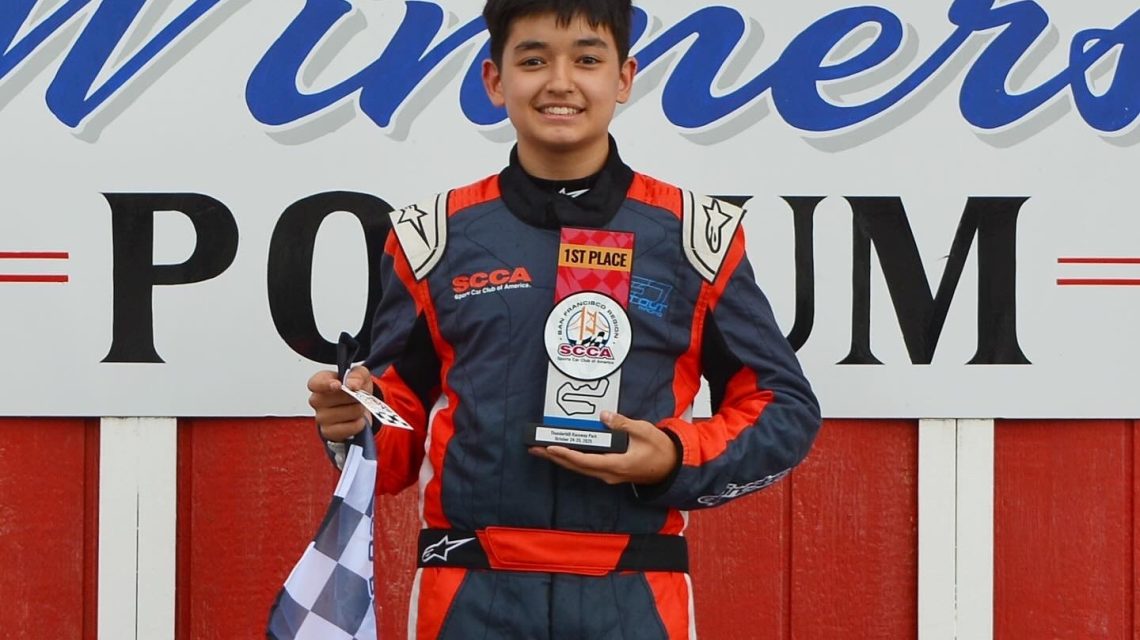
Becoming a top-tier racing driver requires more than mastering the sport’s technical aspects. It is a significant financial challenge, turning young drivers like Asad Nikadambaev into marketing experts as they navigate their racing careers. At 15, Asad has already achieved notable success and is learning the importance of building a personal brand through social media to attract sponsorships for advancing in his career.
The financial burden of competing at higher levels is substantial. Odil Nikadambaev, Asad’s father, mentioned in an interview that they face a potential cost of $350,000 for the 2027 season, excluding travel, accommodations, and potential damages. This is a steep increase from the $25-$50 cost of go-kart rentals in Asad’s early days.
“Most families can’t afford that. Neither can we. We must look for partners, brands, and companies to collaborate with to make it through USF Juniors,” Odil Nikadambaev said.
Asad’s experience highlights the interplay between sports and business and the marketing skills that young athletes must develop. Social media presence is key, though this brings concerns such as online abuse, especially for minors. Asad launched his social media accounts in January and now boasts over 60,000 YouTube subscribers. His viral videos, with views surpassing 10 million, are strategically aimed at drawing interest from potential sponsors.
Making the Leap from Aspiring Driver to Pro Racer
Asad’s breakthrough came in the Hoosier Racing Tire SCCA Super Tour at Buttonwillow Raceway Park. Driving a Spec Racer Ford Gen3, he outperformed several national champions to take first place. The SCCA sanctions this series, providing a path for drivers aiming to rise in the ranks.
Asad’s next target is competing in the USF Juniors, using the Tatuus JR-23, an entry-level car for Formula One or IndyCar racing, his ultimate goals.
“This honestly means so much. My family and I have sacrificed greatly to reach this point, and we plan to continue making sacrifices to reach the pinnacle of motorsport,” Asad commented.
Asad’s strategy evidences a shift in sports marketing. Sponsorship now goes beyond mere brand placement. Sponsors seek engagement with communities, compelling stories, and authentic content. According to Tom Potter, CEO of Rush Group, raising sponsorship for levels like USF2000 is exceptionally challenging. Building a personal brand is crucial for drivers trying to overcome commercial obstacles.
“Talent, results, and performance are priorities for teams, but when skill levels are similar, drivers with better fan reach and marketing prowess gain the edge,” Potter explained.
The online environment can expose athletes, especially younger ones, to risks like harassment. Professor Andrea Geurin from NYU’s SPS Tisch Institute highlighted a need for teams and organizations to educate young athletes about these risks. Her research showed a lack of such initiatives among U.S. sport national governing bodies for athletes aged 13-18.
Currently, Asad’s father manages his social media, shielding him from unwanted activities, allowing Asad to focus on racing and developing content.
 Order 4 Battles for TNA International Championship at Bound for Glory
  Demario Davis: Faith and Football Intersect
  Cleveland Browns Face Defeat and Injury Concerns in Week 5
  Karl-Anthony Towns’ Future with New York Knicks Uncertain Amid Contract Standoff
  Paul Finebaum Questions Arch Manning’s Performance After Texas Loss to Oklahoma
  Michael Jordan’s 1998 NBA Finals Jersey Sells for $14 Million