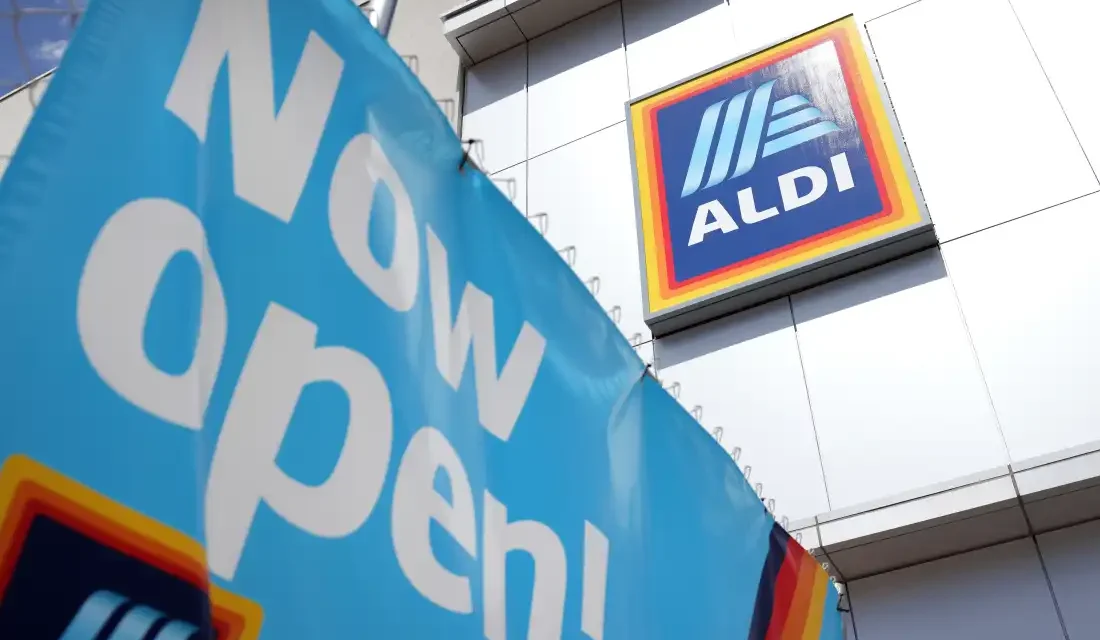
In May 2025, Aldi, a discount grocery chain, announced plans to add over 225 new stores in the U.S. within the year. This move is part of a five-year expansion strategy to establish 800 new locations by 2028. By achieving this goal, Aldi aims to operate more than 3,000 stores in the U.S., ranking only behind Walmart in terms of store numbers.
In 2024, Aldi’s U.S. sales reached approximately $29 billion, surpassing Trader Joe’s. The company, established in Germany, is known for offering low prices, often matching or beating Walmart. As Aldi increases its presence, competitors like Wegmans and Kroger have responded with price reductions. An analysis in late 2023 revealed that grocery chains reduced markups by about 7% in areas with new Lidl stores, a retailer with a similar business model to Aldi.
Understanding how Aldi maintains low prices reveals two main strategies: focusing heavily on private label products and offering a limited selection. Aldi stocks its shelves with products that mimic popular brands, such as cookies resembling Oreos but bearing its own label. This strategy eliminates costs associated with purchasing from major brands. More than 80% of Aldi’s products are these private-label items.
Moreover, Aldi’s limited selection focuses on essential items only. This not only allows bulk purchasing but also minimizes spoilage and reduces storage and real-estate costs. The Albrecht brothers, who took over the family store in 1946, maintained this approach, favoring efficiency over variety. While this means that shoppers might need to visit other stores for specific items, Aldi ensures that the basics are cheaper.
The company also adds a touch of fun shopping experience. Aldi’s middle aisle offers changing items such as toys and seasonal products like advent calendars with cheeses. Additionally, Aldi has expanded its offerings slightly to attract a broader audience. They not only offer the cheapest produce but also competitively priced premium selections.
Aldi’s ability to maintain low prices while providing an engaging shopping experience contributes to its immense growth. The brand has a loyal customer base, with some lining up for new store openings. In the evolving grocery market, Aldi leverages an approach that was crafted 80 years ago and adapts it to the current market dynamics.