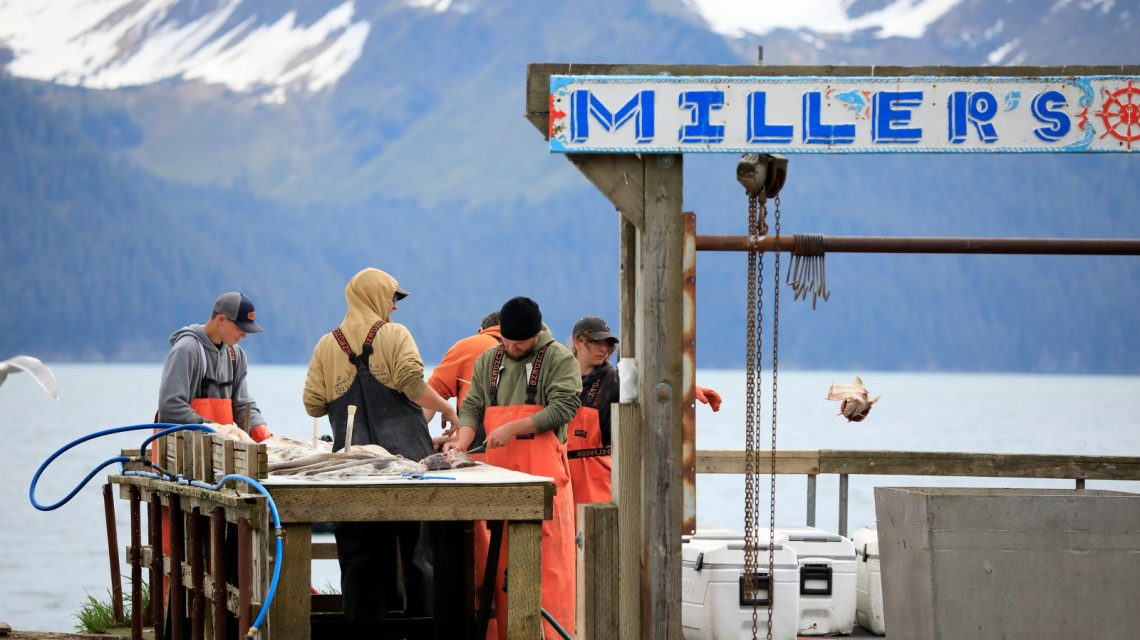
While voters in other states focus on issues like immigration and inflation, Alaskans are debating salmon runs, bycatch limits, and the fishing industry’s future. These discussions could impact whether Democrat Mary Peltola unseats Republican incumbent Dan Sullivan in Alaska’s U.S. Senate race. Given the limited opportunities Democrats have to flip Republican-held seats in 2026, the Alaska contest stands out alongside races in Maine, Texas, and Michigan. Since 2008, a Democrat has not won a Senate seat in Alaska.
Alaska’s diverse voter base and ranked-choice voting system make its elections unique, relying on more than just partisan politics. Aubrey Wieber, executive director of the 907 Initiative, points out that Alaskans face high costs, with rural gas prices reaching $26 per gallon. The state’s dependency on shipped goods exacerbates these costs.
Unlike other states, Alaska faces a core issue with trawl bycatch, brewing from grassroots discussions among fishers long before politicians took notice. Almost every Alaskan falls into commercial, sport, or subsistence fishing.
Fishing’s Significance in Alaska
Alaska’s fishing industry is vital to its economy but faces threats. Historically, commercial fishing is one of the state’s largest employers and export sources, supporting a wide range of sectors from transportation to equipment supply. Unlike oil, it’s distributed across many communities like Bristol Bay and Kodiak.
Salmon ties deeply to Alaska culture, contributing to both livelihood and identity. In many areas, it’s a primary food source, yet fish stocks decline due to pressures such as larger vessels from Seattle, warming oceans, and habitat issues. Bycatch adds to the problem.
The decline in fish stock impacts income and fishing opportunities, leading to uncertainty for many Alaskans.
Campaign Approaches on Fishing
Peltola emphasizes the harm large industrial trawlers cause to Alaska’s fisheries. Her campaign slogan, “Fish, Family, Freedom,” reflects her focus on reducing bycatch and banning factory trawling. She also advocates for expanding electronic monitoring and increasing tribal representation in management councils.
Sullivan highlights his Senate record, stressing the need for better science and monitoring. He introduced the Bycatch Reduction Act, aiming to lessen gear impacts and prohibit unsustainable imports. The act also establishes new assistance funds.
Sullivan has helped Alaska’s seafood industry gain access to federal support, with efforts to make these changes permanent in upcoming legislation.
The Fishing Issue’s Impact on Election Results
Fishing is a significant issue in Alaska, influencing Senate seat control. While national attention may not focus on fisheries, Alaskans prioritize them. Data for Progress polls show strong local support for federal trawling bans.
Wieber highlights the centrality of the issue, noting Peltola’s credibility in fishing advocacy. Despite Sullivan’s longstanding relation with the trawling industry, he now competes on the same turf.
Legal Challenges in Alaska’s Senate Race
The DOJ filed a lawsuit against Alaska, aiming to prevent election certification if Sullivan loses to Peltola. The issue arises from another candidate named Dan Sullivan, allegedly confusing voters. Trump labeled this as a scam threatening the incumbent’s campaign.
Alaska courts ruled to keep Dan J. Sullivan on the ballot, despite allegations. The lawsuit seeks further investigations into voter intentions.
This story was produced with the assistance of Newsweek’s AI, Martyn, with contributions from editors Anthony Murray and Jason Lemon.
 Patriot Act’s Legacy and Privacy Rights 25 Years Later
 Possibilities for GOP to Maintain Senate Control Amid Democratic Surge
 Alaska Democrats Request Dismissal of Trump Administration Lawsuit Over Senate Race
 Nicki Minaj Expresses Support for Trump at Michigan Rally
 Political Ads Intensify As Midterms Approach
 Catholic Bishops Criticize White House Over Meeting Photo