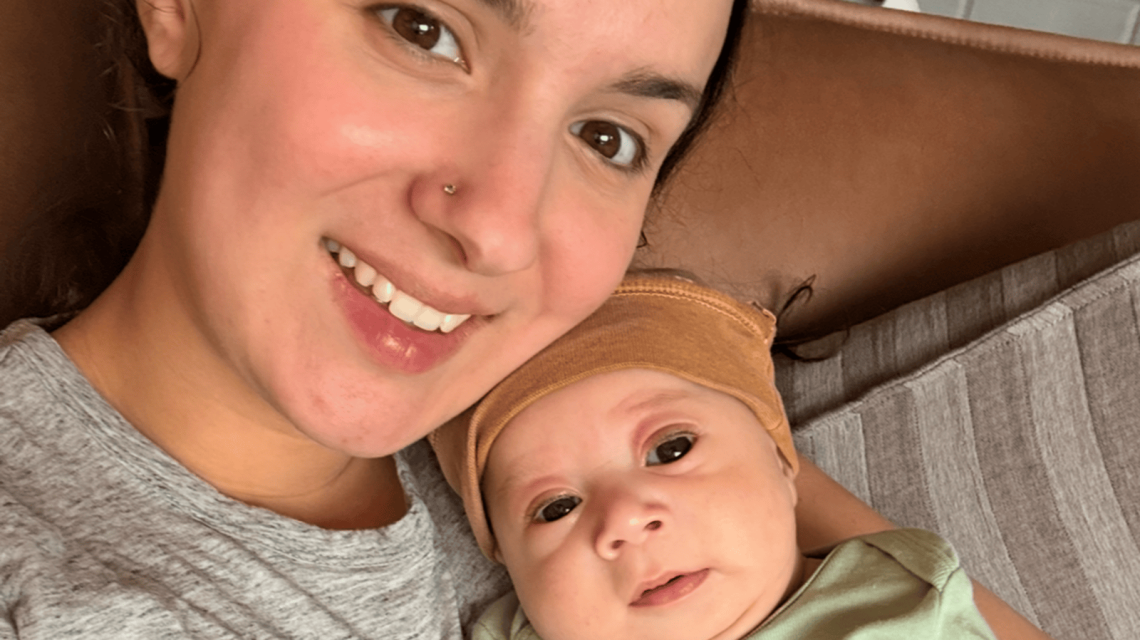
From the birth of her son, a New York mother felt something was amiss. Lauren Musso, 28, residing in Schenectady, closely observed her newborn’s movements with growing concern. These worries began months before, during her pregnancy, when her baby’s movements in the womb suddenly changed. “Overnight, the strength and frequency of his kicks dropped dramatically and never returned,” Musso relayed to Newsweek. Her concerns were discounted, as her baby was still technically meeting minimum kick counts.
Musso’s pregnancy was further complicated by severe hyperemesis gravidarum (HG), a condition marked by extreme nausea and vomiting, resulting in multiple hospitalizations and difficulty maintaining nutrition. Seeking clarity, Musso advocated for an ultrasound, which was not routine, yet one provider agreed, citing the ability to “make a case for it.” Scans later showed her baby, Avery, motionless for extended periods. Despite this, a fetal MRI was delayed, with a specialist reassuring her of a “99 percent” positive outcome. “Those words haunt me,” Musso shared. She consistently felt something was gravely wrong.
According to Dr. Jeffrey Chapa, national medical director of maternal-fetal medicine at Obtelecare, reduced fetal movement is a common concern during pregnancy. While often linked to typical factors such as a baby’s sleep cycle, it can sometimes signal issues with fetal health that require evaluation. “A maternal-fetal medicine specialist can help investigate what’s behind decreased fetal movement,” Dr. Chapa explained, emphasizing the use of ultrasound and possibly MRI for further assessment.
After Avery’s birth, he spent a week in the neonatal intensive care unit. Though initially improving, he struggled with weight gain and developed laryngomalacia. This condition involves tissues around the voice box collapsing slightly during breathing, leading to a characteristic squeaky sound. Musso recounted further concerns about her son’s apneic and bradycardic events, eye deviations, and unusual movements, which were dismissed as normal newborn behaviors that would improve.
Avery faced multiple hospital readmissions. After being discharged, he experienced cardiac arrest at a clinic, with CPR first administered by his nanny. On that day, Musso consulted a neurologist about Avery’s limp and lifeless hand, pleading for a full neurological examination. This led to Avery being reintubated for a brain MRI, revealing multicystic encephalomalacia, a severe form of brain damage. Dr. Chapa noted the difficulty in determining if earlier diagnosis could have altered outcomes, as such damage has multiple causes, not always identified. “Access to specialized maternal-fetal medicine care matters,” he stressed, as it provides time for a thorough evaluation.
Seizure activity was identified only days before Avery’s passing, despite Musso raising concerns weeks earlier. Avery spent his final days in pediatric intensive care, mostly on a ventilator. He died at 3½ months old, surrounded by family. “I held him close and whispered how much I loved him,” Musso recalled. His passing brought sorrow but also peace, freeing him from medical interventions.
The days following Avery’s death felt surreal, compounded by the unexpected transition to hospice care. Musso grieved not just her loss but what she perceived as preventable failures in Avery’s care. Her anguish intensified upon learning an autopsy, which she explicitly consented to, was not conducted. Avery’s body was transferred to a funeral home without their knowledge, leaving the family without answers, feeling their trust shattered.
“We lovingly call him ‘Ave the Brave,'” Musso expressed. “Avery remains an eternal example of offering unconditional love, teaching us to find profound love and connection even in the darkness.”
Musso urges medical professionals to heed parents’ concerns and address HG more seriously. She advocates for compassionate, individualized care where warning signs are not dismissed. “Learn to sit with a grieving parent without fixing the unfixable, and never fear speaking their child’s name,” Musso advised. “Avery’s life was short, but his humanity, joy, and spirit are enduring forces in our lives.”
The medical center involved in Avery’s care declined to comment due to patient confidentiality.
 Severe Smog Engulfs New Delhi After Diwali Celebrations
 Strategies for Muscle Preservation on GLP-1 Medications
 Insights from a Hospital Executive’s Journey Working ER Shifts
 Biden Reflects on Memoir and Health Challenges
 Neighborhood Heroes Rescue Family from Florida Flooding
 Former Aide Criticizes Trump’s Advisers on Health Initiatives