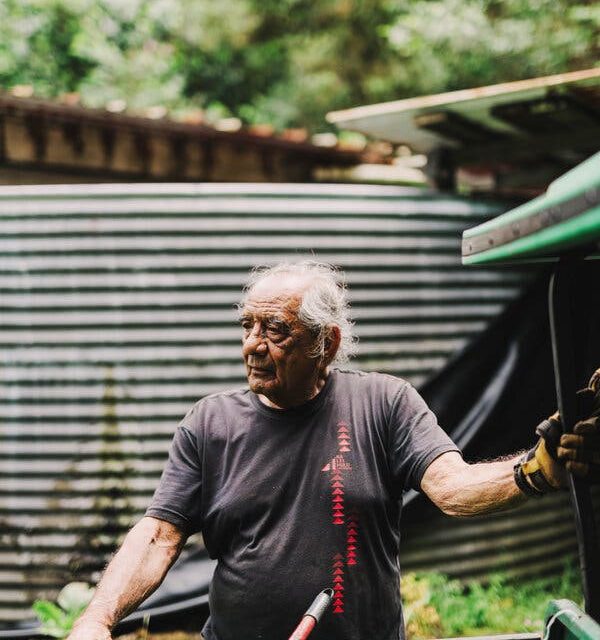
Roy Santana, 80, stands beside the remains of his water catchment tank, destroyed by a 6.0 magnitude earthquake that struck the Big Island of Hawaii earlier this month. His situation highlights the broader water crisis affecting Kona.
The earthquake severely impacted the water catchment systems relied upon by many on Hawaii’s Big Island. The island has seen many natural disasters, including devastating floods earlier this spring. These events have compounded the challenges in the region, but the recent earthquake has escalated them by destroying essential infrastructure.
Kona is known worldwide for its coffee, which thrives in the region’s climate. The small farms located on the volcanic slopes of the Big Island rely heavily on collected rainwater to sustain their homes and orchards, as parts of the area lack county water infrastructure.
In the aftermath of the earthquake, water reserves for hundreds of farmers disappeared as their tanks burst. This left many without immediate access to water, affecting daily life and agricultural operations.
“Things just started falling off shelves and crumbling,” said KayLynne Santana, 71, who farms coffee and macadamia nuts in the area. She described the scene, pointing out the damage on her farm caused by the quake.
KayLynne Santana and her husband have lived without county water services for years. The destruction of their water tank, along with several rock walls they’d built around their farm, underscores the resilience and resourcefulness required to adapt to such challenges.
 U.S. Greenhouse Gas Emissions Surge Amid Global Climate Concerns
  Severe Weather Threat in Arizona and Southern California Explained
  Community Urges Closure of NIPSCO’s Coal Plant in Michigan City
  Marine Life Decline in Gulf of Mexico Post-Deepwater Horizon Spill
  The Great Lakes’ Plastic Pollution Crisis: Underreported Dangers and Industry’s Role
  Arizona Candidates Prioritize Water Policy Amid Drought Concerns