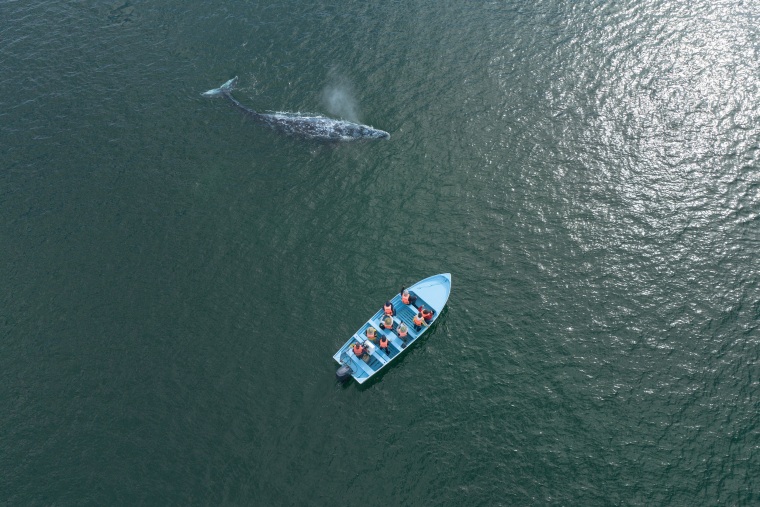
Since March, 21 dead gray whales have been discovered along the shores of Washington state. Research biologist John Calambokidis voiced his concern. Calambokidis, who founded the Cascadia Research Collective, has dedicated decades to studying gray whales. This species was once a symbol of conservation success but is now facing severe challenges.
Gray whale populations have experienced a notable drop over the last seven years. Many of the deceased whales appeared undernourished and exhibited strange behaviors before dying. Scientists attribute these issues to global warming, which impacts the availability of food by reducing sea ice.
Calambokidis stated, “We know it’s a food supply issue linked to dramatic changes in the Arctic due to climate change.” Changes in sea ice seem to disrupt the food chain that gray whales rely on, decreasing their favorite prey.
Josh Stewart, an assistant professor at Oregon State University’s Marine Mammal Institute, emphasized the sensitivity of gray whales to environmental changes. “I don’t think we’re ever going to see an Arctic that can support 25,000 gray whales again,” said Stewart.
Gray whales have been appearing on Pacific shores in large numbers since 2019. The National Oceanic and Atmospheric Administration declared their deaths an “unusual mortality event” then. Although there was a brief population recovery in 2023, the trend has not continued positively.
Gray whales typically migrate north in the spring and summer to feed on amphipods in the Arctic. They then travel south in the fall to reproduce. However, the changing conditions in the Arctic affect their feeding, leading to malnourishment.
The Arctic feeding grounds are crucial for their survival. Scientists are investigating various factors affecting food availability. The early melting of sea ice alters the nutrient flow, yielding less food for amphipods, the whales’ primary diet.
Stewart expressed, “Right now, as they migrate north, is when they’re skinniest, making them most vulnerable to starvation.”
Some whales have journeyed into unexpected areas, such as a whale found in the Wilapa River, likely searching for food.
NOAA estimates indicate a population drop from 27,430 a decade ago to 12,950 last summer. However, Stewart noted these models might exaggerate the decline.
Not all Pacific gray whales are dependent on the Arctic. A subgroup called Sounders and another known as the Pacific Feeding Group have remained resilient.
Elliott Hazen, of NOAA’s Southwest Fisheries Science Center, suggested that various foraging strategies might help some whales adapt to changing conditions.
Previously, Eastern North Pacific gray whale numbers suffered due to whaling but rebounded after protections were enacted. The species was removed from the endangered list in 1994. However, Stewart indicated the population is now at a critical point. “We’re significantly lower in abundance than when the species was delisted, so we are in uncharted territory from a recovery perspective.”
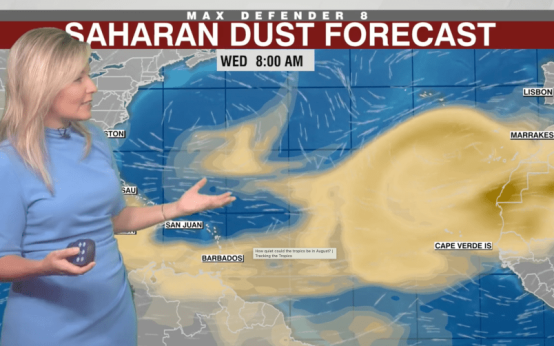 Impact of Saharan Dust on U.S. Weather
  Hanoi’s Urban Transformation: Growth and Challenges
  Grayslake Residents File Lawsuit Against Data Center Project
  Colorado River Water Crisis Deepens as Lake Mead Hits Record Low
  Gov. Patrick Morrisey’s Water Listening Tour in Southern West Virginia
  U.S. Energy Strategy and the Case for Light Crude Refining