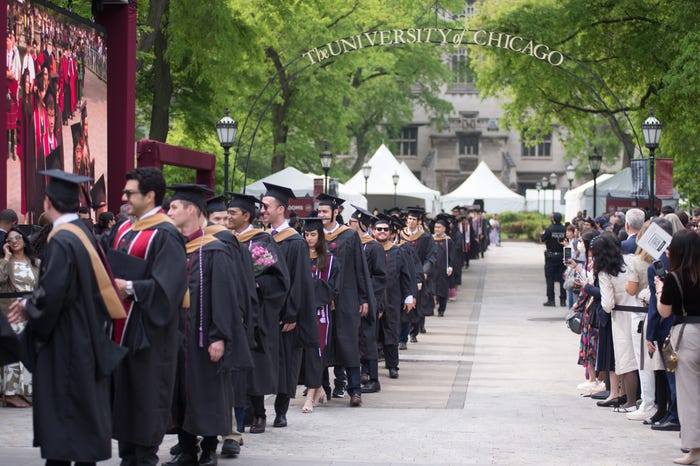
A math professor at the University of Chicago has raised concerns about how AI is transforming hiring practices in academia. This transformation is lowering barriers to mathematical discovery and affecting who gets hired as researchers.
Frank Calegari, a prominent math professor, has expressed these concerns in a recent essay. He emphasized the need for hiring practices to focus more on personal interactions and communication skills. He is looking for candidates who can narrate their mathematical vision and possess the technical ability to explain potential discoveries.
“I am looking for a narrative of where you want mathematics to go, the technical ability to explain why this may be possible.” – Frank Calegari
Calegari warns that some students might use AI to produce mathematical proofs, which could lead to low-level research positions being filled by those lacking genuine skill. He suggests that a 30-minute discussion could reveal which candidates have authentic vision and communication ability.
In his essay, published on Terence Tao’s blog, Calegari criticized “lazy committees” for hiring students based on single publications, which AI could generate. He believes academic communities have a responsibility to train graduate students in effective communication of mathematics.
Other academicians have noted similar trends. Cornell professor Steven Strogatz pointed out that mathematicians with charisma, or “rizz” — a slang for charisma — have an advantage. These individuals can explain AI-generated results and pose new questions, adding value in a rapidly evolving field.
The rapid advancement of AI causes some mathematicians to feel uncertain about the future. However, many are working to integrate AI into their procedures, despite initial resistance. Students are also facing challenges in adapting to these changes, calling for their educators to provide clear guidelines on AI usage.
Survey responses from institutions like MIT indicate a desire for leadership and direction on this topic. Such leadership is seen as crucial for effectively incorporating AI into the academic sphere.
 Melania Trump’s Support for LSU’s New Scholarship Endowment
 DOJ Sues UCLA for Alleged Discrimination Against Jewish and Israeli Students
 Student-Loan Borrowers Face Increased Oversight
 The Role of Public Schooling in Equalizing Social Conditions
 Understanding Information in Modern Classrooms
 The Ongoing Debate on Public Schooling as the Great Equalizer