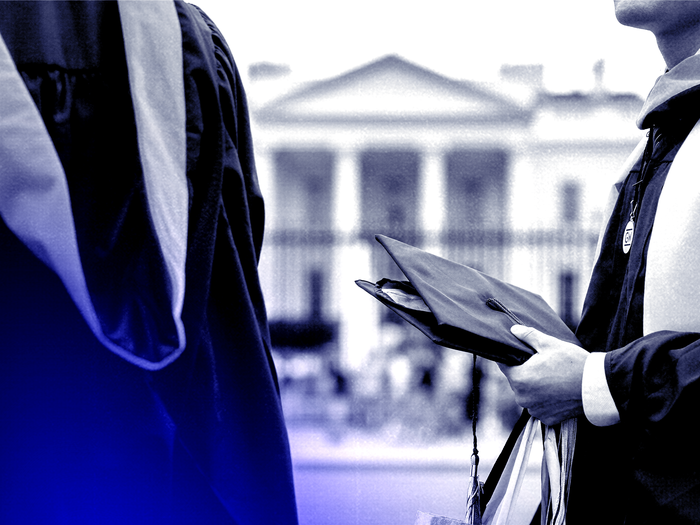
Democratic lawmakers are preparing to enhance oversight of federal student loans. After securing control of the House and Senate, priorities for the upcoming Congress are announced. Top on the list is reviewing the Trump administration’s actions, especially concerning the Department of Education’s student-loan policies.
Massachusetts Senator Ed Markey indicated plans for hearings. He asserted that this administration would be held accountable, specifically mentioning the Education Secretary’s role in decisions impacting millions negatively. The Department, under President Trump, decreased its workforce and relaxed controls over student-loan servicers. Meanwhile, an extensive overhaul of repayment processes was implemented, causing confusion and billing inaccuracies among borrowers.
Aaron Ament, the president of Student Defense, an advocacy group, highlighted opportunities for detailed oversight. Issues such as transitioning borrowers to new repayment plans with increased bills, resuming collections on defaulted loans, and insufficient monitoring of student-loan servicers are key areas of concern. He anticipates a rapid escalation in oversight activities.
An Education Department spokesperson argued that the administration created new, affordable options for American students and suggested that some Department functions could be handled by other federal agencies.
The Oversight Outlook
Hearings are expected to kick off the oversight process, according to Ament. Democratic lawmakers could subpoena Education Department documents and utilize the Office of the Inspector General along with the Government Accountability Office for investigations. It was the GAO who found the Department had stopped assessing servicers for call quality and accuracy.
Student Defense proposed an oversight ‘curriculum’ targeting various higher education issues. These include predatory college practices, mishandling of loan forgiveness programs, and complications in borrower repayment plan transitions. They suggest lawmakers request specific documents, including servicer performance reports and staffing information from the Federal Student Aid office.
Frederick Hess, a director at the American Enterprise Institute, expected extensive oversight activities focusing on educational budget cuts and efforts to dismantle the Education Department. He noted these oversight initiatives might significantly occupy the executive branch’s resources and focus.
Despite being a minority in the past two years, Democrats persistently pursued student-loan oversight. Recently, over 30 Democrats urged the Education Department to address serious repayment issues and pauses in debt relief. While some Republicans supported repayment reforms, some, like GOP Rep. Anna Paulina Luna, advocated for capping interest rates at 2%, which President Trump expressed potential interest in endorsing.
Oversight processes require time. While certain repayment mistakes might be swiftly rectified, issues such as improving oversight over predatory schools demand more prolonged efforts. Representative Suzanne Bonamici expressed intentions to enhance borrower protections and counteract Trump’s student-loan policies. She highlighted the need to reduce college degree costs and offer relief to students exploited by for-profit institutions.
For more insights or to share stories about student loans, please contact Ayelet Sheffey at [email protected].
 Melania Trump’s Support for LSU’s New Scholarship Endowment
 DOJ Sues UCLA for Alleged Discrimination Against Jewish and Israeli Students
 The Role of Public Schooling in Equalizing Social Conditions
 Understanding Information in Modern Classrooms
 The Ongoing Debate on Public Schooling as the Great Equalizer
 Americans Still Value Higher Education for Career Growth