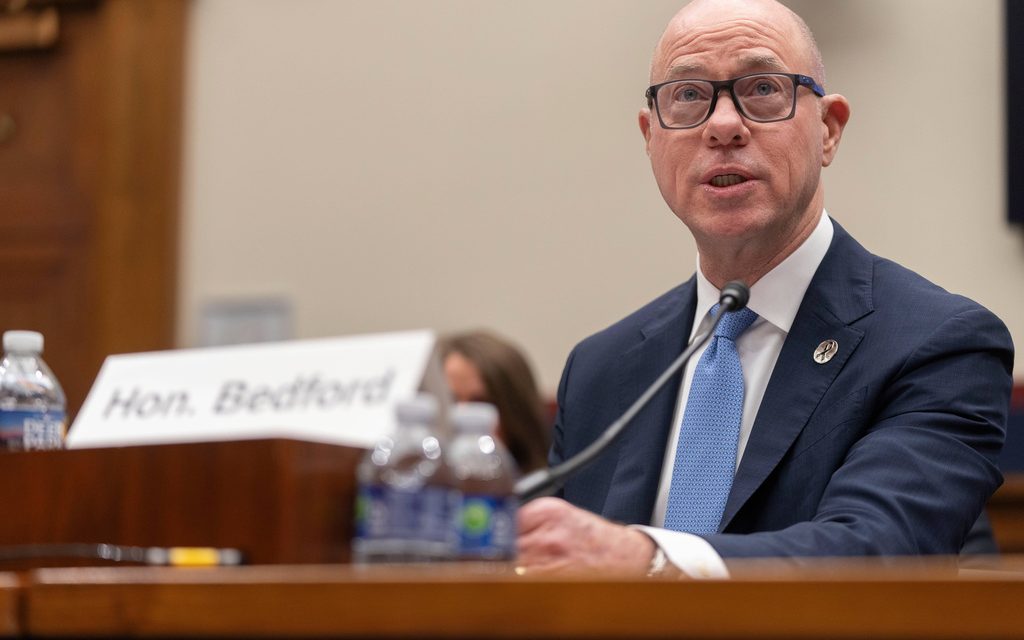
FAA Administrator Bryan Bedford addressed the Aviation Subcommittee of the House Transportation and Infrastructure Committee in Washington. During the testimony, he highlighted a significant system failure in the FAA’s Philadelphia approach control, or TRACON, on September 21, 2025. The failure stemmed from an aging circuit, which forced the system to switch to its backup. However, a severed fiber line, cut by a construction crew in New Jersey, rendered the backup ineffective. Consequently, five major Northeast airports experienced ground stops: Newark, Teterboro, Philadelphia, LaGuardia, and Kennedy.
Jackson Shedelbower, in an op-ed dated October 1, emphasized the incident as a reminder of the need for Congress to approve Transportation Secretary Sean Duffy’s $30 billion funding request for system upgrades. He contended that while the infrastructure is outdated, evident in the failed circuit scheduled for replacement, merely replacing components is not enough.
Former air traffic control professional Vincent E. Bianco III, with 23 years of experience, expressed urgency for system modernization, aligning with the controllers, airlines, and pilots who support Duffy’s request. He critiqued Shedelbower’s perspective for focusing on replacing outdated equipment without addressing the need for design improvements. Bianco emphasized that resilience requires separate physical routes and testing of system backups under load.
Bianco recalled the failed promise of NextGen, launched in 2003, which aimed to modernize the air control system with a $36 billion budget shared between the FAA and airlines. Despite $15 billion spent by the FAA, benefits were minimal, attributed to undefined requirements, overambitious plans, and dependency on airlines’ timely equipment upgrades.
He also noted Congress allocated $12.5 billion in July 2025 for phase one of the current modernization effort, which has already escalated to $16 billion. The new budget request could raise the total to $42.5 billion, despite the Government Accountability Office’s findings that the phase one cost projections excluded critical expenses. Only a third of the proposed $30 billion targets air traffic control architecture.
Bianco stressed the importance of incorporating training for controllers and technicians into the funding, given the demands of transition and maintaining old systems during upgrades. He advocated for conditional funding, emphasizing no single dependency for critical facilities, verified through testing. Furthermore, he recommended staged fund releases based on progress, overseen by the inspector general and GAO. Bianco insisted on integrating training and staffing with hardware funding and obtaining a full lifecycle cost assessment prior to Congressional approval.
While Shedelbower acknowledges the need for investment and oversight, Bianco argues for a strategic approach that emphasizes planning beyond financial allocations. Funding alone cannot ensure resilience; it requires robust frameworks and resilient infrastructure designs capable of withstanding challenges.
 Family Sues Over Fatal Shooting of Mexican Immigrant
  University of Maryland Student Found After Six-Day Search
  British Man Released on Bail Amid RAF Fairford Security Investigation
  Body-Camera Footage Reveals Aftermath of Teacher’s Injury by Student
  Fox News Celebrates 30th Anniversary at Nasdaq
  Feds Target Social Security Fraud Ring in California