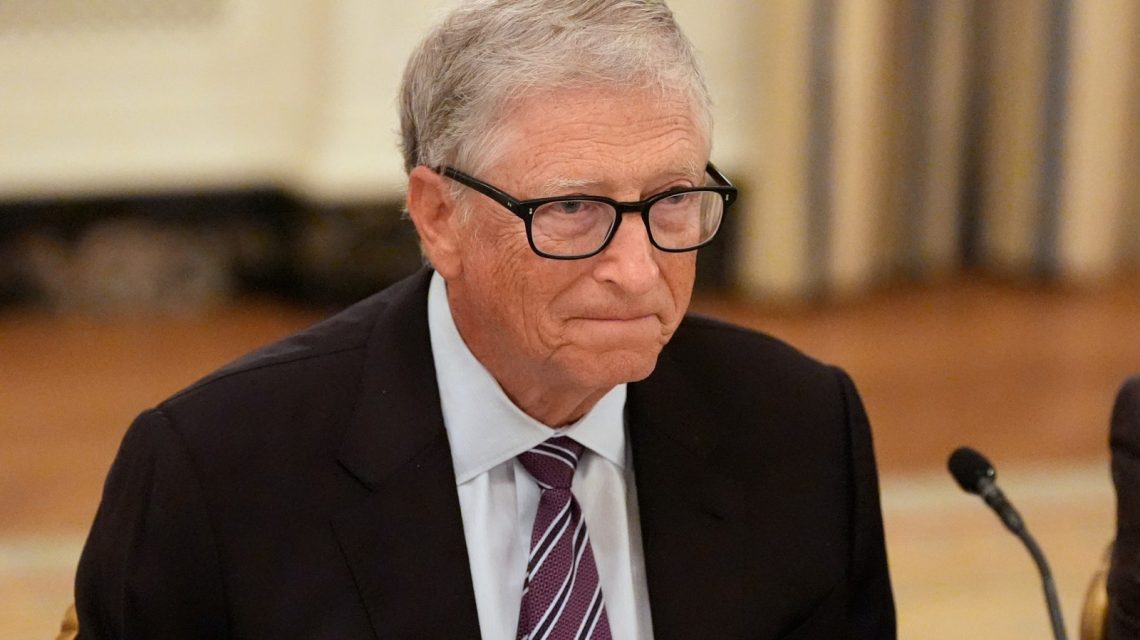
During a recent appearance on NBC News’ Meet the Press, Microsoft co-founder Bill Gates emphasized that discussions around an AI ‘kill switch’ miss imminent dangers like cyberattacks, fraud, and the misuse of AI in creating biological weapons. He argued that while concerns that AI systems might become uncontrollable are prevalent, policymakers should prioritize mandatory monitoring and safeguards.
‘The kill switch is an odd focus. It’s insufficient,’ Gates told moderator Kristen Welker. ‘We haven’t reached a point where AI autonomously grabs computers and refuses shutdown. This dialogue showcases a nontechnical understanding of AI.’
Gates is a prominent voice in the discussion on AI’s potential risks, which he posits are comparable or may even surpass those of prior technological revolutions. Amid heated policy debates in Washington regarding AI regulation, Gates stated that the real threat lies in humans leveraging AI for harmful purposes.
‘AI can propel events causing mass casualties,’ Gates warned. ‘There’s no weapon more potent than bad actors with advanced AI tools.’ He dismissed suggestions that AI fears are exaggerated, insisting, ‘It’s not a hoax.’
The Debate on AI Safety
The interview centered on whether AI systems need emergency shutdown measures — commonly known as kill switches. Gates argued this idea detracts from the necessity for robust monitoring by governments and companies. He said, ‘The kill switch won’t prevent the disasters experts fear most.’
Instead, Gates urged for enforced oversight to track AI models and record potentially hazardous activities. He mentioned that distinguishing between beneficial uses of AI, like drug design, and malicious uses, like bioweapons, requires continuous oversight rather than relying on shutdown tools.
Proposed legislation such as the ‘AI Kill Switch Act’ reflects the ongoing policy debates. Introduced by Representatives Ted Lieu and Nataniel Moran, the bill would mandate AI developers to maintain the capacity to manage or suspend AI systems to prevent catastrophic harm. This includes empowering the Secretary of Homeland Security to intervene if necessary.
AI Regulation and Leadership
Gates highlighted that society might be underestimating AI development speed, calling it an ‘evolutionary event.’ He stressed that while AI might seem smarter than humans in some respects, humans still control these systems and the immediate threat comes from malicious use of AI.
He criticized self-regulation by companies, stating ‘No one thinks self-regulation is enough.’
In tandem with Gates’ sentiments, former President Donald Trump expressed intent to regulate AI while advocating for rapid development. Trump’s administration proposed hiring an AI czar to oversee policies and maintain U.S. leadership in AI.
Addressing Immediate AI Threats
Cybersecurity experts, like John Walsh from IGEL, have highlighted ongoing threats AI poses to crucial infrastructure, such as water treatment systems. AI accelerates vulnerability exploitation, making defensive responses lagging. Walsh noted that AI enhances geopolitical tensions, referencing that many essential facilities operate with limited cybersecurity resources.
Gates plans to continue advocating for AI safeguards and stresses the importance of U.S. leadership in international standardization. He encourages parallel discussions on AI safety to prevent future crises.
Representative Ro Khanna is working on legislation that aims to control recursive self-improving AI, stressing it as a ‘real risk.’ Gates concluded the discussion by emphasizing the urgency of enacting regulations before a major AI-induced calamity.
 AI Developers Warn of Dangers Amid Recent Scare
  Protect Your Data with LifeLock’s Identity Theft Plans
  The Impending Shift to Quantum-Safe Security
  Understanding the Q-Collar’s Role in Brain Protection for Athletes and Soldiers
  Attorney General Blanche Opposes New AI Regulations
  Parallels Between ‘Threads’ and AI Fears