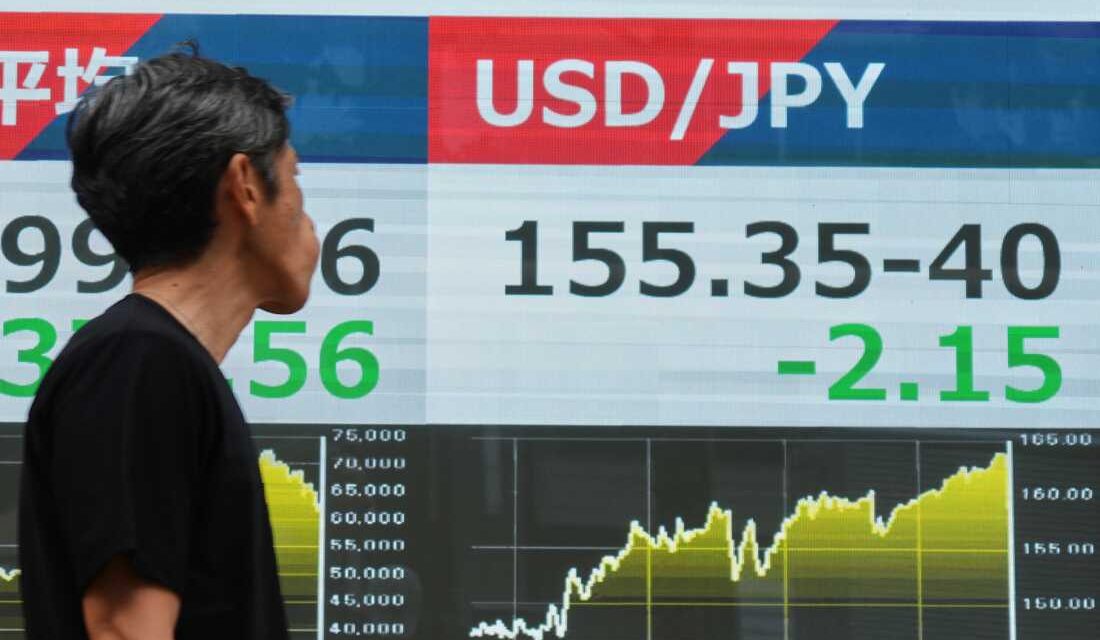
An electronic board displayed the exchange rate between the U.S. dollar and Japanese yen at a securities firm in Tokyo on August 3, 2026. The U.S. dollar weakened sharply against the yen following confirmed market interventions by U.S. President Donald Trump and Japan’s finance minister.
At the end of last week, the dollar was trading above 163 yen, representing 40-year highs. However, after suspected regulatory interventions, the exchange rate dropped below 160 yen. By Monday morning, after the official announcement, the dollar fell about 1% to 156.34 yen, marking a significant shift.
Japan has faced challenges with the yen’s prolonged weakness against the dollar. As a country heavily reliant on imports, a weaker yen leads to higher prices and increased inflation. Earlier efforts to strengthen the yen against the dollar saw little success. Suspicions arose last week of U.S. involvement in stabilizing the yen.
Trump explained that Washington’s assistance stemmed from a strong relationship with Japan. He emphasized the financial strength of the U.S. and acknowledged Japan’s need for support due to its weakening yen. Trump’s comments highlighted the mutual benefits of this intervention, calling it a “signal of friendship” that is beneficial for the global economy.
In Tokyo, Finance Minister Satsuki Katayama confirmed the intervention, stating that the finance ministry, in coordination with the U.S. Treasury Department, had purchased yen. This move aimed to address “excessive volatility and disorderly movements” in the yen’s value in recent months. Katayama assured further actions if required.
Such explicit acknowledgment of market intervention is uncommon, noted Neil Newman, managing director at Astris Advisory Japan. He recalled the last significant instance was after Japan’s 2011 earthquake and tsunami disaster. Newman stated that a weaker dollar could make U.S. goods more competitive by reducing costs in yen terms, potentially boosting American exports to Japan.
Newman highlighted the rarity of U.S. engagement with Japan on currency matters but acknowledged an alignment of interests between the two nations.
 Controversy Surrounds Performances at Gillette Stadium
  Tucker Carlson’s Remarks on Britain and WWII Spark Backlash
  Police Divers Uncover Ancient Roman Artifacts in Sardinia Waters
  Conservative Activist Urges AI Safety Measures
  G7 Nations to Release 100 Million Barrels of Oil Amid Fuel Price Surge
  Attempted Hijacking on FlyDubai Flight to Tel Aviv