The competition between the U.S. and China in developing artificial intelligence technology is intensifying, focusing on hardware and computing power. In China, companies such as Huawei have surpassed global leaders like Nvidia within their domestic market.
Nvidia’s Diminished Market Share in China
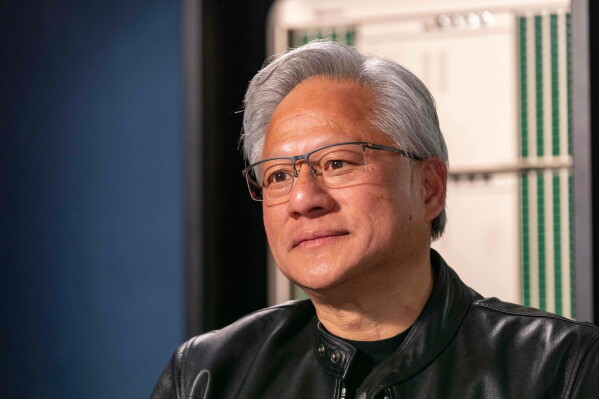
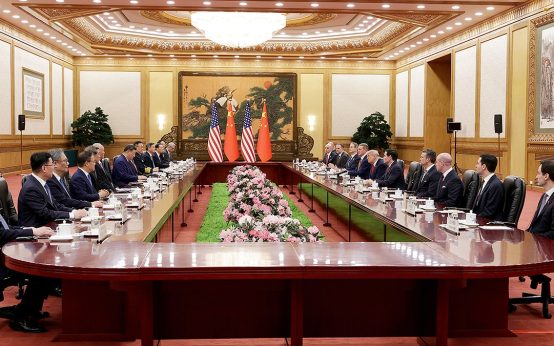
Despite Jensen Huang, CEO of Nvidia, visiting Beijing amid the U.S.-China summit in May, Nvidia’s success in China has been limited. Initially, U.S. export restrictions due to national security concerns hampered Nvidia’s sales of advanced H200 AI chips. Although these restrictions were eased later, China began promoting domestic chipmakers like Huawei, leading to a loss for Nvidia in China’s AI chip market.
Jensen Huang mentioned that Nvidia once held a 95% market share in China prior to export controls that restricted its sales. He emphasized the need for balancing national security concerns with technological competition and export growth.
Rise of Chinese Chipmakers
Since 2019, when the U.S. imposed restrictions on Huawei and other Chinese companies from purchasing advanced computer chips, Chinese semiconductor companies have been striving for self-sufficiency. As a result, Huawei has gained a significant foothold in the Chinese AI chip market.
According to a report by Bernstein, Huawei’s market share in China’s AI chips is projected to grow from 40% to 50%, whereas Nvidia’s share shrinks to 8%. Huawei’s advanced chips, like the Ascend 950 series, are considered comparable to Nvidia’s H200.
Despite the challenges, Nvidia remains crucial for Chinese AI technologies. The semiconductor supply chain is international, and no single country can produce advanced AI chips independently. The Chinese demand for Nvidia’s products, often smuggled to bypass restrictions, demonstrates this.
Nvidia’s technology relies heavily on ASML’s EUV machines used by TSMC to manufacture Nvidia’s top AI chips. However, these technologies are barred from the Chinese market.
Continued Demand and Expansion
Nvidia anticipates revenue growth despite export restrictions, with expectations of $91 billion in revenue between May and July 2023. Compared to Huawei’s $126 billion revenue for the same period, Nvidia remains a significant player globally.
Collaboration and Adaptation
Chinese AI firms like DeepSeek collaborate with Huawei to adopt their AI models to Huawei’s chips, showing potential to replace Nvidia products. Nonetheless, a complete shift to Huawei’s chips is not expected abruptly.
To adapt to regulations, Nvidia developed the H20 chip, a modified version of its AI technology acceptable under U.S. export laws for sale in China. Despite this, clarity around the import of Nvidia’s H200 chips into China remains elusive.
Huawei’s Global Ambitions
As the largest telecom equipment supplier, Huawei aims to expand its reach globally, including its chip technology. Operating in 170 countries, Huawei strives to enhance digital connectivity. As China’s chip production advances, Huawei could expand its market presence in areas like Southeast Asia.
China remains steadfast in advancing technological self-sufficiency and exporting its developments. This strategy persists, regardless of Nvidia’s ability to sell products in China.
Contributions to this report were made by AP journalists Josh Boak and Kelvin Chan.
 Experts Warn Against Alarmism in AI Governance
  AI and the Changing Nature of Google Searches
  Data Centers Stir Controversy in Texas Amid Growth Boom
  The Technology Rivalry: Trump’s Meeting with Xi and the AI Ecosystem Clash
  Ways to Protect Your Finances from Cyber Threats
  Interview with Nvidia CEO Jensen Huang: AI Outlook and Business Strategy