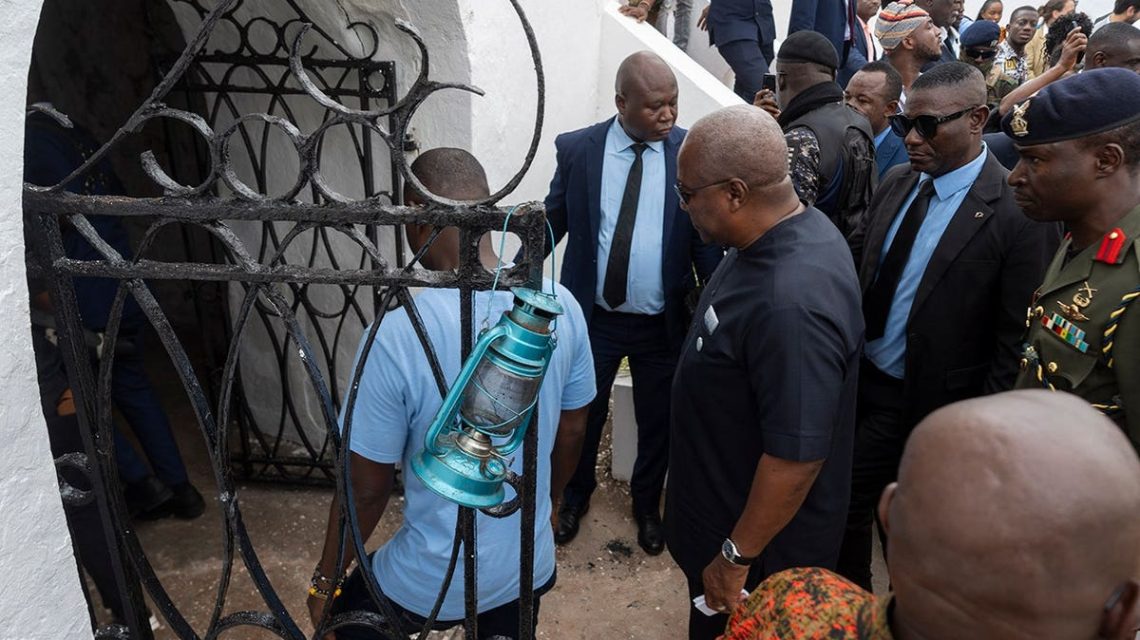
African and Caribbean leaders have called for financial compensation, debt cancellation, and formal apologies from countries that gained from the transatlantic slave trade. This demand follows the adoption of an extensive reparations plan during a conference in Ghana.
The 19-point framework includes proposals such as financial compensation, debt relief, and a Global Reparations Fund. It also seeks the return of looted cultural artifacts and ancestral remains, along with reforms to international financial institutions perceived to disadvantage Third World countries.
The proposal aims to be presented at the next United Nations General Assembly, as African and Caribbean nations intensify their coordinated efforts towards slavery reparations. The African Union and the Caribbean Community (CARICOM) Commission on Reparatory Justice adopted this plan at the conclusion of a three-day conference.
Participants included John Dramani Mahama, Ghana’s President, who remarked, “None of us gathered in this hall today can be held personally responsible for the atrocities of the transatlantic slave trade.” He added that while history may not demand inherited guilt, it does require inherited responsibility.
The proposal does not specify individual countries to provide compensation or issue apologies. It advocates for debt cancellation, climate justice financing, expanded citizenship pathways for Africans in the diaspora, and a “right of return” for descendants of enslaved Africans. African countries are also urged to maintain former slave forts and castles as memorial sites.
Reparations advocates state that at least 12.5 million Africans were abducted and transported on European ships between the 15th and 19th centuries. These supporters emphasize that the effects of slavery persist across Africa and the Caribbean even today.
The conference follows a United Nations vote in March recognizing transatlantic slavery as the “gravest crime against humanity.” This resolution received 123 favorable votes, although the U.S., Israel, and 52 other countries either opposed or abstained. Concerns about potential interpretations that create a hierarchy among crimes against humanity were voiced by the United States and European Union.
French President Emmanuel Macron participated virtually from the Élysée Palace, and acknowledged the suffering inflicted by slavery. He emphasized that reparations should be part of ongoing efforts rather than merely a financial settlement.
Prominent figures from Namibia, Liberia, Senegal, Barbados, and Sao Tome and Principe attended, along with senior officials from other countries. The event in Ghana integrated separate reparations initiatives into a unified document, aiming to present it before the United Nations.
This report includes contributions from Reuters.
 Israel’s U.N. Ambassador’s Viral Video Reaches Iranian Audience
  Trump’s Remarks on Ukraine-Russia War Casualties and Peace Efforts
  Tony Blair Warns Europe to Maintain U.S. Alliance
  Trump Rejects Iranian Proposal on Strait of Hormuz
  Tensions Rise as Russia Accuses Europe of Blocking Ukraine Peace Efforts
  Erdogan Challenges Israel’s Rhetoric and Strengthens Alliances