
A new poll from the Pew Research Center reveals Gen Z’s concerns about artificial intelligence (AI), despite being the most frequent users. Society is grappling with AI’s widespread influence on healthcare, education, work, and personal relationships. Many Americans express worry about AI’s potential harm to personal lives and society.
Gen Z’s AI Concerns
Among age groups, Gen Z stands out, with 48 percent predicting a negative impact on society from AI in the next 20 years, whereas 37 percent feel it will negatively affect them personally. This is compared to 40 percent of the overall population anticipating negative societal impacts and 37 percent anticipating negative personal impacts.
Only 14 percent of young adults aged 18 to 29 foresee a positive societal impact of AI, while 20 percent believe there will be personal benefits. The Pew Research Center report notes significant chatbot usage among adults under 30, who remain skeptical about AI’s future.
“While most adults under 30 use chatbots, they’re the most skeptical about AI’s future impact,” the Pew Research Center report states.
Lee Rainie, formerly of the Pew Research Center and now with Elon University, finds Gen Z’s concern unsurprising. The generation faces a disrupted job market as they enter the workforce. While they embrace technology, they also worry about job stability.
Rainie describes Gen Z’s interaction with AI as “a complicated story.” They grew up with AI but remain wary of its environmental impact and accuracy. The prevalence of AI in academic settings, often referred to as “cheating wars,” adds to their concerns.
The survey, conducted between February 17 and 23, 2026, included 5,119 participants.
Gen Z’s AI Use Compared to Other Generations
According to the report, 66 percent of Gen Z have used chatbots like ChatGPT, Gemini, or Copilot, an increase from 55 percent in 2024. This surpasses usage among other age groups—61 percent for ages 30 to 49, 42 percent for ages 50 to 64, and 23 percent for those 65 and older.
Adults aged 30 to 49 are more likely to use chatbots daily, with 23 percent reporting daily use, compared to 21 percent of Gen Z. Older Americans show lower daily usage rates, with 13 percent for ages 50 to 64 and only 4 percent for those 65 and older.
College Graduates Revolt Against AI in Ceremonies
AI skepticism among young Americans is evident in recent graduation ceremonies. College commencement speakers discussing technology, like Google CEO Eric Schmidt, have faced boos. Schmidt noted that AI will affect various sectors, responding to graduates’ fears of a predetermined future dominated by machines.
“There is a fear in your generation that the future has already been written, that the machines are coming, that the jobs are evaporating … and I understand that fear,” Schmidt stated.
Scott Borchetta, CEO of Big Machine Records, encountered similar reactions at Middle Tennessee State University.
New graduates face a challenging job market influenced by AI, likened to the difficult post-COVID-19 climate in 2020. As reported by the Federal Reserve Bank of New York, unemployment among recent college graduates was 5.6 percent in March 2026, while the overall rate was 4.2 percent.
Data centers vital for AI face community opposition, leading to moratoriums on their construction.
This article includes reporting by the Associated Press.
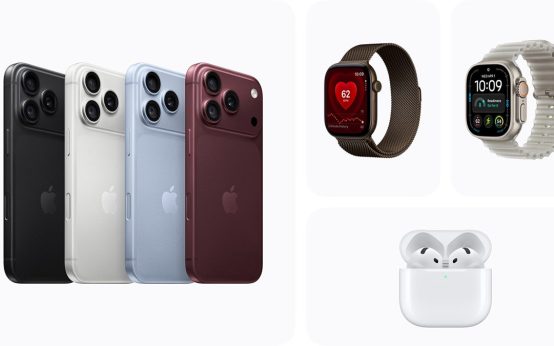 Apple Unveils Latest iPhone, Watch and AirPods Models
  Secure Your Internet Connection with Consistent VPN Usage While Traveling
 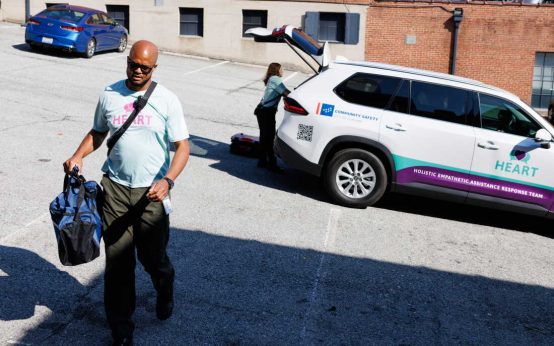 Durham’s HEART Program: A New Approach to Public Safety
  Missouri’s Abortion Policy: Conflicting Amendments and Voter Decisions
  The Impact of Extended Job Searches on Mental Health
  Concerns Over AI’s Impact on Higher Education Learning