
The Caribbean Sea, a place known for its tranquil beauty, became the setting for a harrowing life-and-death experience. In darkness, far from the coast of Dominica, the absence of guiding lights left me stranded. Our dinghy was compromised, with a failing motor and a hull filling with water. As the current threatened to drag us further out, we made the tough decision to abandon ship.
Amidst the turmoil, memories blurred. The swim seemed indefinite. Yet, salvation came from Dominican fishermen, embodying a trust revered among mariners, that in times of dire need, we transcend differences to offer help. Mariners’ struggle is primarily against the sea. This responsibility to assist is enshrined in several conventions, including the International Convention for the Safety of Life at Sea and the International Convention on Maritime Search and Rescue.
On September 2, 2025, maritime traditions faced a shocking breach. The U.S. targeted an unidentified vessel in international waters, repeating its assault as sailors clung to wreckage. Over eight months, more than 60 vessels were struck, resulting in over 200 fatalities. Despite investigations, none of these individuals were confirmed as threats linked to illicit activities. They were victims against the unyielding sea.
This principle of aid at sea, respected globally, saw its value diminished. Videos from six Democratic senators urged service members to obey maritime laws. The media condemned these actions, yet they persisted, with an example as recent as May 30, 2026.
Our ocean-connected world sees about 80 percent of global trade traversing seas. Nearly all international internet traffic travels through undersea cables rather than satellites. In the last 18 months, actions by the U.S. administration led by Trump dismantled legal frameworks protecting maritime peace and economic opportunities.
Freedom of navigation hinges on the Law of the Sea, essential for unobstructed maritime routes, especially through straits like Hormuz. Iran and the U.S., despite not formally ratifying the treaty, historically honored navigational freedoms. Recent conflict saw these nations obstructing navigation, defying established norms. Although resolution may be near, full restoration remains uncertain.
Global commitment to subsea cable protection dates back over a century. Russia’s shadow fleet allegedly engaged in severing cables, disrupting adversaries’ access to power and information. Iran similarly sought to impose charges on cable usage passing through their territory.
The international seabed’s resources belong to mankind, as recognized by the Law of the Sea. Deep-sea assets must be exploited with respect for this global inheritance. Yet, the Trump administration sidestepped decades of negotiations over resource allocation, rejecting international guidance and customary law, despite dissent from scientists citing environmental concerns.
The U.N. Convention on the Law of the Sea safeguards mariners, ensures maritime freedoms, protects cables, and oversees the use of deep-sea minerals. Despite signing an implementation agreement in 1994, the U.S. Senate did not ratify, leaving the nation in limbo, adhering to customary practices without formal treaty support.
The retreat from customary U.S. and international maritime laws endangers all who navigate beyond land. Trust in the U.S.’s adherence to maritime norms is wavering. Restoring legitimacy demands Senate ratification of the Convention on the Law of the Sea to reaffirm commitment to safety and security at sea.
Andrew D. Thaler is a deep-sea ecologist and conservation technologist. He contributes to the OpEd Project as a fellow in Technology in the Public Interest.
Copyright 2026 Nexstar Media Inc. All rights reserved. Unauthorized publishing or distribution of this material is not allowed.
 Historical Discrepancies and Diplomatic Sensitivities in U.S.-China Relations
 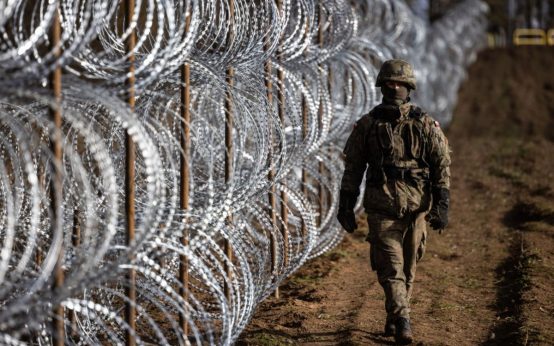 Escalating Tensions: Russia’s Nuclear Threat and the Kaliningrad Conundrum
  Marco Rubio Discusses Thwarted UK Terror Plot and Global Threats
  New Leads Emerge in 2014 Ayotzinapa Student Disappearance Case
  Concerns Over U.N. Secretary-General Candidate’s Alignment
 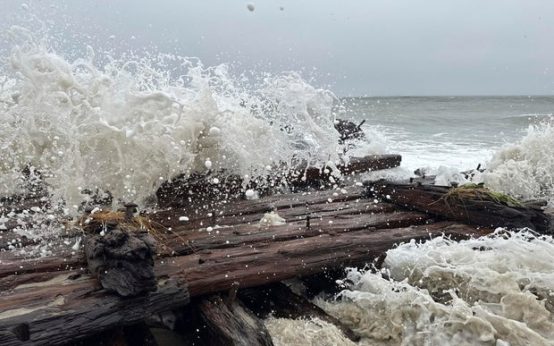 Possible Shipwreck Exposed After Nor’easter in Nantucket