A rare strain of Ebola, linked to the Bundibugyo virus, has been detected. Known for its high contagion risk, Ebola spreads through bodily fluids and carries a high fatality rate, impacting between 30% and 50% of those infected. Symptoms include fever, rash, and vomiting, according to the World Health Organization (WHO). The Bundibugyo strain lacks approved vaccines or treatments.
Health officials express alarm due to the late detection of this outbreak. Most cases originate in the eastern Ituri province of the Congo. However, infections have surfaced approximately 600 miles away in Kinshasa, the capital, and in neighboring Uganda. This expansion highlights uncertainties regarding the virus’s full spread.
The Congolese government has closed its land border with Rwanda. “There are significant uncertainties about the true number of infected persons and the geographic spread,” the WHO stated. Challenges in controlling the outbreak are exacerbated by regional conflicts, notably with the rebel group M23. The local administration in Goma, a city captured by M23, confirmed a case.
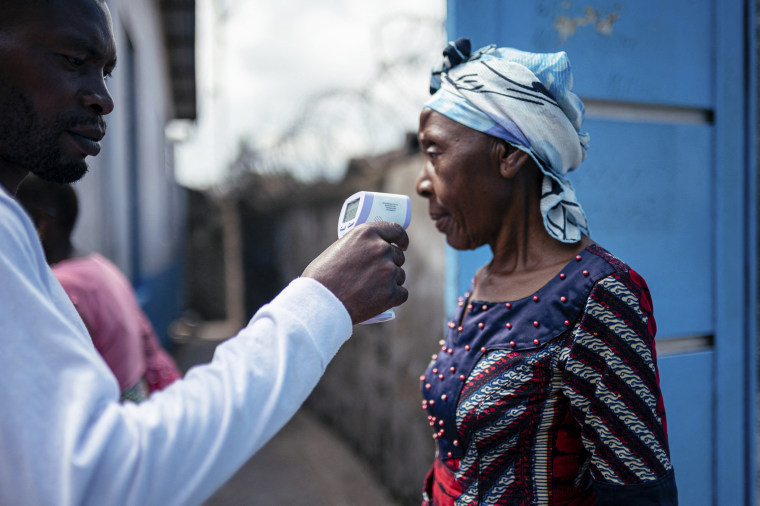
Health measures include temperature checks for hospital visitors in Goma. Jean Kaseya, director-general of the Africa CDC, voiced concerns on British television about insufficient medicines and vaccines, leading to increased fatalities.
The WHO emergency declaration is assisting governments and agencies in containment efforts. Its regional office in Africa reported the arrival of 35 experts in Bunia, Ituri province’s capital, alongside 7 tons of medical supplies.
The U.S. is aiding with “surveillance, laboratory diagnostics, infection prevention, and other efforts,” the CDC announced. However, CDC’s Ebola response manager Satish Pillai did not detail the impact on Americans, preferring to focus on local needs.
Doctors Without Borders is ready to enhance its medical response. “The rapid increase in cases and deaths, along with cross-border spread, is extremely concerning,” said Trish Newport, MSF emergency program manager.
Jeremy Konyndyk, former head of the Covid-19 response at USAID, now president of Refugees International, noted the loss of international support infrastructure. He referenced cuts made by the Department of Government Efficiency, affecting USAID and CDC. He highlighted the contrast with 2014-16, when USAID and the CDC led the global response to an Ebola outbreak.
The State Department is collaborating with Congo and Uganda to control the virus swiftly while rallying support for key partners. The department has not offered immediate responses regarding the outbreak’s effect on Americans or the cuts’ impacts.
 Susie Wiles Discusses Her Recovery from Breast Cancer
  Tofu Tops Protein Source Rankings: A Comprehensive Analysis
  Southern California Faces Santa Ana Winds and Increased Fire Risk
  Ensuring Lasting Smiles Act: A Necessary Step for Healthcare Reform
  Americans’ Confidence in Federal Food Safety Drops to Record Low
  Flu Season Hits Early: Importance of Timely Vaccination